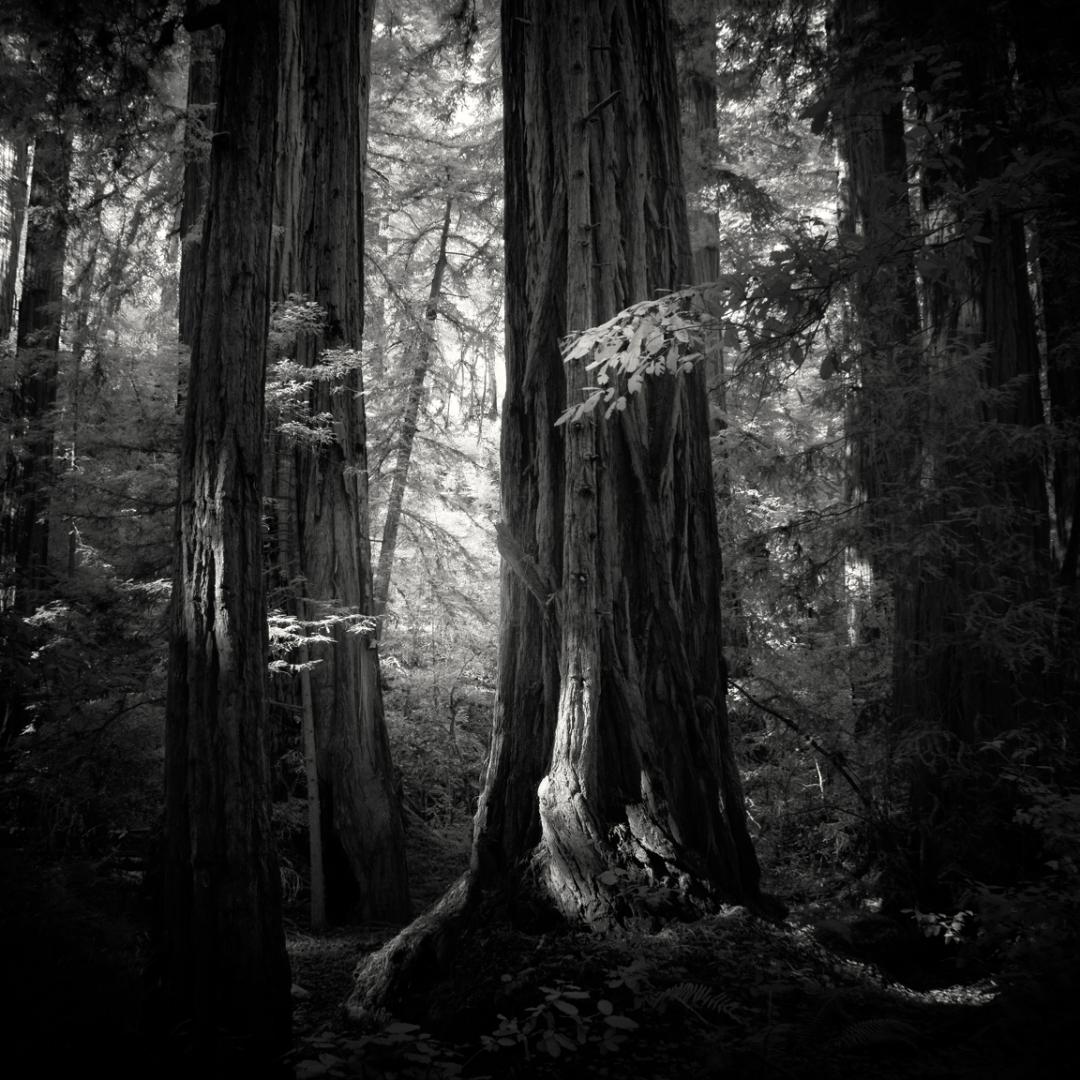
Poems: Peter Weltner
Images: Nathan Wirth
Photos from the
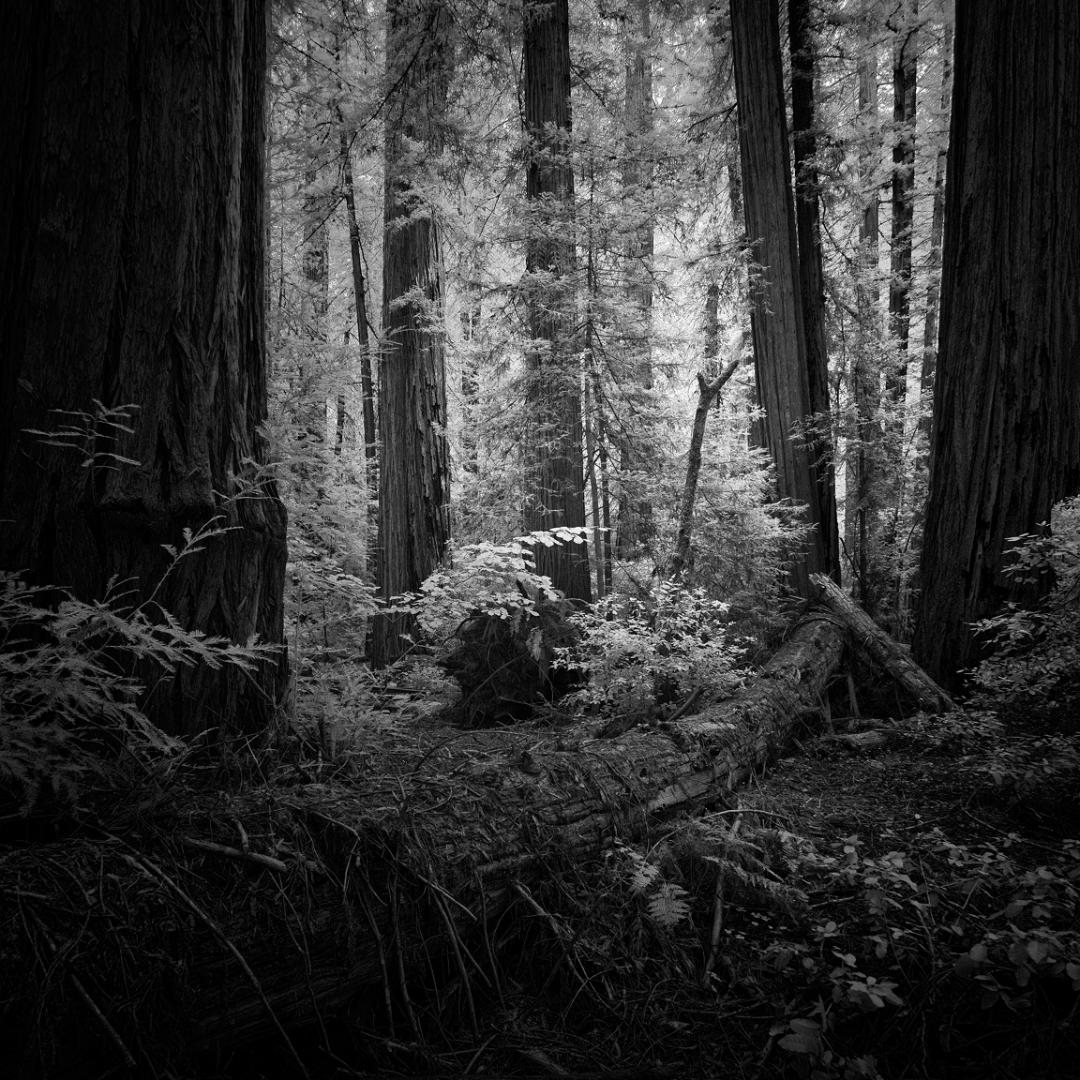
Armstrong Redwoods
State Natural Reserve
and the Russian River
*****
Peter Weltner taught Renaissance and Modern poetry and prose for thirty-seven years at San Francisco State. He has published seven books of fiction, including The Risk of His Music and How the Body Prays (Graywolf Press) and numerous books and chapbooks of poetry, most recently Old Songs Replayed and The Lost Ghosts of Lemnos (Marrowstone Press, Seattle) and Crow-Black Stones and a Flock of Crows (Agenda Editions, UK). He lives in San Francisco near Sunset Dunes by the Pacific Ocean with his partner, Atticus Carr.
Inspired by poetry, Zen, cinema, and decades of walking in nature, Nathan Wirth attempts to photograph silence. A Slice of Silence, a collection of his photos, which includes ekphrastic images with poets Gary Snyder, Red Pine, Jane Hirshfield, Joseph Stroud, Daphne Marlatt, Andrew Schelling, Sam Green, Tim McNulty, Peter Weltner, and others, is forthcoming from Watershed Press in 2026. More of Nathan’s images can be found at sliceofsilence.com/photography/
*****
***
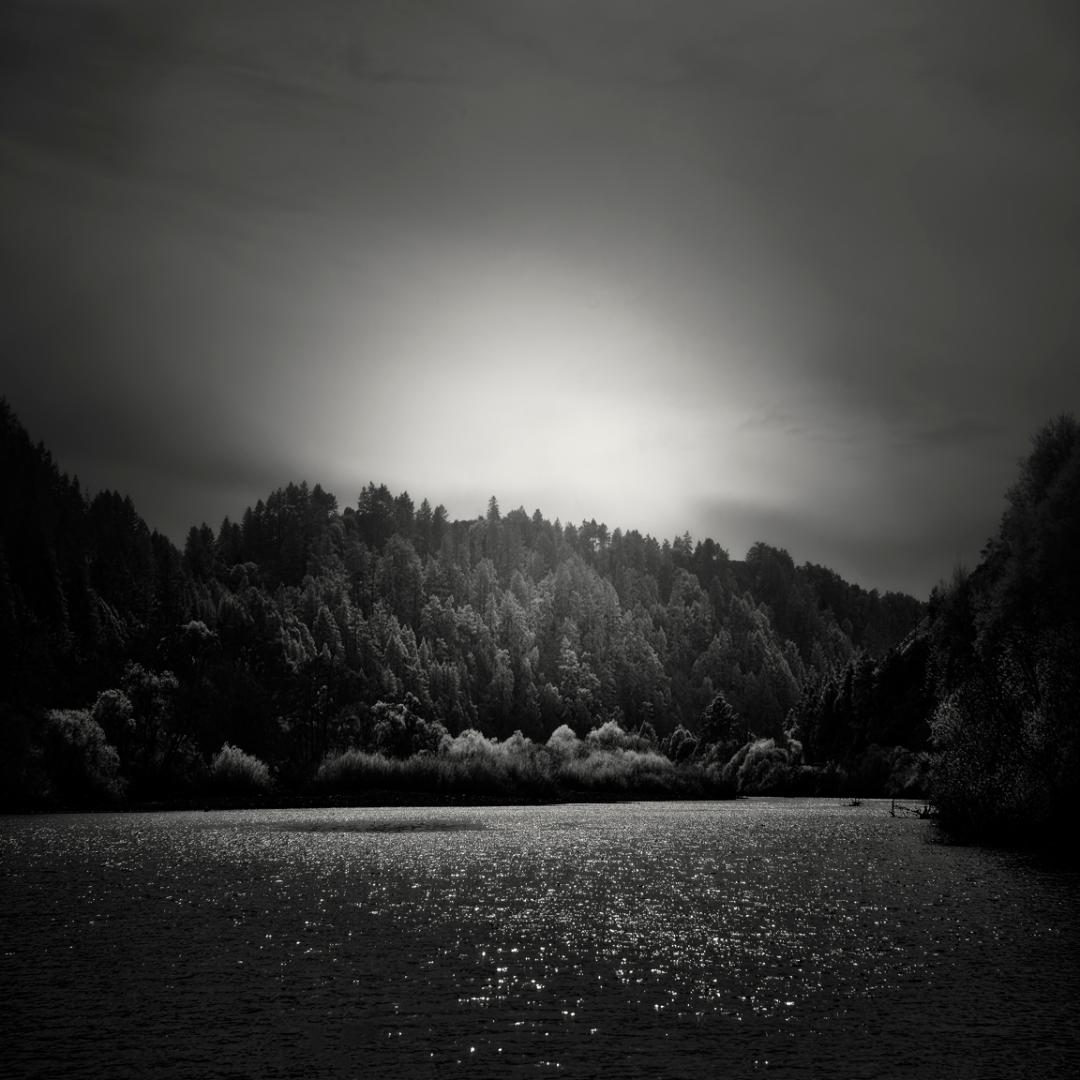
REDWOODS
The moon’s reflection on the Russian River
courses its steady journey, fluent as
ghosts, its pale light by force of water
broken into bits and pieces, life as it was
rippling, silvery as fish scales under the sun
by day, shining gem-like as stars at night,
your eyes sparkling, too, as we walk, my friend,
toward dusk as it might be were it held as tight
against death as our arms hold each other,
having arrived at path’s end, to that bend
in the river that leads to a forest to wander
in forever, without ever talking or needing to,
in wonder at how calmly they’re being left behind,
those years we’ve been together, hoping to find,
in night’s hushed darkening, the words for what woods do.
***
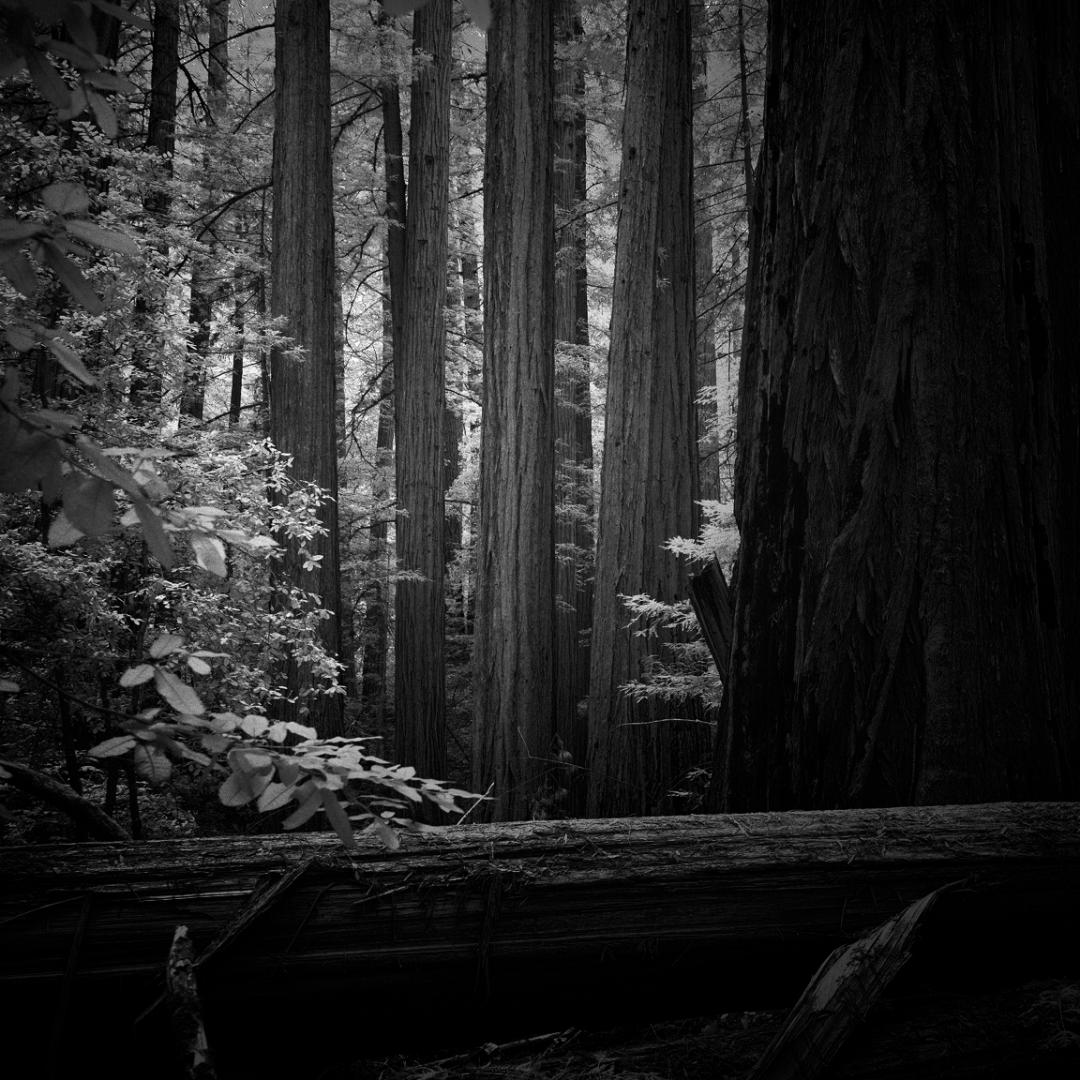
REDWOOD
Trees like poles to climb, foliage gleaming in a shaded light, as
snow shadows day, while you try to see far away though only
what’s near is clear, vision intensified by
exactitude, this leaf, that needle, bark scrap, limbless trunk:
whatever’s more precise than memory in the back of an eye.
Think of Barnett Newman’s zips or Pollock’s Blue Poles,
how you dance to the rhythm of what they envision.
Consciousness must betray itself to be free,
must trust the ghosts concealed in things outside it,
these redwoods half seen, though no less certain, in shades of gray.
How quiet the wilderness is today, wet from dew, the mist
that perpetually falls in woods, the murmur of a distant rain
that is part of what you know, is you, the light muted
by the moisture dribbling off redwoods, bushes, and vines,
the music of a rainy morning’s hushed musings, its silence broken.
Or perhaps this is noon, this burnished gray, blackened brightness, not
the sun’s, but a gift of the primeval world you enter
with your camera: illusionless, stark, half-awake dreaming trees
once depicted on an ancient paper scroll, washed in watery ink, nature
painterly, the cold, fading light you’ll sleep better by deep back in the forest.
***
OLD GROWTH
1.
You remember our tree, Ronnie, the one reaching
toward heaven, its bushy, spiked limbs, jagged,
gnarly, thigh thick roots, leaves beseeching
Jesus, we said, old as it must have been, haggard,
its twigs like bony fingers, a kind of fury
to it whenever storms shook it. Some day I’ll see
it again. Each hike we took we had to press
our palms against its bark, maybe to confess
our sins, I don’t know. A rite two small boys
made up. A liturgy. A laying on of hands.
Hickory. Spruce. Beech. Dense vines. Pine stands.
And an ancient oak not even loss destroys
but rejoices in, the smell of leaves, loamy earth,
streams after rain, trees’ solemnity, the woods of our youth.
2.
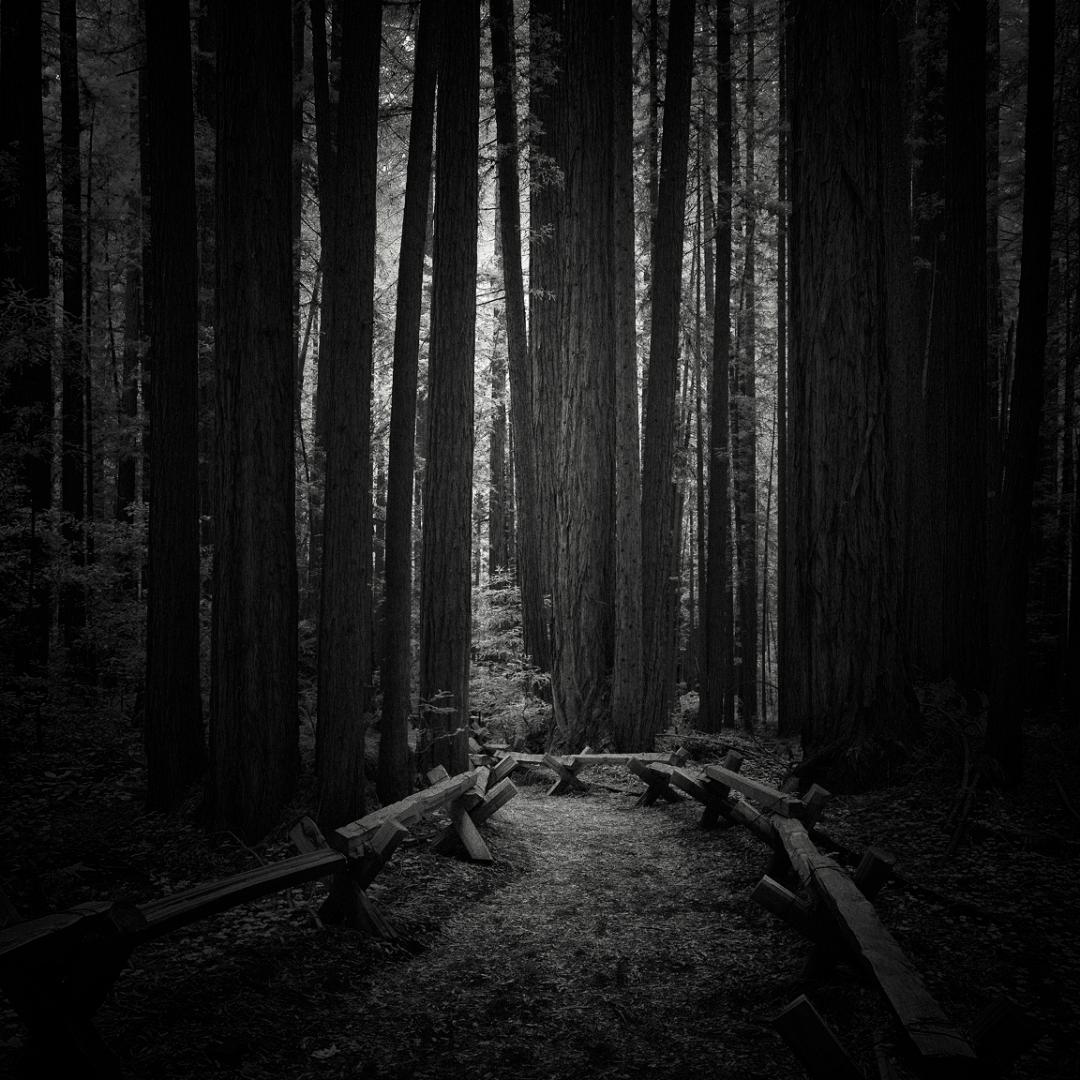
A photo of an old growth forest. A ghost-like haze,
mist from a distant sea mingling with
fog-dampened sunlight,
chill breezes seeping
through needles, leaves, thickets of brush, entangled vines
where massive redwoods root, their trunks
grand, defiant
as monoliths, bark mottled
black and gray like shadows cast by twilight, precise forms
dying away. How much they must know,
have seen, these venerable
trees, dim, shaded,
unreadable like black ink spilled on cardboard or scratch paper,
their hearts, their sap, the hard, flat rings inside them
visible only after
they topple from old age
or are cut down and sawed for timber. Look at them, Ronnie. Trees
so strict and rigid they might be steel beams
slightly leaning or set on edge,
polished granite columns
of a temple rising out of woods, soaring from floor to heaven,
or posts shaping frames though which flows and scatters
like rain through screens
a smoky light,
a promise of more dark to follow, each mammoth tree a thickly drawn bar,
a broad crease, a wide gap, a fold in space,
a phantasmic forest snapped by a lens,
redwoods elevated,
aspiring skyward not opposed to the wilderness in which they dwell but invisibly lifted into the clouds like a consecrated host
a priest holds higher than he can reach,
to wonder at. Holy trees,
icons of belief, fables of nature reputed to be as long-lived as stones,
as ancient creeds surviving past man’s wantonness,
desperate acts of folly,
his skill at destroying.
Look, long departed boyhood friend, how in a photograph of
an old growth forest, we two druid boys
might wander yet, incessantly
seeking
the giant oak we abandoned, having grown too old for it.
Come back, Ronnie. To ceremony with me. There are
more sacred trees to believe in
than youth knew,
gods to hold true. Let us touch
them,
hands open,
and see.
 The High Window