*****
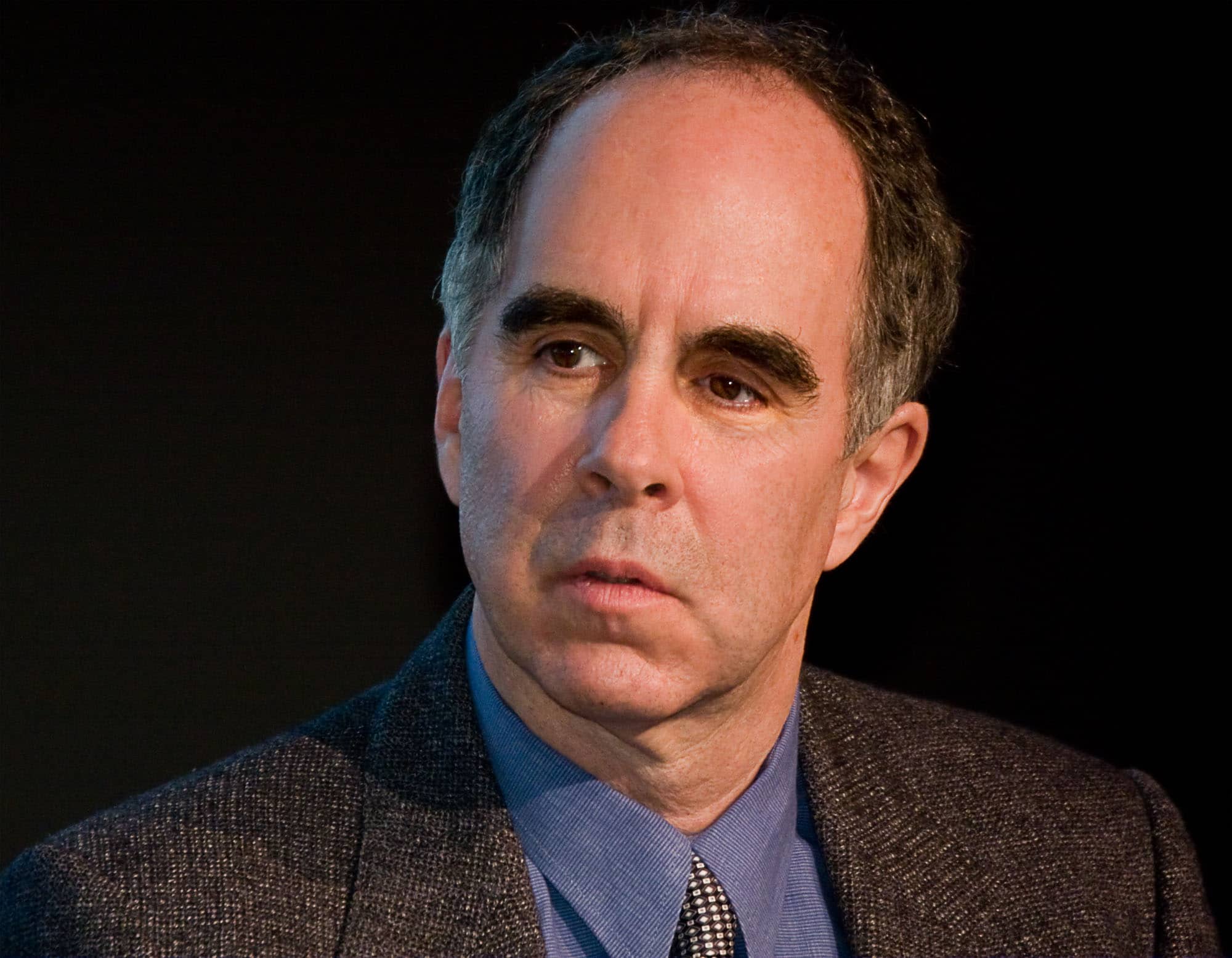
A.F. Moritz, whose hometown is Niles, Ohio, was born 15 April 1947, and educated at Marquette University, Milwaukee, Wisconsin, coming to Canada in 1974 so that his wife, Theresa, could take her doctoral studies at the University of Toronto. They became Canadian citizens in the 1990s, and have co-authored nonfiction books on Canadian history and culture, including the standard biography of Stephen Leacock, a biographical study of Emma Goldman focusing on her Canadian residences, and The Oxford Illustrated Literary Guide to Canada (1987). Moritz is a dual Canadian and U.S. citizen.
Niles is very near Youngstown, the birthplace of William Heath, the Featured American Poet in The High Window in March 2024. Niles and the Mahoning River Valley (pronounced muh-HOE-ning) are basic presences in Moritz’s poetry. For example, in The High Window (issue 6 summer 2017), his poem “The Dearest Freshness” is about a childhood experience in a scrub field by the Niles Republic Steel plant, about 500 yards from his childhood home.
Moritz is considered and considers himself a Canadian poet but also has had a continuous U.S. presence since his early-1970s publications in the little magazines. Since 1974 he has published in Agni, American Poetry Review, Denver Quarterly, Georgia Review, The Hudson Review, The Literary Review, The Massachusetts Review, The Paris Review, The Partisan Review, Poetry, Prairie Schooner, The Quarterly, Shenandoah, The Southwest Review, The Yale Review and many others. The title poem of The Sentinel (2008) received the 2005 Beth Hokin Award of Poetry magazine (best poem in a year’s issues; the only other Canadian recipient of this award, given since 1948, is Margaret Atwood).
In an essay (“Enriching Shadow: A. F. Moritz’s Early Poems”) on the 2002 one-volume republication of Moritz’s first four books, John Hollander took him as a U.S. author, calling the book “a chance to catch up on the first part of a body of work by one of the strongest American poets of his generation.” Similarly, Peter Campion, writing in Poetry (November 2004) saw him in the American context, writing that in Night Street Repairs, Moritz “has that priceless combination of emotional strength and formal attentiveness, a combination which can seem particularly rare these days, when the editors of prominent houses so often deal in reputations instead of real artwork. Moritz is easily a better poet than the last four winners of the Pulitzer Prize.”
*****
An Introduction to Poems from The Wren
In The Wren, A. F. Moritz arranges eighty-four short poems in a sort of galaxy: an apparent scatter, not of stars but of poems, of feeling-thoughts. In this, his twenty-third book, the poems originated with an impulse, beginning in April 2019, to write a series of continuous poems. The first goal was to keep them short. The second was to make them separate, in the process reflecting the whole of human life, stable in moments and bodies. What is the unity of these active “states” of ours, given that they do not simply follow, or hook onto, or neighbour, or echo one another in a chain of resemblance that seems to have gaps and missing links that reappear later, healed?
The title was chosen partly to speak to Moritz’s The Sparrow: Selected Poems (2018), but also because, among the many short poems of this collection, one of them asked to be central: a poem about a small bird that hops from within a thicket of stems to peer out at the poet for a second and then disappears back inside. This tiny story of a tiny fellow creature is the narrative, the “novel,” of this book: a little story that is nonetheless one of the great and ever-retold stories.
*****
A.F. Moritz: Seven Poems from The Wren
SO LATE
Why do I talk to you so late
except that in the darkness words
are drawn out
of the mud: speech—which was created
by there being you
to talk with. And as then, as at first, the words
are still taking a form—still are
given and take a form, so that one more thing
can appear on earth, another
flower, even so late.
WHAT AM I DOING
What am I doing? Nothing.
Only what I have to: sleeping,
eating, cleaning, keeping
my books in order, going out,
walking, hearing, looking,
picking up things
to see them closer, touching,
feeling things, like a clump of earth
or a push of the wind. At night
tasting the night, wandering more,
listening, hearing plinks,
whirrs, whimpers, rustles, many
sounds and their setting,
silence. Then coming back in.
Sleeping. Dreaming. I’m doing it
well. Nothing is left to chance.
CHILDHOOD
Thank you
children
we can live
struggling
to let be
for you
the illusion
guarding the garden
we who know
the things we know
are illusions
having escaped
none
but the happy one
Yes for the
illusion you
children
we can live
NOTICINGS
Why should anyone pay attention
to you? Attention: wise people call it the origin,
essence, and end of wisdom. They say
its nature is that it’s owing
to each thing. Even you. But don’t imagine
that the wise people can hold this or that dandelion
steadily in their hearts forever. They walk on, go on
to their successive
oblivions, their next attentions.
A DREAM
The ship had just sunk. I was one,
maybe the only one, left, thrown in the sea,
and I rode the one piece of jetsam I could see,
a wooden ladder. It was my world. I loved it.
It went from here to there, from origin
to eternity. It was ten flimsy feet
of slats and rungs. On it, I was as lost
as it was, floating on the sea. How long could I live
in that paradise? If I let go—my strength
was failing me—would I drown or only
drown in a sweet sea?—you, she, the
unutterably profound, my early
love…help…come back to me!
COME LIVE WITH ME
(After Saigyō and Marlowe and Breton)
Here I become
aware of the song of my heart,
“again, again, again…” Here I touch
the gold in the air, I hear
that it is what “a
gain” means. Now what I have
to tell you, you who want to
see the flowers, see
with actual sight, throw away
the world, you call it, and come, live
with me in the mountains…
A LEXICON
Weight officiates
at the marriage rite of ground and water—
the carving of the channel
is done by their heavy spate of desire to be
this stream. Experience is that they have
an idea but no idea
where it will go. Light lives in the white
and light green veil, the ripple
of haunches, this worldly, other worldly,
the sperm, the lonesome
child playing, along the banks. The word
for this living-in that light does
is “sparkles”—the same way that the word for
the house by the stream is “splendour”.
 The High Window