*****
The editor would like to thank Sydney Lea for facilitating this selection of contemporary Slovenian poetry.
A former Pulitzer finalist and winner of the Poets’ Prize, Sydney served as founding editor of New England Review and was Vermont’s Poet Laureate from 2011 to 2015. He is the author of twenty-three books: a novel, five volumes of personal and three of critical essays, and fourteen poetry collections, most recently Here (Four Way Books, NYC, 2019). A fifteenth book of poems, What Shines?, was published in September this year. in February. In 2021, he was presented with his home state of Vermont’s most prestigious artist’s distinction: the Governor’s Award for Excellence in the Arts.
Sydney was The High Window‘s Featured American Poet in the Winter 2023 issue. You can find his poems by following the link.
*****
Marjan Strojan • #Miljana Cunta • Jure Jakob • Meta Kušar • Ifigenija Zagoričnik Simonović • Iztok Osojnik • Ana Pepelnik
*****
Marjan Strojan: A Sequence
THE EVENING WALKS THE MEADOWS
***
The evening walks the meadows, unsure which
way to turn. It listens to the darkness splashing
over the brim – and hears again the orchard cry
in its sleep.
***
The nightingales’ fireworks in the rain –
armies of clouds marching through
the woods: no one will survive
the weeks ahead, yet they
will all be back –
same as
we.
***
Only very large or very small things really differ.
They seem like a cry from afar, too intermingled
with sounds of the night for us to care – yet, like
vultures circling the hills – they peck at our heart
from a distance.
***
Across the worn-down patches of blood-mouthed fern
under juniper skies, over a fawn so tiny no crow cares
for the roadkill, the autumn hurries to the dark offices
of winter on earth.
***
A cold morning – hammer sharpening the scythe.
I wait for an explanation… Likely, though, it will
always be like this: A freezing morn, not a cloud
in the sky – some future sky – cold not letting up,
the edge growing thinner.
***
Merciful stars! Bethlehem descended on
Earth from the dark – Herodes arose and
commanded his cohorts one more Night
of the Innocents.
***
Darkness breaks. On the lawn
ice shadows on the grass
change into a lake of dawn
lining the mountain pass.
Numbly sniffing the air
a circle of roe deer pace
listening, listening… then take off
in its own embrace.
(Translated by the author)
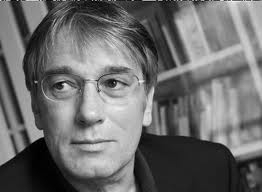
Marjan Strojan has written several volumes of poetry and translated Beowulf, The Canterbury Tales, Milton’s Paradise Lost and his sonnets as well as poems by William Shakespeare, Robert Frost, James Joyce, and others into Slovene. He also edited and in part translated the first comprehensive anthology of English poetry in Slovene.
He won the 2000 Veronika Award for his collection Steamers in the Rain, the 1995 and 2003 Sovre Translation Awards for Beowulf and Paradise Lost, and the 2015 Prešeren Foundation Award for The Canterbury Tales.
*****
Miljana Cunta: Three Poems
9 AM
The morning multiplies like the chicks in the coop behind the house. The impatient light searches for a breach—sauntering sunbeams convert the morning into premonition. Day besieges us on every side, but we are safe from the intruder: a cool net of shadows stretches beneath our fingers. Tweedy coquetry, cottony calm, silky shimmers, and the long and tireless snip of noisy shears, which know how to stop at the end of the journey. Buttons in lively disarray and the thinnest of barely visible threads—the work of creation is safe; it doesn’t push you out of the room. Out of yourself. Fabric samples flow in waves across the furniture and let themselves be pricked where it hurts the most. Surrounded by such willing victims, we scoff at beauty; work will be our amble through the day. Words are beside the point. I wear the thick silence as a long, sumptuous gown in which I move with remarkable skill and no fear of falling. Expertly we step, she and I, as if one through the other; we waste no time on digressions. The heavy credenza shakes out its treasures each time we pass. When I place my hands on it, it too settles down.
8 PM
The nightstand is full of forbidden things. I plunge my snotty nose deep into holy water, I touch the exhibited Heart. All mysteries are within my reach. The Angel of God, my Guardian dear, keeps watch by my bed; he is perfectly beautiful and stands upright; there are no altar flowers but only a dull green wall with a mirror so I can finally see his back—it’s true, he does have wings. Now he comes closer, but he’s getting smaller and smaller, not bigger. Tiny and playful, he sits down on your lips, which get bigger and bigger, and more and more sounds come out of them, shining like pebbles in a mountain stream, gurgling sounds. The Angel, my Guardian dear, for the third time now, shows me his soft face. And I too am as small as can be, hiding in the folds of the sheets and giggling. I long to touch him, to have him by me on my pillow. But there’s a narrow lane between us, from nose to mouth; I’ve traveled it more than once, up and down, but don’t dare cross it. It belongs to you—not like a tree, which roots its solidity deep in the ground, but like a cloud, which a lonely man watches through a window, and when his attention is absorbed by the excitement across the road, the wind scatters it through the sky.
9 PM
Pajamas should be ironed to a crease, towels folded in half, the bed cover fragrant with a breeze that blows at just the right strength, the curtains concealing and revealing enough for the old lady’s well-kept luxury to be seen and not seen—as the blade of the flatiron constrains unruliness, as the palm interrupts the laundry’s springtime dance, as a finger reaches for a story in large print and leaves the dark red mark of a tiny insect, as the unpruned cherry tree stands before the window. And the room shuts its eyes… With darkness comes the thought that the bodies in the photographs will step out of their frames and come into our bed and warm their feet. We were all cold when we were little, you will tell me once more on the threshold of a dream, when I’m up to my ankles in the icy Soča—the river is beautiful and doesn’t like me—and will never be able to move again.
(Translated by Rawley Grau)
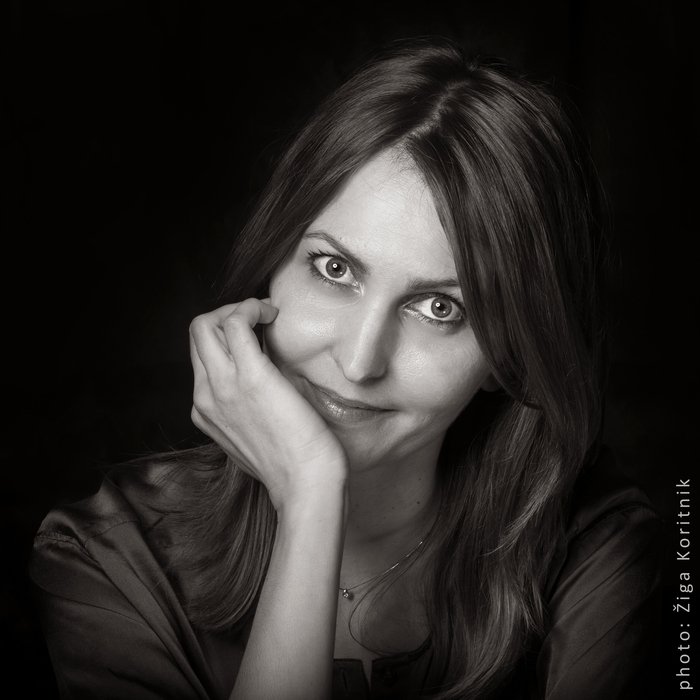
Miljana Cunta is an editor, a translator, and author of four volumes of poetry: For Half the Sky, 2010), Songs of the Day, 2014, Light from Outside, 2018, We Lost Our Way a Few Times, Now We Are Returning, 2023 She has written a number of reflections on poetry and was a guest columnist for Delo, Slovenia’s major daily newspaper. She is past program director of the international literary festivals Vilenica and Fabula.
*****
Jure Jakob: Poem
BIRDPOEM
This is a bird made of words.
Today, I’m this bird.
Smoke is drifting from somewhere.
First, it circles a little,
stands still,
then it pulls,
I can feel it being pulled up
through the warm autumn evening.
There’s a lot of moisture,
there’s been a little rain, and a little wind, too.
A leaf falls from the plum tree,
it is falling for a long time,
as if skipping
from one cobweb to another.
I’m listening to the waterdrops in the gutter,
someone at the neighbour’s draws down the blinds.
It’s dark here on the porch,
in a rounded, tangible way.
I’m not interested in the surroundings,
my circumstances are something else
than this space with seemingly
all-familiar determinants,
metres, time slipping, skipping
from hour to hour.
I don’t believe that.
I’m a bird,
crouching on a chair on the porch
and waiting, and I wouldn’t want it any other way.
I trust the air,
I breathe it in and cuddle it, hold on to it
and breathe it out,
it’s flowing well.
Everything that has ever happened to me
is happening right now,
has happened this way.
There’s no quantity here,
everything’s about the same all the time,
sometimes a little too much,
sometimes a little too little.
Here and there I twitch,
something gets my attention,
a mosquito, a frog’s croak in the distance,
a neighbour in the house next door
who has turned off the light.
I have sight, hearing and a bird’s mind
and among them something
that can never tip over
completely into gratitude,
completely into sadness.
My wings are made of this,
right now I’m right in the middle,
I take off.
I’m a good bird today,
waving my wings correctly
so the air allows me,
it’s incredibly soft,
the way it should be,
almost without any resistance
it persistently carries me onwards.
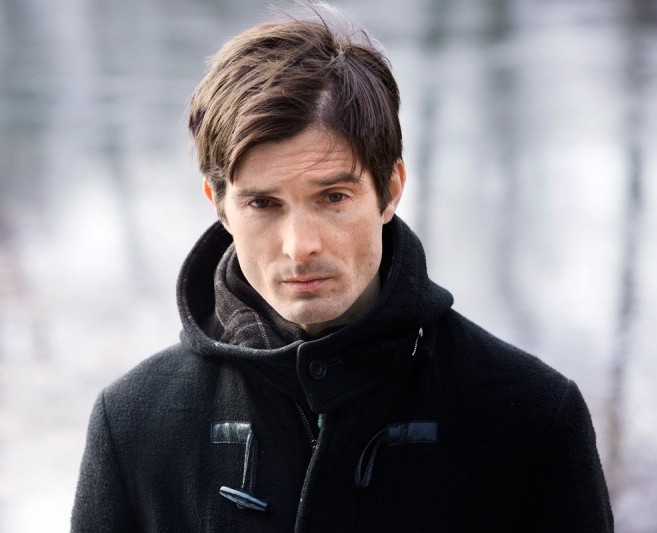
Jure Jakob (b. 1977, Celje, Slovenija) has a Master’s Degree in Comparative Literature from the University of Ljubljana. He is the author of six poetry books, a monographic study about narrative works of Lojze Kovačič, a book of prose and essays and four poetry picture books for children. His work has received many awards, including the Prešeren Fund Award for achievements in literature (2018). He lives and works in Savlje near Ljubljana.
*****
Meta Kušar: Three Poems
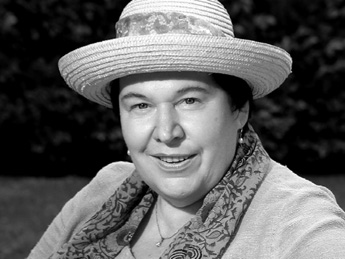
THE SIXTH ONE
Today’s your name day. Nathaniel spoke to you of sin
and you shuddered because the old foibles hadn’t been
washed away. Betrayed, you still roar from the pain.
That’s how reality endures. Goes on and on.
Even when a tempest threatens, when a rose blooms to
its last days, when no one fights over a manuscript.
Reality goes on. Goes on and on.
I raise my glass. Long is the biblical feast.
I pour water for you into silent crystal. Running water,
because all else has frozen over, dried up, rotted.
Everything’s rotten. These are shards of destroyed poems.
Time doesn’t fly. It lies like a log, it moulders unless
a strong self pulls it along. Modernism’s dung.
Kisses vanish if they don’t become truths.
So do poems.
And the Biblical feast.
And me. Tr. by Ana Jelnikar & Stephen Watts
A spool of indulgence
Do you know what’s happening ?
Where dreams and this shuddering come from?
How I shove the cold away, summer’s hoarfrost,
And wind myself into a spool of indulgence ?
I wedge myself into white carnations. And I breathe. I breathe!
Their sweet youth holds me up
Like a she-wolf her young. Do you know what is going on?
Where the scents are coming from? The tastes? The explosions of light
against the evening?
Not even the smallest ripple washes onto the shore.
From where does the celestial food come
that it bubbles on the tongue, as the senses feast ?
The spool of indulgence is my home.
I hear every needle slide into the shoulders.
(Translated by Ana Jelnikar and Stephen Watts)
SERENISSIMA
I discovered a heated mass of pagan
gods. One cornered me, while others
threw shapes back into the mass, so they melted
with silver. As I leaped for the gold,
death gave out a groan. Does it want me to see further?
Swords were all over me. Death pushed them away.
I saw love. Boiling vermouth disappeared,
and I saw a purple seed on a fern
in a burrow. I saw the descendents
of those murderers get reborn in the gondola. Language is
One. Out of white silence it resuscitates white earth.
Even the nightingale in its regal bough speaks it,
so the white beech grows strong in the white night.
Language takes off. I fly with it. I don’t dare say what I think
under the three-hundred-year old Calabrian pine.
Under which Johann dreamt of Faust. In Padua
generations nurtured it. In Santa Maria
della Salute, he spun around his golden axis
and the Mefisto spun around Faust’s. The dome covered them
both. Who uproots trees? Who uproots us?
When the first heavenly torsion breaks, the architect injects
his inspiration into Herod’s palace. He brings the ruler
observing his crimes a black gondola! As soon as he
steps into it, he’ll die of fear. Not even
his royal mother can save him.
Neither can death save him. Only the messenger will.
Heal him with scented wood. Under the pine
boughs, you become immortal, a baby donkey.
One day you reign over it all.
Do you still wear your hat slanted sideways?
(Translated by Ana Jelnikar asnd Barbara Siegel Carlson)
CHOIR
Solitude has the same helpers as love.
It’s not winter.
Evening has no season and
no century.
In love there’s no forbidden landscape.
In a poem there’s no forbidden touch.
In the garden no forbidden flower.
In dreams no such ending.
The minutes are recorded.
There’ll be three monuments:
At the Ljubljana post office, the Rialto
And the Portuguese coast.
On altars flowers smell fresh.
On conquerors shirts are sweaty.
Meta Kušar was born in Ljubljana in 1952. She is a poet and essayist, is the author
of six books of poems, several of which have been published bilingually in various languages, including Ljubljana which was published in 2008 by Arc Publications in England. Kušar has also published a book of interviews called Interviews (2009,
Ljubljana) and a collection of essays for which she received the national award for the
best book of essays for 2012.
*****
Ifigenija Zagoričnik Simonović: Four Poems
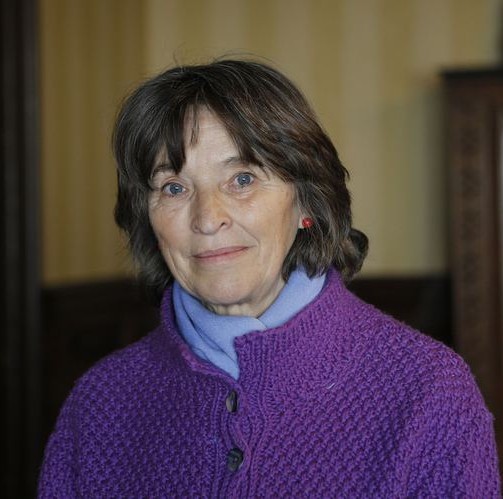
I WOULD BE A TREE
I would be a tree
endlessly growing,
to the tip of every branch.
I would grow fruit,
which would fall far from my trunk.
And plants from the seeds of my fruit
will not throw shadow
on anything or anyone
but invite everything and everybody
under their mantle, like Our Lady.
I would be a tree –
You alone would have permission
to fell me.
AN EMPOWERING CALL
We don’t hear each other often,
but each time it seems
like the previous conversation is continuing
and it will go on long after we finish the call.
You encourage me to write.
I would be ashamed in front of you
if I stopped writing.
You write with such ease, you say.
I thank you, but the ease is harsh…
Am I burying my head into send, I don’t know,
am I squeezing blood out of a stone, I don’t know,
am I hitting a wall by my head, I don’t know,
am I sprinkling sugar or throwing grenades,
I don’t know.
You are doing all at once, you say.
HEAVY LUSTFUL EYELIDS
At a PEN Congress 2018
I sat down. Two men, a woman, six empty chairs.
Around the other tables it was lively. Wine was flowing.
A poet with his guitar singing, passionate about sadness. Applause.
Only after plates were taken away, did we greet each other.
Something attracted me to one of the men.
Asian. I couldn’t say where from. The colour of his skin.
And his dark eyes beautifully inscribed. He was not eating. He ordered beer.
It seemed to me that he smelled sweet. He was silent. Sparingly.
He kept making jokes. Tourist questions, he said.
I blushed. He scented my passion, which made me want to sit closer.
As dry figs with ice-cream were served, impatiently he told me
that he had been in solitary confinement for six years. In a cage most of the time.
If his chains rattled he was bitten by the guards,
because they couldn’t play their ancient game in peace.
If he moaned his fellow prisoners kicked him,
because they couldn’t sleep when he cried out.
Prisoners were worse than jailers. They shouted, they bit the iron net,
whenever he closed his eyes and couldn’t stay awake.
They fell upon him, passionately. Because he discredited his homeland.
They jumped on his fingers so that he would not be able to write again.
Food without a spoon. Always liquid. Never warm.
Water never in a clean trough. He newer washed.
Newer shaved. His hair never cut. His clothes never changed.
Never really alone, not even in a solitary confinement, he said.
He was drinking drops dropping from his hair, when he was soaked to wake him up.
Once he swallowed with a special passion. One more gulp, two.
But it was disinfectant. Liquid shit poured out of him. Green,
from the mould of his insides. This is not mine, he thought to himself, he said.
Once a week they allowed him to empty the bucket.
Three wardens, madly angry, took off his chains,
Three of them, when he could not lift his eyelid, still less his hand.
It seemed to him he could fly, he said.
He stretched his legs behind the table. His legs met mine.
I sensed peace although his knee trembled.
I was applauding the singer with his guitar, while I was beginning to fall
in love with a man I shall never see again.
LADYBIRD
i imagined
a ladybird
in my hand
it was tickling
my palm
i felt each little leg
I clenched my fist
gently
no one could ever
open my fist
outside it was pouring
lightning thunder
he threw me
beet me
tore me apart
making my hips crack
the ladybird
with me
warm
I cried
with joy
for I’d protected it
I went
through it all
happy
Ifigenija Zagoričnik Simonović was born in Ljubljana, Slovenia, 1953. She hold degrees in Slavonic linguistics and comparative literature, as well as in Studio Pottery from the Harrow school of Art and Design in Britain. In 1978, she followed her husband to London, where he worked for he BBC World Service until his death in 2001, and she worked for 10 years as a ticket seller at the Royal Academy of Arts and sold her own pots at Covent Garden. After returning to Slovenia in 2006, she published seven books by the author Vitomi Zupan, who had been imprisoned by the communiste régime for seven years. From 2017 – 2021, she was president of the Slovene PEN Centre.
*****
Iztok Osojnik: Poem
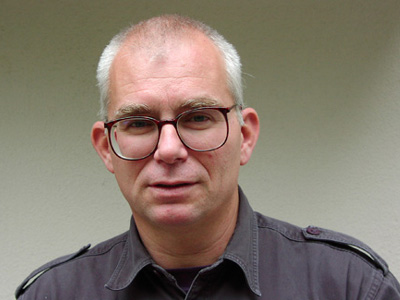
EARTH, BLUE AS AN ORANGE
1.
“Earth, blue as an orange.”
(Well, you have to start somewhere.)
A shattered man of
irrelevant years, I am still one of those immortals
trapped in a worm’s body, trapped in this earthly
orange until he pays his dues. He totters along with
Orion’s spear in his stomach, laughs in his heart like a
clown, not the happiest laugh but the most sincere,
kick-starts a moped, coughs into the autumn morning.
Something blue nevertheless — we ought not get too
tangled in brambles of sentences, and anyway I don’t
give a toss. My heart is a bleeding lump of meat
On a butcher’s or anatomist’s table. And also,
if you wish – I mean you who have the privilege of
sunning yourself in the shadow of this worm —
it’s also an umbrella for tears
and a sewing machine of tied hands. This should be
read as the fate of Christ, a man with the sky in his
heart and the body of a little cripple —
and in fact it was here I really wanted to start
with the crippled little man who is laughing
a bitter green laugh,
A metallic green guffaw the likes of a stinging nettle,
The little man looks into himself as into a mirror
Licked by a gust of silence.
We will now listen to a radio show,
Set the dial to the station of olive trees and lavender
And wait for the broadcast to begin… But what will begin
that I don’t know inside out already, you infernal worm?
A duck flies past the window and there’s the question of
a galleon that I capsized on a beach,
a wreckage under my bum
and I think nothing will explode in this
mouth-organ music
of purple cacophony. Waiting for my clown-like gust
My heart is watching me as if I’m a criminal
What kind of light is this, to weave all this into a coat
For a funny little man? But at least I’ve bitten the bullet
True, I don’t know what I’ll eat but October is grey
and we know
November is the cruellest of the twelve angels
The wind is gnawing at my island: one must stand firm!
I watch this place-in-a-bottle of green glass
catching light here and there
Not all of us are made for happiness,
what a stubborn turtle
Plodding away but not content to play with pain
So the bottle being must be made to face facts for a start
Autumn fog is an invigorating draught, I stick my finger
Into a star and bleed as it becomes a grown man.
2.
This is meant to be a letter. But where’s the typewriter?
How can a man wipe his wounds if he has no cloth?
I am trying to recall the buffeting of the wind
in the labyrinth of narrow streets
in Starigrad on the Isle of Hvar. I am losing my mind
thinking about that Italian café
from the novel whose title I forget.
Something the Mediterranean shares with my heart.
Of course it is not the only thing my heart is after
in its battle with the world. But where is my boat?
I don’t have a boat, and here in this place
that makes me by definition a sailor without a boat.
Therefore let us consider this insect in my limbs.
It must be some digestion hormone, turning me live into
cloud-fodder. This side of the universe
is a leap from the frying pan into the fire.
Freedom is something green.
A man is walking along the street in prisoner’s clogs.
His chains rattle and the man is smiling.
This Martini is bloody strong. The man is
of course myself.
A traveling shop, on its shelves the happy nattering
of exotic spices, a truck
rumbling along the potholed road
through the Starigrad green.
What are those pitted fruits called? Žižula?
Forever they will mean my happiness.
Only let me dig it up out of the earth,
blister my hands. Love is always linked with a man
who is bleeding, but this one is rather more stocky.
And if anybody here thinks he is about to crawl,
they are mistaken. Of course he will.
I am speaking of that Italian café from the time
between the wars, a café in winter with its lights
already on in the morning and almost empty.
I wish I could sit by the window
with an unread newspaper spread across my knees,
a refugee from the Bora wind and the whistling
that dances through the streets,
but there is a lot to be said for pulling up your collar,
pushing your hands into your pockets
and strolling around with an unwritten book,
freeing the most intimate of your dreams,
speaking what I know full well
cannot be silenced with any silence.
Milk is white.
3.
To speak from a place where silence speaks.
Seven hearts of mine have put on Greek armor,
they are running across the plain of Kopais
below the Chitheronia of my imagination. How
to catch dreams that have untied the hands?
From letter to letter I open out the shutters
on a little house like a children’s toy, on a little house
in a little house, in which there is another little house
and one more and it sings like the songs of Strniša.
To see and feel something for the first time as a man
counting little stones.
The shadows had frightened me off, I shut down the
computer and went to the shopping mall. I drove around
town, in my left pocket a folded piece of paper,
a piece of iron a man carries in his heart.
And drinks from. And eats from.
Fog is a beautiful thing to a man who cannot sleep.
It washes his eyes, kisses his soul.
The land inside is green. The sky green.
Green sea. Green city. Green moonlight.
Everything green up to the zenith.
Green centipede.
Sea undulates against the morning,
sadness shimmers in glasslike depths.
Green boots on my feet ran down there
among the olive trees and cicadas.
At night I dived into a fountain,
came out with some little stones that warm my heart.
Morning light feels a face and shapes it into a delicate
blossom. I walk. The sky touches the rooftops gently.
A green hippopotamus is swimming,
seagulls screech. If you touch me your knees become
tendrils springing flowers. Water is clean as honey.
Lavender bushes nestle on my life’s crossroads.
Light is thinner than a rosemary stem.
A hazy field of lavender.
Aroma of coffee.
(Translated by Ana Jelnikar and Ciaran O’Driscoll)
Iztok Osojnik, born 1951, is poet, scholar, translator and mountain climber. He obtained his Ph.D. in historic anthropology. He has published 34 poetry collections in Slovenian and 6 in English (and more in other languages) as well as many scholarly books and articles. His poems and essays have been published in more than 20 languages. For his work he has received Slovenian and international literary awards. In 2022 he was awarded the Golden coin for his life work. At present he works and lives with his family in Ljubljana.
*****
Ana Pepelnik: Four Poems
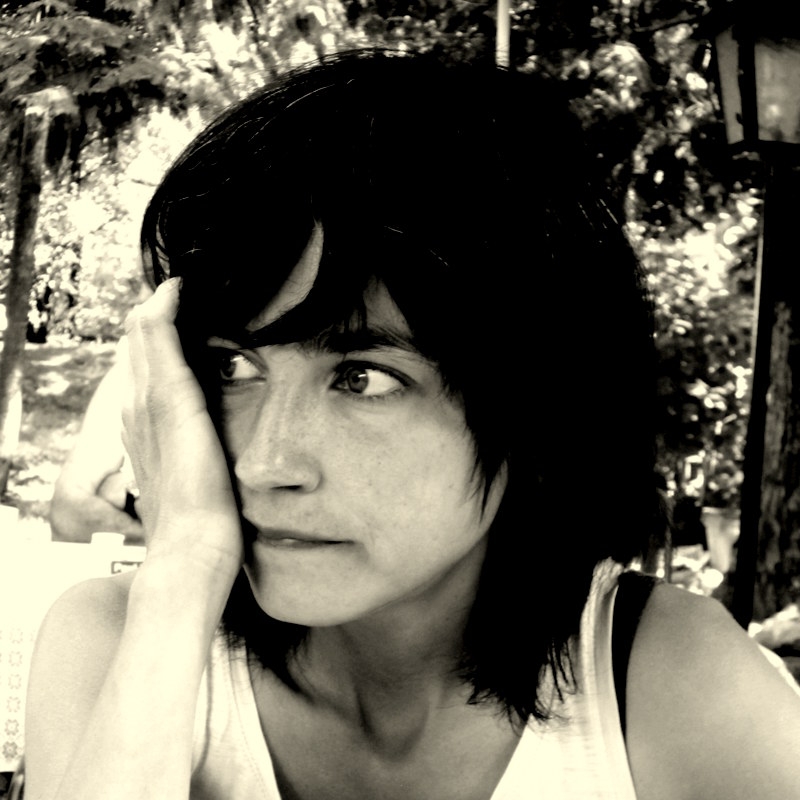
SONNETS
for Joshua Beckman
I
Incomplete dreams. Easy
morning. Towels spinning. The pinwheel
dappled. Incomplete morning.
Easy dreams. Trash men clearing
glass cans. This is morning pinwheel.
Quite improper for incomplete
dreams. Mist. Leftovers of rain on oxeyes
and chrysanthemums. Close to beginning
of November. First smell of winter. Easy
trash men. Dappled rain and incomplete
flowers. Improper November. It always begins
with trash men and ventilated coats.
Close to beginning. First smell of November
of ventilated rain. Incomplete dreams.
II
Red van full of forget-me-nots slides
over streets. I’m trying to find your poem.
I don’t give name to streets. I share them
with people from this town. Red van
full of forget-me-nots. Still. Trying to find
your poem. Red airplane landing on
airport of red town. Blue forget-me-nots.
I never remember airports. I don’t run after
red airplane. Too much of forget-me-nots. Your
poem. Sliding. Van full of streets. Clown
sitting behind the wheel. Red van in front of red
fire station. Sky growing out of red house.
Blue forget-me-nots. Your poem. I share it with people
from this town. Red sky growing out of house.
III
Distant boats. Rain falling until
they were swept away. We peel chestnuts.
Roasted shells are little boats.
When they soak you can hear cracking
out of dried ones. Distant boats.
How many people you think still use
firewood in town? Not many.
All I do is move. Peeling chestnuts.
From one station to another. Sometimes
I say more than usual in one day.
Firewood emits enough heat. Sometimes
I listen pipes cracking until I fall
asleep. Sometimes people are in the rain.
Until they start crying.
BELOVED GOD
dear
beloved god.
It’s hard
to start
when once
you stopped.
So I’m telling
you
now. Thanks
for being there for me
while I wasn’t
there
for me. You were
in my universe
but together
we were so terribly
far. My second son
was born new love
we became
four. And may the
assistant at the clinic
have the chance
to make the world better
for someone. And may the
paediatrician at the maternity ward
have the chance to be kind
to at least one mother.
That will be plenty. And may
the anorexic psychiatrist
at the psychiatry clinic
have the chance
to be loved. So she could
eat the chocolate
and be given love in kind.
It will be plenty. And may the
gynecologist
have the chance to be
blessed with her 5th child.
It will be plenty. And may it
beloved god
may it please be destined
that the main fuse of
the shopping mall is blown out
on one of these nigths
so that all those
fucking too bright lights go out
so I could go
to the garden and see
the stars. And may I
have the chance that
my love will be meant
for the crowds. Understood.
And may my death
be light. May it not
hurt.
No one. Beloved god.
Ana Pepelnik is a poet and translator. Her debut collection of poetry, Ena od variant kako ravnati s skrivnostjo was published in 2007 and nominated for The First Book Award. It has been followed by several others. She has translated Elizabeth Bishop, James M. Schuyler, Matthew Zapruder, Joshua Beckman, Noelle Kocot and Matthew Rohrer. Her co-translation with Matthew Rohrer of Skin, by Slovene poet Tone Škrjanec was published in the United States by Tavern Books, and was among ten finalists for American PEN’s award for translation. She takes part in sound-impro performances with the trio CPG Impro – Čučnik Pepelnik Grom, notably Poetrix, a collaboration of musician and sound artist Jaka Berger –Brgs.
Previous Translations
THW 37: Romanian • THW 36: Polish • 35 THW35: Bulgarian • THW34: Czech • THW33: Flemish • THW32: Marina Tsvetaeva • THW31: Greek • THW30: Swedish • THW29: Galician • THW28: Galician • THW27: Early Irish Poetry • THW26: French-language Poetry from Africa and the Arab World • THW25: Contemporary Hebrew • THW24: French • THW23: Italian • THW22: Russian • THW 21: Austrian • THW 20: Macedonian • THW 19: Swiss-German • THW 18: Spanish • THW 17: Franco-Canadian • THW 16: Modern Greek • THW 15: Kazakh • THW 14: Hungarian • THW 13: Polish • THW 12: Classics • THW 11: Catalan • THW10: Hispanic • THW 9: Hebrew • THW 8: Bulgarian • THW 7: Japanese • THW 6: Dutch • THW 5: Portuguese • THW 4: French THW 3: Italian • THW 2: German • THW 1: Italian
 The High Window