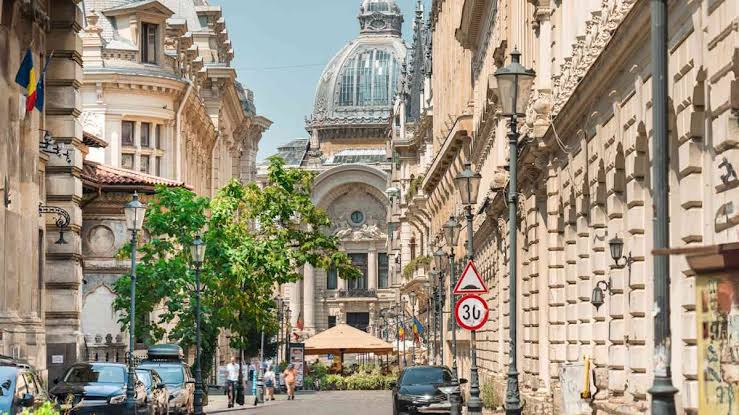
I would like to express my thanks to Clara Burghelea and her team of translators for the work thery have put into producing this supplement of contemporary Romanian poetry. [The editor]
*****
Clara Burghelea has published two poetry collections: The Flavor of the Other (Dos Madres Press 2020) and Praise the Unburied (Chaffinch Press 2021). Her poems and translations appeared in Gulf Coast, Delos, The Los Angeles Review and elsewhere. She is the Review Editor of Ezra, An Online Journal of Translation and the Translation Editor of Reunion: The Dallas Review.
*****
Introduction
The Romanian Supplement responds to an invitation from editor of High Window, David Cooke. The review hosted four of Ștefan Manasia’s poems in my translation back in February and I can only hope this piqued the editor’s interest in more Romanian poetry in translation.
The supplement includes the work of eight translators, some of whom also happen to be exophonic poets: Lucia Cherciu, Monica Cure, Romana Iorga, Diana Manole, Mihaela Moscaliuc, Gabi Reigh, Andreea Iulia Scridon and Claudia Serea. Exophony describes writing that occurs in an adopted language. Exophony allows writers to explore the nuances of a new language – English in this instance – expand their creative potential, challenge existing linguistic assumptions, and reach a different readership.
The translated poets – Leonard Tuchilatu, Dan Sociu, Nora Luga, Emil-Iulian Sude, Aura Christi, Irina Nechit, Lena Chilari, Ana Herta, Letitia Ilea and Lucia Cherciu – share a keen eye for striking imagery and a genuine commitment to evoking real human thoughts and feelings about the world. The supplement stands as an invitation to the reader to join these poets in ‘a rendezvous at heaven’s gate with a fig tree growing from each hand’ as Nora Iuga says. Ranging from lyric to narrative, the poems blend musical quality, and emotional intensity with vivid imagery and experimental form. At the end of the reading journey lies the promise that “you are alone in the land of your being. /Everything outside of you returns you to yourself, rescues you. /Blessings abound, everywhere” (Aura Christi).
Equally important, the supplement finds its strength in the work of these translators who rendered into English the unexpected, evocative metaphors and descriptions of the original. Not only do they bring the work of already well-known and unsung poets to the English audience but they also revitalize the original work, invigorate language and their own creativity. As exophonic translators, some of them, they challenge the existing norms of the binary translation, bringing a fresh, personal contribution to this exchange, and thus illuminating on concepts such as identity, language ownership, visibility and creative exploration.
*****
The Poets
Leonard Tuchilatu • Dan Sociu • Nora Iuga • Emil-Iulian Sude • Aura Christi • Irina Nechit • Lena Chilari • Ana Herța • Letiția Ilea • Lucia Cherciu
*****
Leonard Tuchilatu: Four Poems translated by Romana lorga
RAPTURE
Today my world died. I no longer know
what’s happening.
I have no use for you any more,
yellow paradise flowers.
I’m drunk with the news and I sing
an old song that rings out
like the chimes on the Kremlin.
I sing and my sounds leave me,
they leave me
empty to the brim,
until the place where I sit clears up,
giving birth to chaos,
to an inferno unseen by anyone,
giving birth to an immortal
underground life, known
only to you, vanishing cyclops.
THE BALLAD OF CRAFTSMAN MANOLE
A pitcher for my misplaced body,
so I can see the curved sky
through a minuscule ring,
where I enter
carried forth by this unreal world.
A sign of gratitude
from the cattle
who drum pain into my body
to hasten my exit.
I become legend
such as I am,
having said nothing uplifting to anyone.
Then I’m born again
in the voices of my people.
Once they wall me in,
all that’s left to do is receive
unfamiliar joy,
brought on by the months of the year.
I am a pilgrim –
not of my own will, not by command
from that tiny heaven I glimpse
through the narrow mouth of the pitcher.
Soul pilgrim.
SOMEWHERE AT NIGHT
Somewhere at night, a sleeping star
is rattled by pitiful barking.
Somewhere at night,
the moonlight awakens a singer
hanging on tense, tremulous threads.
Somewhere at night,
darkness gives way to a window
pouring light into the late hour of roosters.
This is the home of high waters,
where mother still sings a mournful song,
sent with the birds to find me
here, where I wander, attempting to suppress
the sadness of a grimly tolling bell.
(From the collection Fata Morgana)
translated by Romana Lorga
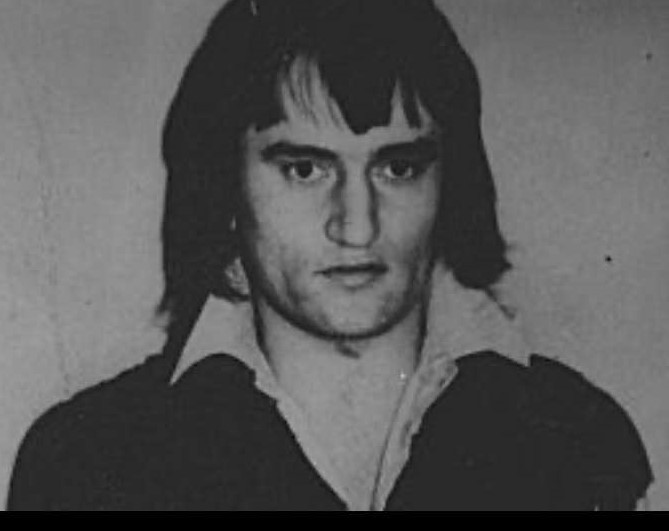
Leonard Tuchilatu (1951-1975) was a Romanian poet from Moldova, one of the former soviet republics. He died of an incurable illness at the age of 24, after being subjected to multiple disciplinary punishments during mandatory army service (the ruthlessness of the soviet military abuses is infamous in the post-soviet territories). Though virtually unknown outside Moldova, the poet has gathered a following among several generations of Moldovan poets. Posthumously published work: Sol (1977), Fata Morgana (1989), the anthology Sol. Fata Morgana (1995), and the bilingual (Romanian/Russian) collection Rapsodie (2001).
*****
Dan Sociu: Five Poems translated by Monica Cure
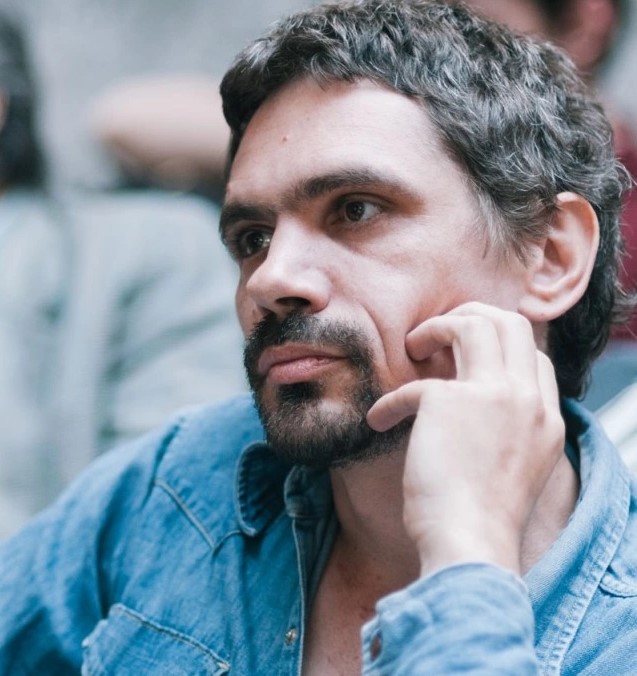
photo © Ciprian Hord
***
I saw Taylor Swift
at the bus depot market
she was wearing fake leather pants
stretched over her butt by God himself
she got on the bus headed for Cîndești
with bags from Penny
juicy tomatoes ice cream
she knew it would melt before the border
but she smiled mysteriously
secretly
she likes eating it this way more.
***
If I had to choose between you
with your loathing of spiders
and the spider in the bathroom,
discreet and delicate, at my place
for half a year without criticizing me
without complaining
about the spot we’re trying to survive in
I’d choose you, obviously,
but when I’d go to kill it
and flush the toilet
and I’d see its thin
gentlemanly legs, swirling away
I’d feel bad about it
and pull you into the bedroom
to fuck you angrily
how you like it best
***
Goodness isn’t simple
at the Burdujeni train station
a homeless man shit
himself
and was calmly walking around
with his blue eyes
everyone held their sleeves
up to their noses, as if after an attack
of sarin gas
I gave him 1 leu
and the woman at the ticket
counter looked at me
reproachfully
I was leaving
but she was staying.
***
To each his own—
Peace Gardens cemetery
for him who wants to be alone
for him who wants eternity
Eternal Hills cemetery
***
Last night I found a phone on the bench
next to the maternity hospital
belonging to a gay guy
I read his Grindr messages
when I returned it to him he wanted to buy me a drink
and tugged on my arm, come on come on
he was over 30, nonexistent lips
but I thought that if I went
I might start liking it
and I couldn’t have stood all the sadness
of being gay in a small town somewhere
in their depressing gatherings
in the secretive apartments
of poor people, like him
from villages, on disability,
because I saw the documents on his phone,
something of an alcoholic, he asks a guy
if he got the change the previous night
from the bar, his mother had also died
in the spring, he too was hungry
for affection, someone asked him
on Grindr if he does anal and he
said yes if you kiss me, I wouldn’t have
kissed him even if I felt like it
he looked as if he had oral herpes
maybe he didn’t but that’s life
I immediately pulled away
when some guys yelled
out their window, fuck him up
they saw him pulling my arm
and thought we were fighting.
(From the anthology Vino cu mine stiu exact unde mergem 1999-2014. Translated by Monica Cure)
Dan Sociu (b. 1978, Botoşani, Romania) has worked as a journalist, translator, editor and copyeditor, but is best known for his poetry. He has published nine books of poetry, three novels, and prose and poetry in both Romanian and international literary journals, for which he has won numerous awards. As an English to Romanian translator, he has translated over 20 novels, and the poetry of over 30 British and American poets, as well as articles and plays. He has been an artist-in-residence in the U.S. and Germany.
*****
Nora Iuga: Six poems translated by Claudia Serea
1. Before I started writing, I felt my intestines like tourniquets pulled by brutal, rushed hands, I don’t even know exactly how pain was formed and what was it calling. Anyway, you didn’t understand that pain calls more on desire, that this writing, more immaterial than a dream, heard and came to me the way Montaigne’s stifled cough came back one evening in 2005 in the old City Hall building from Bordeaux when a violinist tunes his violin in front of the fireplace.
2. and suddenly the dune Pyla appears in front of me, which I have forgotten there, by the ocean, where Europe’s hem gets into the washbasin full of water, how long is your skirt, Europe, you’re so old fashioned. I have memories of Teodor, of the poem read in Literary Romania; of a boy in a blue dress, of the hair of a mother grown by the two eyes of a child of the lilies that tie an alcove to a chapel, and brown scabs appear on my knees, I tear and chew them, they are sweet or salty, I don’t know. in my hands I hold a wooden circle. look how the black rags fly on the horizon; is it time that’s burning?
3. I fall asleep and this window always bangs against its wooden frame and wakes me up, the way the palms of the anesthesiologist insisting to revive me, the trifles place themselves in the brain compartments as in a pencil case and I want to write about a light green flower, by the way, did you ever see a light green flower with a hickey on its neck? Anni doesn’t answer, she’s taking her Gerovital.*
4.
Anni is the orange in the fridge
Anni is the odd sock
Anni is the collared blackbird
that pecks at the lovage
Anni is the girl who blows smoke
in Mr. Montaigne’s face. Anni, Anni, Anni
is la vie en rose when that tall and thin Black man
tells her: You, shorty.
5. and after two hours in the Bordeaux train station. This high-speed train scares me, you wouldn’t understand, I can’t rush love, how many broken straps my slips had because of all the men who rushed.
6. I write so I can’t think. I write so I don’t cry. I write so it doesn’t hurt. Look at him, how he sleeps there on the Rhine River, the White Russian who gave me a rendezvous at heaven’s gate with a fig tree growing from each hand.
*Gerovital is a drug against aging.
(From the collection The Little Girl with a Thousand Wrinkles)
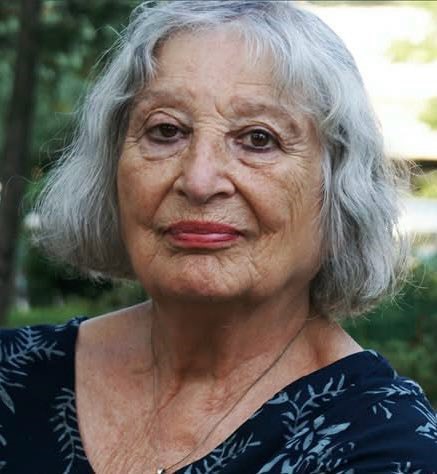
Nora Iuga is a multi-award-winning Romanian poet, writer, and translator. She is a leading voice in Romanian poetry and literature, author of over thirty books of poetry and prose. She was censored by the communist regime of her country early in her career (1971–1978). She is a Germanist and worked as a journalist and an editor i.a. Her writing is rich in unexpected, surreal, sensuous imagery. Her are published in Germany and other European countries. In the U.S.: The Hunchbacks’ Bus (2016) and Dangerous Caprices (2023), translated by Adam J.Sorkin and Diana Manole. She translated about 50 volumes of poetry, fiction, and essays from the German (Günter Grass, Paul Celan, Ernst Jünger etc.). She participated in numerous national and international literary events. Among her distinctions: the National Award “Pour le Mérite” by the German President (2000) and the National Award “Pour le Mérite” by Romania’s president (2017). She is a member of the Writers’ Union and of PEN Romania.
*****
Emil-Iulian Sude: Three Poems translated by Diana Manole
WE’RE ASHAMED OF THER DIGNITY SOMETIMES
which occasionally the security guards
from the Mega Image supermarket.
the guards of the same ethnicity
think dignity is a dishrag.
just watch how they let their eyes wander. some puppies
to chase us some rags. we go down an aisle
they’re already in front of us. we aren’t dressed that great.
the smart guy suits are on the clothesline hanging out to dry.
God forbid we’d tuck a few ponies of beer
under our souls
maybe a loaf of bread. they think we’re collectors of liquid barley
and leftovers of
pork or chicken in nylon bags
with which you cover the furniture outside
when it rains
just watch how the cashiers
lean toward that red chest cavity. to see us
unbutton our jackets we take everything out
from our breast pockets with a sense of guilt although
our blood is pure red through and through.
we’d better ask
bread to be cheaper
ask the ponies to be cheaper
ask the bologna to be cheaper.
Mega Image has security guards of the same
blood colour. guards guarding the guard.
only yellow t-shirts separate us from the same slavery
when they put us in horns
and muzzles to stop us eating the grapes we picked
we sometimes wonder if the dignity of our ethnicity
ends at Mega Image or with the roma guards
who pretend to be gadjo.
BRUH, TAKE THIS KID AND RAISE HIM
stop hitting him in the head at dinner
’cause the gypsy’ll stay short and dumb
the engineer was drawn
on an A4 sheet in red ink
out of an immediate love with many consequences
he gave me away. he was missing
arms to hug with. said he had aromanian blood secretly mixed
in mom with toy cars as bait. i had no reason to
to doubt it. not even God knew.
the third father put himself on my birth
certificate so i’d carry his name in black and
white in my wallet – i had to have a family name.
i dreamed of opening a rosé champagne
but didn’t catch him alive. we treated ourselves
toasted with plastic cups
watched the grass grow.
my mother read a cubic meter
of books at a time. she fell in love with prince charmings in tears
woke me up every morning an hour earlier
afraid i might start worrying again
that i wouldn’t find the school.
the fake father was never fake. neither the engineer.
they made a bright future for me i never
huffed paint to enlighten myself. nor had a briefcase.
i sneakily ate a lot young sprouts burst from
my nose ’cause of the potatoes. in my neighborhood
i was mr. engineer at six
the children’s clown genius.
i was happy playing soccer.
happier at the comparative degree
when reading a book of fairy tales
undying.
LIKE A HEAD STEWARD STRETCHES
the missus who reads us off
from the list. with shoulders
to the ground we wait
with love for the expired stuff
from malls. what’s thrown away by others
is just right for us.
for those of us who’re still alive
a kind of death on rerun
we’re happy about the 50-percent-off
sticker a circle of life that
will someday carry us
to all the good in the world
we wait upset with consumption but not
of the lungs consumption of life
we loosen our expectations of the steward
our eyes are watering maybe-just maybe
she’ll call us too
let us fill our raffia shopping bags with
with shiningly-wrapped edible happiness
watch how the gentlewomen get out of the cabs
we hide our hunger in our chests
afraid they’d take out of the trunks their
bottomless shopping bags and leave us
to eat each other
oh what delicacies among the even more
expired expired only the bloodsuckers
from the upper floors can afford them but
we’re happy
we the ones who dwell in the basements of the
sumptuous apartment buildings were told
by the one who we were told
how to hide our hunger in a desperate fullness.
we grow bellies and tumble away between
the apartment buildings.
electric kick scooters. we don’t tell anyone
oh what a stale taste. the imprint on the roofs of
our mouths the payment for past lives
let’s stop spilling the beans all over bucharest
that at the north train station when
day meets night we don’t know
what day we don’t know what night.
the even more expired. expired delicacies start
racing to our fridges to let us save
our money for beer and ciggies.
(From the collection The Security Guard at Night)
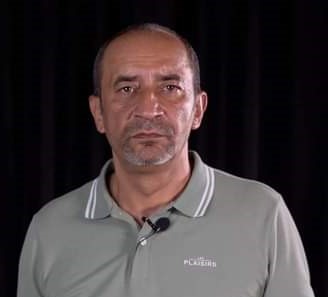
Emil-Iulian Sude is one of the first award-winning poets of Roma ethnicity in Romania. He published five collections of poems, including Paznic de noapte [The Security Guard at Night] (Casa Cartilor, 2023), which is forthcoming in English (tr. Diana Manole) from Laertes Press (US) in 2025.
*****
Aura Christi: Two Poems translated by Gabi Reigh

NIGHTTIME IN THE MOUNTAINS
Nighttime in the mountains, scattering
Cries of anonymous birds
Through the forest I’ve never escaped
Where the centuries grow in rows
In the cavern of my estranged body
Like lapsed anchorites.
No sound furrows
my flesh. No tremor. No call.
From time to time, something like a presentiment,
Like a secret sixth sense
That I understand no more than myself
Fixes me to the ground in front of the window
And my sunken eyes stare
Into the rustle of the cosmic gaze.
In my endless white peace
The night and an inscrutable other
Reshape themselves into everything
That was once quaking oblivion.
SOMEONE IN THE NIGHT
Someone, greater and stronger than you,
Looms from the night,
Drawing closer, on tip-toes.
He touches you. A touch like a breeze,
A strange light buried under eyelids.
Then – with infinite care – he swallows you,
Gifts you back to the world,
More of a child than when you were a child,
More than you could ever be.
You loiter in sleep as if in a verse;
Holding your breath.
You’ve forgotten your wanderings
Or when you returned to your body’s carcass
So much lighter now: the body of a boy, of a girl.
Who knows if this will be your last night
Of cosmic wanderings.
……………………………………………………………
The morning rouses itself from your body
With the skill of an ecstatic inquisitor
Deep in thought. Everything is pure, soaring, ablaze!
Everything you touch transforms
Into the flesh of the impossible.
Everything is reborn – second by second –
As if for its last life. Or so it seems.
Yes. It seems to you that everything
Is thrusting itsef into existence; here,
In the land of unknowing,
In the dead silence heralding a new destiny
That absorbs you against your will. Almost.
Each thing is reinvented. Like a child,
You name them: water, fountain, grass, path,
Steps, horse, flower, sky… and then again,
Again: water, fountain…
You are alone in the land of your being.
Everything outside of you returns you to yourself, rescues you.
Blessings abound, everywhere.
Another orbit: the clock of destiny
And iron sky bears heavily upon you –
Heavier and heavier!
The scent of perdition, mingled with late roses.
The road is long,
The air heavy,
The evening diaphanous, Lord,
And so vast!
The gods break out from night’s temples,
From their torturous depths: hidden inside you.
You reshape yourself from the soot of night terrors.
O, rarefied silence! O, nameless,
Untouchable, invisible things
That chain you to their flaming core!
From these you were born, last eternity.
To these you must yield. Listen. Worship.
The nights are your song. Their sufferings, yours.
Separation. Misunderstandings.
Estrangement. Solitude. Bread.
Wine. Eyes. Water. High noon.
Meanwhile, the lions unleashed from your gaze
Dance and tear each other to pieces.
Dance and tear.
In groups of three, of seven
They dance.
(From the collection Austere Gardens)
Aura Christi was born in 1967 in Chișinău, The Republic of Moldova. Three years after graduating from the State University, School of Journalism in 1990, Christi retrieved her Romanian citizenship and settled in Bucharest, Romania’s capital. Since then she has established a remarkable reputation as a poet, novelist, dramatist and essayist, with more than thirty-five books to her credit, and many national and international prizes. Christi’s poems, novels and essays have been translated into French, Russian, English, Swedish, Greek, Italian, Spanish, Hungarian, Macedonian, Chinese, Korean, Bulgarian, Polish, Albanian, Turkish and Hebrew. The poetry collection Austere Gardens was published in 2010 and has been translated into German and Spanish. Translations of Christi’s poems were also included in the anthology Women at the Border – Ten Romanian Contemporary Poets published in Spain in 2022, alongside others by celebrated poets such as Ana Blandiana, Nina Cassian and Ruxandra Cesereanu.
*****
Irina Nechit: Three poems translated by Mihaela Moscaliuc
WITH WHITE GLOVES
I handle my demons and yours with white gloves
and they know this too
so they put their white gloves on
No matter how much they want to break our bones
they don’t
and won’t pierce our pupils either
no matter how hard they wish they could
I’ve felt their eyes bore holes in the back of my head
and wanted, so many times, to turn around and say
good evening good evening good evening
for it’s only at night that they materialize in dark alleys
I would have tried to hold my tongue, hold back reproach
and shake their hands vigorously
undaunted by the cold
my hands are colder
especially at night when I get off
that last trolley with frozen windows
We would have touched one another’s fingers
mine shorter, theirs longer
but we each wear white gloves
so white we would have been the envy even of Michael Jackson.
VISIT MORE OFTEN
I shuffled through papers and cardboard
chewed through a thousand plastic bags
to reach you
Get me a trap in which I can sleep
for forty-eight hours without thinking
of mother’s swollen feet
mother who’s asking that I visit more often
knowing I won’t
Only spiders have sound feet and race through streets
they are the real champions
Send me back to where a red planet
is waiting to dive into my jugular
drink my blood like a tick.
BURKA
The Taliban stretches its arms,
throws a burka over me,
I wriggle under its folds,
search for holes through which to peer,
pull it down over my head.
I’ve disappeared inside the burka,
armless and legless,
no chest,
no abdomen,
just a bundle of flesh, bones, intestines.
All that reaches me through the holes
are some hints of light.
I can’t see my palms,
can’t see my nails,
can’t see the mother-of-pearl buttons on my blouse,
can’t see my knees,
can’t see my self,
I stand frozen under the burka,
afraid to step into the street.
I, who’d walk through town by myself,
slip through crowds
unaccompanied,
I who’d write, think, read
by myself,
drag my loneliness
unaccompanied
through narrow alleys,
now have to wait for the mahram,
for a mahram to get me out of the house,
for a mahram to show me the world.
And to think what I’d endured
to exit the house when I pleased
and walk alone where I could listen to the sounds of my own steps,
hear my own thinking
and rescue my dreams from oblivion,
and now the Taliban gets to dictate what I can and can’t see,
where my next step goes and where not even my shadow
should make itself visible.
Do I even have a shadow
when I pull the burka
over my head?
Am I still here
or elsewhere
or anywhere at all?
The Taliban stretches its arms
over parched countries,
over snow-covered mountains and fruiting valleys,
dumps millions of burkas
and we can’t see the sun,
and no longer have eyes,
only some holes that fill with darkness.
(From the collections Maria și Arma (2024), and Copilul din mașina galbenă (2010)
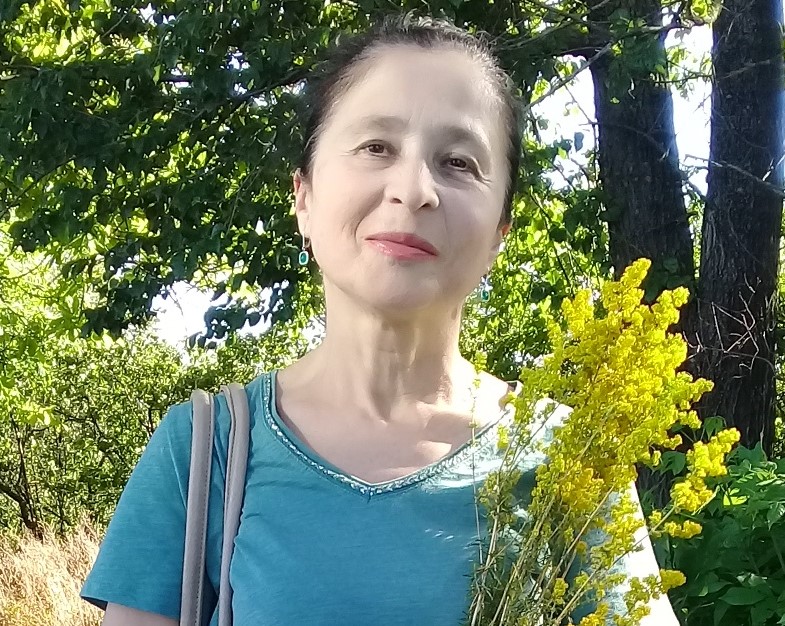
Irina Nechit (1962- ) is a poet, journalist, critic, translator, and well-known playwright from the Republic of Moldova. She has published several poetry collections, the most recent being Copilul din mașina galbenă/The Child from the Yellow Car (Ed. Cartier, Chișinău, 2010) and Masa de sărbătoare /Holiday Feast (Editura Cartea Românească, 2020). Her play Eu am vorbit cu Putin/I spoke with Putin (2023) was selected as winner and stage read at the National Theater Vasile Alecsandri” (Iași, România) in 2023.
*****
Lena Chilari: Poem translated by Andreea Iulia Scridon
when i was little
i was born with my umbilical cord
wrapped around my neck
when i was big
i choked on the flesh of my own fingers
when i was little
i asked my mother to love me
and she turned her back to me and i cried
when i was big
i thought for a long time that this was
the definition of love and i floundered
when i was little
i saw the earth quake
under my father’s laugh
now that i’m big
i understand that my father can be none other than
the heart of the earth
when i was little
i wanted to be skinny and have long hair
when i’ll be
Big
i became so beautiful in my soul
that it spilled over my constantly shorn hair and
it doesn’t even matter how i look anymore
my poetry isn’t a pretty word and a rhyme
my poetry is life and its pain
then ink then keyboard
then agony then pleasure
and finally healing
the stigma of feeble loves
i wear it in the cracks of my soles
while i straighten my spine
And raise my head to the sun
little or big
tiny lena or elena
five or twenty-five
chilàri or chìlari —
a back turned away does not define me
and the earth cracks under my soles
blessed by callouses
there is nobody on earth happier than i am
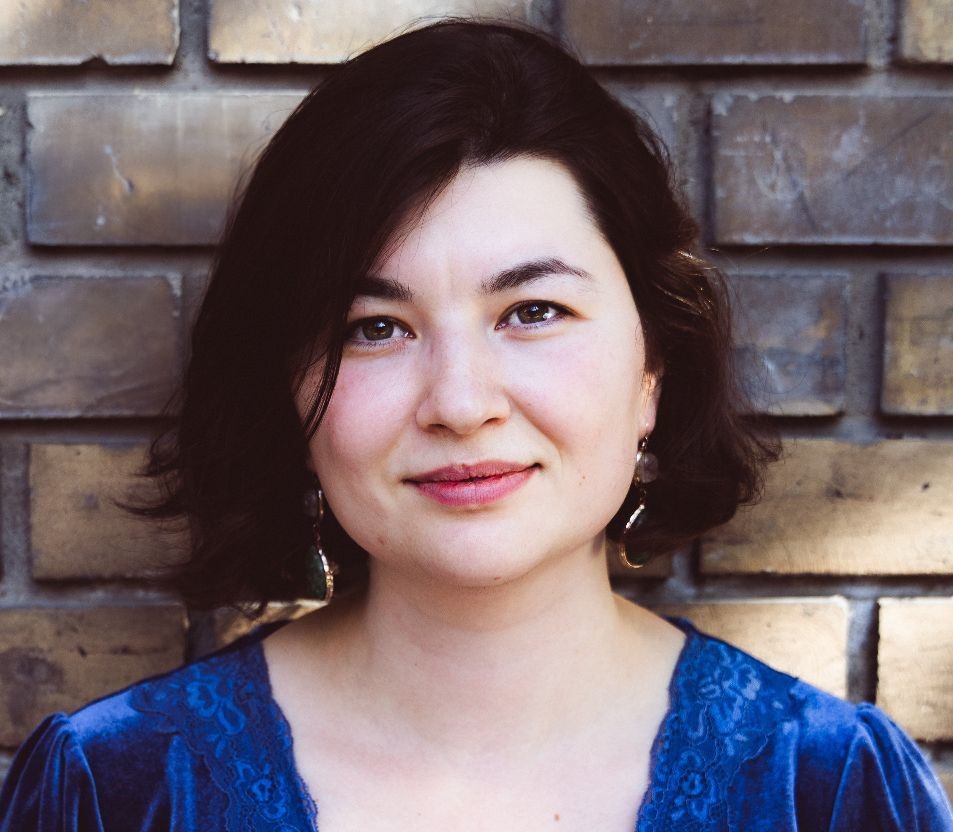
Lena Chilari was born in Pepeni, Republic of Moldova, and studied literature in Cluj. She was awarded the Alexandru Mușina Debut Prize for her first book, o cană de noviciok la bătrânețe (“a cup of novichok for your old age) in 2020 and published a second book, Ludmila răstoarnă munții (“Ludmila topples the mountains”), with Max Blecher Publishing House
*****
Ana Herța: Poem translated by Andreea Iulia Scridon
THE DOLL WITH THE LITTLE PINK DRESS
Only your arms can measure my distance
I tell you as I lie on the grass that pinches my skin impudently
You know, when I was a little girl I had a doll that was
50 centimetres tall and wore a little pink dress
I wasn’t allowed to touch her —
my soul forced to learn the meaning of distancing
on holy days I kidnapped her and ran to the attic barn
where I made a bed for her and parents out of straw —
spectres to become reality in a series of stages
then I would carefully take her back to the good room
And for a long time afterwards feel weighed down by guilt
Like the guilt of being born
It took thirty years of playing with life to be able to mirror myself untroubled
in the glass eyes of dolls in toy stores
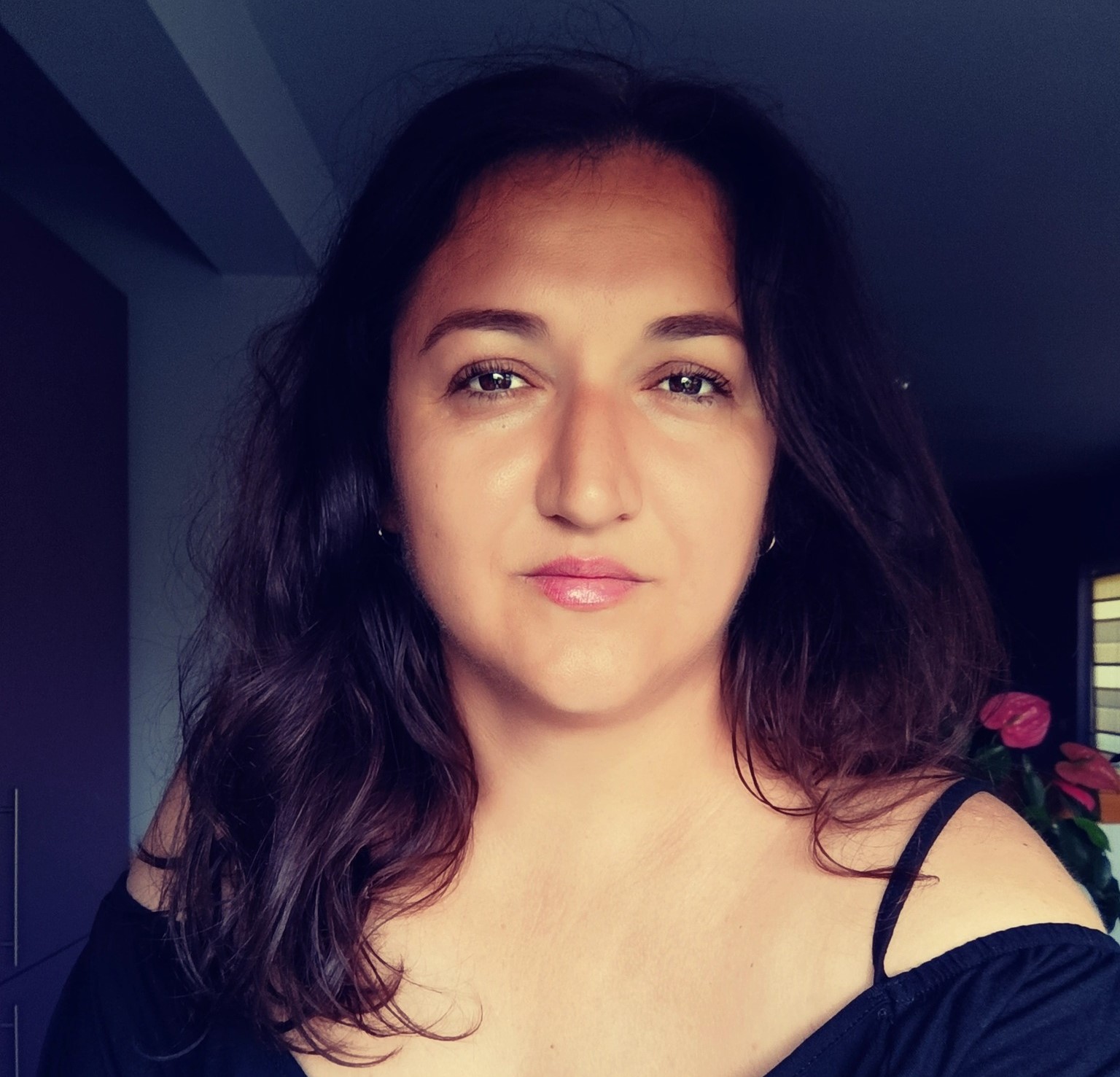
Ana Herța was born in Năsăud and studied Psychology at UBB Cluj-Napoca. She was awarded the Debut Prize of the Romanian Writers’ Union in 2022, after debuting simultaneously with prose and poetry in 2021. Her latest poetry book, Poeme de lut, (Clay Poems) was published in 2024.
*****
Letiția Ilea: Poem translated by Andreea Iulia Scridon
WITHOUT MOM
it’s been almost a year without mom.
i still haven’t written the poem that would capture
what cannot be captured.
her voice telling me to be careful when crossing the street
even though my hair has started turning white.
her constant worry
which i seemed to feed almost on purpose.
her eyes with their weakened sight barely discerning the pages
of the literary magazines i receive.
the minute gesture of wiping the dust off books collected
across an entire lifetime knowing she won’t have enough time
to read them.
the way in which she nursed her sister with her own final days.
her sister outlived her by exactly seven days.
before me lies a pile of old photographs
she knew the history of every face: where they lived how many children they had
when they died. i was always thinking of something else when she explained
these things. therefore i obviously don’t remember anything.
now i’ve lost those faces too those distant relatives old friends. they’re gone too.
wherever they are they must have bumped into mom who as she was so often
is embarrassed by her weird daughter.
most of all i miss her laughter which was “like a grenade”
— so her elementary school friend would say —
most of all i miss our invested words
which are now useless
most of all i miss everything. her.
it’s been almost a year.
the dog is still waiting for her.
every time we come back from a walk
Hh sniffs the whole house maybe just maybe she’s back.
i don’t know what i did this entire time
nothing durable nothing that would make sense
the small despairs from my old poems now seem meaningless.
i often dream that mom is caressing my forehead
as she did when i was sick during my childhood.
i feel her vast palms with their skin roughened
by the work of a lifetime
maybe what comes next really is a prolonged sickness
punctuated by springtimes that no longer bring joy about
disappointments lost friendships.
i feel like i’ve hit the highest threshold and the lowest at the same time.
such a strong and drawn-out pain that it numbs you.
there’s nothing more can be done
someone mix the cards up again
take me by the hand
and help me cross the street.
Letiția Ilea is a poet from Cluj-Napoca who has published several volumes. As a translator, she has translated multiple volumes of poetry from French to Romanian and teaches French at the city’s university.
*****
Lucia Cherciu: Three Poems translated by the poet
INSOMNIA I
From so much silence the windows break
the silver falls off mirrors
and if you can hear the dogs barking in the night
if you can hear the gulls in a droughty Bucharest
if you can hear the vibrations on the church steeple
then you know that insomniacs are praying
their veins dilating like train tracks in a hot summer
From two to five
insomniacs are counting their breaths
wailing in the night
the lights coming in from one corner of the house to another
from one room to another
like someone who walks from one side of the train to another
looking for his friend who, he doesn’t know,
hasn’t boarded anymore
LIST
Pistachio ice cream
mango sorbet
vanilla and caramel
chocolate profiterole
and raspberry sauce
Domneşti apples
oranges
pineapples
bananas
guavas
fat cherries
moscato grapes
bean soup
with a lot of lovage
from the garden
with leeks
from the farmers market
pork ribs
smoked in the attic
for three weeks
and started only after
Epiphany
two-hand tall
Easter bread
made at home
with twelve eggs
and filled with cocoa
large ground walnuts
raisins
and glazed with egg wash
a bottle of plum brandy
and a towel
to give away for my father’s soul.
THE LUGGAGE
A bottle of plum brandy
an abecedary for a friend from San Francisco
whose daughter can barely say a couple of words in Romanian
plates from Horezu
wrapped in a hand-embroidered towel
for covering the laptop
lovage seeds
to plant in pots on the windowsill
in spring when I start to count
the days till summer
a jar of bitter-cherry preserves
a package of linden flowers from the garden
fresh newspapers for a friend from Florida
who’s not content to read them online
a drawing of an airplane
from the five-year old niece
in which one can see the travelers through the window
a book of poems by Blaga
the camera with the seven hundred pictures
from the Vrancea Mountains
my father’s prayer book
in which he kept an old diptych
as a bookmark
and next to the passport with many visas
above all
from my mother
a small icon she received as a dowry
when she moved to the neighboring village
and now the icon with the Mother of God
hangs above the bed
across the ocean.
(from the collection Lepădarea de Limbă)
Lucia Cherciu is a Professor of English at Dutchess Community College and served as the 2021-2022 Dutchess County Poet Laureate. She is the author of six books of poetry, including Immigrant Prodigal Daughter (Kelsay Books, 2023), Train Ride to Bucharest (Sheep Meadow Press, 2017), which received the Eugene Paul Nassar Poetry Prize, Edible Flowers (Main Street Rag, 2016), Lalele din Paradis / Tulips in Paradise (Editura Eikon, 2017), Altoiul Râsului / Grafted Laughter (Editura Brumar, 2010), and Lepădarea de Limbă / The Abandonment of Language (Editura Vinea, 2009). Her work was nominated multiple times for a Pushcart Prize and for Best of the Net.
*****
Translators
Romana Iorga is the author of Temporary Skin (Glass Lyre Press, 2024) and a woman made entirely of air (Dancing Girl Press, 2025). Her poems have appeared in various journals, including New England Review, Lake Effect, The Nation, as well as on her poetry blog at clayandbranches.com.
Monica Cure is a Romanian-American poet, writer, and literary translator currently based in Bucharest. She is a two-time Fulbright grantee and her poems and translations have appeared internationally in journals such as Poetry Northwest, Graywolf Lab, Kenyon Review, Modern Poetry in Translation, and elsewhere. She is the winner of the 2023 Oxford-Weidenfeld Translation Prize for her translation of Liliana Corobca’s novel The Censor’s Notebook. Her translation of a volume of selected poems by Dan Sociu is forthcoming with World Poetry Books.
Claudia Serea is a Pushcart Prize winning poet and translator. She has published seven poetry collections, most recently In Those Years, No One Slept (Broadstone Books, 2023). Serea is a founding editor of National Translation Month, and she co-edited and co-translated The Vanishing Point That Whistles, an Anthology of Contemporary Romanian Poetry (Talisman House Publishing, 2011). She also translated from Romanian Adina Dabija’s Beautybeast (Northshore Press, 2012) and Iulia Militaru’s The Seizure of the Beast. A Post-research (Guernica Editions, 2023). She co-edited Shattered: Artists Inspired by Artists (New Meridian Arts, 2024), an ekphrastic poetry collection protesting the war in Ukraine. She writes, translates, and edits manuscripts in Rutherford, New Jersey.
Bucharest-born Diana Manole is a proudly hyphenated Romanian-Canadian award-winning writer, literary translator, theater artist, and scholar. She translated three Roma plays from Romania, and numerous Romanian and Canadian poems featured in magazines. Diana was awarded the 2023 Lunch Ticket Gabo Prize for her translations of Emil-Iulian Sude’s work.
Gabi Reigh moved to the U.K. from Romania at the age of 12 and now teaches A level English. In 2017, she won the Stephen Spender Prize which inspired her to translate more Romanian literature. As part of her Interbellum Series project, she has translated interwar novels, poetry and drama by Lucian Blaga, Liviu Rebreanu, Mihail Sebastian, Hortensia Papadat Bengescu and Max Blecher.
Mihaela Moscaliuc (1972-) is the author of Cemetery Ink (Pitt Series, 2021), Immigrant Model (Pitt Series, 2015) and Father Dirt (AJB, 2010), translator of Carmelia Leonte’s The Hiss of the Viper (Carnegie Mellon UP, 2015) and Clay and Star (Etruscan, 2019), editor of Insane Devotion: On the Writing of Gerald Stern (Trinity UP, 2016), and co-edited of Border Lines (Knopf, 2020). She is a 2025 Guggenheim Fellow and teaches at Monmouth University, NJ. https://www.mmoscaliuc.com/
Andreea Iulia Scridon is a Romanian-American poet and translator. She is the author of several poetry books in English and Romanian and has translated multiple books of poetry and many works of prose from Romanian to English.
*****
Previous Translations
THW 36: Polish • 2THW35: Bulgarian • THW34: Czech • THW33: Flemish • THW32: Marina Tsvetaeva • THW31: Greek • THW30: Swedish • THW29: Galician • THW28: Galician • THW27: Early Irish Poetry • THW26: French-language Poetry from Africa and the Arab World • THW25: Contemporary Hebrew • THW24: French • THW23: Italian • THW22: Russian • THW 21: Austrian • THW 20: Macedonian • THW 19: Swiss-German • THW 19: Spanish • THW 17: Franco-Canadian • THW 16: Modern Greek • THW 15: Kazakh • THW 14: Hungarian • THW 13: Polish • THW 12: Classics • THW 11: Catalan • THW10: Hispanic • THW 9: Hebrew • THW 8: Bulgarian • THW 7: Japanese • THW 6: Dutch • THW 5: Portuguese • THW 4: French THW 3: Italian • THW 2: German • THW 1: Italian
 The High Window