*****
Thomas Alexander Gaul: Four Roman poems
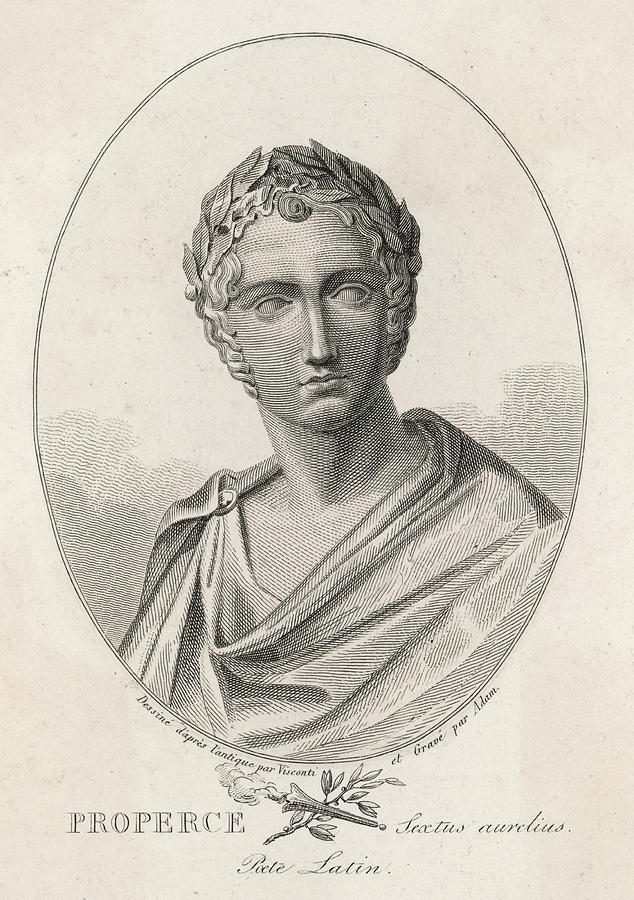
AFTER PROPERTIUS (3.10)
I heard a scratching in the depths of sleep, then chatter:
xxxxxThe Muses, perched like birds on my bedpost,
Asking, with sly smiles and winks, if I recalled
xxxxx What day it was, then, with three handclaps,
Answering themselves: Cynthia’s birthday!
xxxxx I threw the shutters open to the dawn,
A bright, calm day: let it continue thus.
xxxxx Let the clouds wreathing the mountain tops
Remain a decoration and the ocean waves
xxxxx Caressing the beach below simply provide
Soft background music. A day without sorrow
xxxxx Or its memory: just for today
Let the stream of tears that runs from the rock
xxxxx That was Niobe cease; let the bird
That once was Alcyone sing pleasantly
xxxxx And delight us with flashes of blue plumage;
Let Procne rest for once, or if she wants to sing,
xxxxx Let it not be laments for her son.
Cynthia, your signs are most auspicious,
xxxxx So greet the day. The gods await your prayers,
But, first, wash the sleep away—splash your face,
xxxxxAnoint your skin with pure spring water;
Tidy your tousled hair with your fingertips;
xxxxxGarland it; then, slip into that dress—
You know the one I mean—the blue dress you wore
xxxxx When first you caught my eye; and look, my dear,
As you straighten it, admire your own beauty,
xxxxx And pray that you will always turn my head.
At the flower-covered altar burn incense
xxxxx And fill the house with its sweet perfume.
Then think of the evening’s plan. There will be friends. Wine.
xxxxx Someone will pass around an onyx jar
Of myrrh to assail our senses with saffron.
xxxxx The musicians will play dancing songs,
Will exhaust themselves and us. Then you will tell
xxxxx Some risqué story, blushing, catching my eye
Through the candlelight and this will start our friends
xxxxxSwapping amorous confessions
Until, inevitably, everyone tipsy,
xxxxx Insults, kisses are exchanged on the street
In the early hours, laughter, shouting, song
xxxxx Echoing long into the city night.
Alone, we roll the dice to decide finally
xxxxx Who has been brushed hardest by Cupid’s wing.
Drain the last glasses. I notice your bare feet.
xxxxx It is past midnight and I say,
“You are one day older now! Your birthday’s done!”
xxxxx And you reply, “There is one last thing!”
We complete the rite in bed. “Someday you will be old,”
xxxxx I sigh. “Ah,” you say, “but not tonight! “
*****

AFTER C ATULLUS (68) OVID (HEROIDES, 13)
I wait for you in this private place
That I have dreamed for us: a pretty house
That sits by a lake at the end of a country lane
Where pouring from the many birds are songs
That celebrate the purity of love,
Where trees whisper of lovers’ impunity,
Where even the stones blush at the deeds performed.
And you find your way! I hear your careful steps
And the creak of your sandal, the strain
In the leather as, like a bowman grips the arrow,
You hold your fair white foot trembling
At the threshold between one life and another …
I think of Laodamia crossing
To Protesilaus hot with lust, unblessed—
No pledges had been made, no sacrifice
In the temple, no prayers. Heaven despises the proud.
He would be cut down first on an alien shore
Leaving her and an unfinished house behind,
Mounds of sand outside the door, sheets
Instead of windows. The petty gods demand
A bowl of steaming blood and a bent head
Before an innocent girl falls into bed.
She was unfulfilled that first day then he left.
The gods only award the scrupulous.
She waited. Winter. The year turned, and again.
Consumed with longing her mind ranged far abroad
From her half-built home, surveyed the wide oceans,
Crossed mountain ranges, and sifted through
The smoking ruins of Troy. Surely this,
This grinning skull has not his smile?
Surely this bony finger had never been
Clothed in skin that gently stroked her cheek?
For chairs the two had barrels, for a table
A plank of wood across two piles of bricks.
Protesilaus had left the place unroofed
And so she looked out at the stars and wrote
To him in trembling, childish script,
The wind whipping the candle she had lit:
“I write from where our kitchen should have been.
I should have called you back but my tongue …
It could not, out of fear, form any words.
Then when you stumbled at the door of your father’s house
And caught my eye and smiled I found a way
To say ‘My husband!’ and plan for your return.
When you do so come at night—I like the dark,
For then I think I see you rise out of the sea
Like the moon, climbing the path to the house
And peering over the half-built wall you left.
You seem afraid. Dawn comes and the dream fades.
I take this as an answer to my prayers. Know
That not an altar in Thessaly goes unadorned
By gifts from me. I sleep and pray and hope.
No god’s name goes unpronounced, unpraised.
The wine we got as a wedding gift is gone,
Splashed on holy flames.
xxxxxxxxxxxxxxxxxxxxxxxxxxxAn effigy
Of you I keep on my pillow, a wax bust
Someone taking pity on me made.
It is like enough to you to kiss goodnight
But my tongue cannot part its lips,
And a cold mouth offers no reward.
When will I feel your lips on me for real,
When will I place your hand between my legs
As impatiently you rehearse
Your bravery in battle, comrades’ deaths,
The noise of victory, the journey home?
There will be the greater delight for the delay
In having it, I swear. I will squeal
With joy at your stories and your touch.
xxxxxxxxxxxxxxxxxxxxxxxxxxxxxxxxxxxxxxA name
Carries on the wind from Troy, a whisper,
Whether a promise or a curse
I do not know,” but the tightness in her chest,
The heart-clutching dread that overtakes her now
Suggests she knows the answer: “the name
Is Hector, beware of his dripping sword,” sticky,
She sees in her mind’s eye, with her beloved’s blood,
“Hector of the ice-blue, flashing eyes.”
Nothing lasts.
xxxxxxxxxxxxxxxO, when first I kissed you,
Out amongst the ruins, the sun setting,
Cupid circled us like a moth. You gasped
When I found the small of your back. “I feel safe,”
You said, “in the strength of your arms.” Now you yield
To anyone. I don’t condemn the parade
Of lovers to your door. Why should you fear
The gods’ censure: the gods are guilty too
Of indiscretion; they learn humility
The same as us. I am not proud. You
Came to me not on your father’s arm
But secretly at night—no less a bride
For that, no less the gift! Your hesitation
At the threshold told me what I need
To know of loneliness and strength. Some
Of our days surely you want to remember
When darkness folds over you and the winter comes?
Some will you mark in red on your calendar
And place a white pebble on the window sill at dawn?
*****

AFTER HORACE (ODES 2.12)
I find no music in the Numantian war,
Nor in Hannibal’s cruelty, nor in the blood
Leaking from the defeated Carthaginians
To redden the sea off Sicily. Great creatures
In a frenzy—the blood-lust of the Lapithae,
The fury of the Centaurs—and heroic men—
Hercules subduing giants: the boom, boom, boom
Cannot be picked out on the lyre. You, my dear friend,
Can best capture it on film. How else to record
The humbling of the captive royals paraded through
The streets of Rome in chains? Shoot their downcast eyes,
Cut to a child laughing, cut to a ragged flag.
I sing of Cynthia, her eyes alive and clear,
Her voice melodious and true. Even from here,
Across this table, her breath’s in tune with mine—
Our two heart-beats harmonise and we need not tell.
Yearning! Yet the grace with which she says “tomorrow”!
She hums, eyes closed, when a song she recognises
Plays over the café radio. “Look, I fell…”
But she puts her finger to my lips. “Say ‘for you’
And I am done for, so do not say it.” The noise
From the kitchen declares they’re closing up. Laughter.
The sound of money being counted. She whispers:
“Who would want it?” My chair scrapes as I push it back.
I sing of her as she bends her neck for kissing,
Of her passion, her cruelty when outside she
Denies me, and I sing of when, denied in turn,
She pulls me to her, despite myself, takes from me.
*****

AFTER OVID (REMEDIA AMORIS, 211-244)
Unlearn love. Get far away.
Yes, your mind will turn to her,
But as the released prisoner
Recalls the bite of his prison chains:
Remind yourself how free you are
When memory of her creeps in.
Yes, you’ll weep—who could forget
That blue dress sliding to the floor—
So weep, but from a distant place.
You will hurt, but best endure
Without the solace of her touch,
Her exquisite lips, her tongue,
Her legs knotted around yours.
Dismiss excuses: delayed trains;
The Sabbath day; a coming storm.
Walk if you must but go, go,
And if you have learned anything,
Do not keep looking back at Rome—
Let your last sight be of the gentle dawn
Warming the bricks of the city walls—
But focus on the road ahead.
Should you hear a faint whisper
That sounds like her calling out to you,
Or if a shadow falls into step
Beside your own and seems hers—
Surely you know her silhouette—
Do not turn around: loose
A shot behind without looking,
And run: no distance is far enough.
Out at the edge of the icy wastes
In the company of strangers, love,
And the memory of love,
Will no longer trouble you:
Flame becomes embers becomes ash
If you race away and don’t look back.
 The High Window