*****
*****
David Hackbridge Johnson began composing at the age of 11 and has written works in all genres. His works have been widely performed. and include 15 symphonies, 4 of which have been recorded on Toccata Classics. He is also a poet.
*****
David Hackbridge Johnson: Translating Jean Moréas
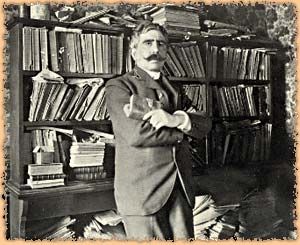
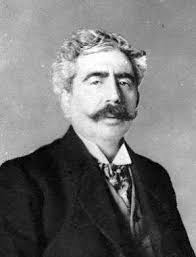
There are cold winds blowing through this verse, so little read that the tongue freezes to the roof of the mouth. Reading aloud warms words – rediscovering lost art as a process of thawing. Even in France, Jean Moréas is neglected outside the realm of specialists. Moving from Symbolism (a term he coined in an essay that keeps him in textbooks on poetics) to his founding of the Ecole romane, meant in effect a move from the anarchism of vers libre to the classicism of an ordered world willed into being as a reaction to chaos. This classicism attracted figures of the Right, and it may well be that Moréas has suffered by association with extremists such as Charles Maurras, despite it being well known at the time that Moréas eschewed any strong political allegiances – his was a renewal of old forms rather than a radical political shift. I have chosen a poem from Les Cantilènes (1886), two from Les Syrtes (1884), and one from his best-known collection, Les Stances (1899). In writing about the River Rhine, Moréas cannot claim the neutrality of nature writing – the river runs right through Alsace, that region so bitterly fought over between France and Germany. His book Les Syrtes, hints in its title at the idea of a liminal zone between gulfs. One might be reminded of a later work that posits the no man’s land of borders, Julien Gracq’s Le Rivage des Syrtes (translated as The Opposing Shore). Is Moréas coding for Alsace-Lorraine in the manner of a revanchist? The poems chosen from Les Syrtes seem more to inhabit the world of Verlaine than nationalist tropes – all is formed of an intimate and exquisite lamenting. ‘Sensuality’ hints at the Huysmans of À rebours, with its bejewelled decadence. The poem from Les Stances, will delight those who find the sea both immutable, and indifferent to human woes. Translation can make new melodies that carry over as much as is allowable into a new tongue – this means some liberties which make poems in English rather than a stunted hybrid. The reader might well take heed, as have I, of Jules Renard’s remarks on the business of translation: ‘a crime perpetrated by low types who know neither language, and shamelessly set about replacing one with the other.’
NB: You can hear these poems read in their original versions by clicking on the French titles.[ed.]
*****
: Four Poems translated by David Hackbridge Johnson
SENSUALITY
Listen no more to the plaintive bow that laments
Like a dying dove along the bowling greens;
Attempt no more the flight of pilgrim dreams
Dragging golden wings through the infamous clay.
Come this way: here are the fairy-tale settings,
In Sèvres the exquisite dishes from which you wean yourself,
The cups of Samos to dip your lips in,
And the deep sofas to rest your body.
Come here: here is the ardent blushing
Of red hair studded with flowers and beryls,
The ponds of Persian eyes, and the April roses
Of rumps, and the lilies of breasts rubbed with essence.
Come and inhale the aroma — and bite with bared teeth
Into the suave banality of life,
And sleep the sleep of the satisfied beast,
Disdainful of the splendours of transcendent dreams.
*
N’écoute plus l’archet plaintif qui se lamente
Comme un ramier mourant le long des boulingrins ;
Ne tente plus l’essor des rêves pérégrins
Traînant des ailes d’or dans l’argile infamante.
Viens par ici : voici les féeriques décors,
Dans du Sèvres les mets exquis dont tu te sèvres,
Les coupes de Samos pour y tremper tes lèvres,
Et les divans profonds pour reposer ton corps.
Viens par ici : voici l’ardente érubescence
Des cheveux roux piqués de fleurs et de béryls,
Les étangs des yeux pers, et les roses avrils
Des croupes, et les lis des seins frottés d’essence
Viens humer le fumet et mordre à pleines dents
A la banalité suave de la vie,
Et dormir le sommeil de la bête assouvie,
Dédaigneux des splendeurs des songes transcendants.
***
(Les Syrtes, 1884)
ARIETTE
You bound me with your white hands,
You bound me with your fine hands,
With chains of periwinkles,
And ropes of nasturtiums.
Let your white hands,
Your fine hands,
Chain me with periwinkles
And nasturtiums.
*
Tu me lias de tes mains blanches,
Tu me lias de tes mains fines,
Avec des chaînes de pervenches
Et des cordes de capucines.
Laisse tes mains blanches,
Tes mains fines,
M’enchaîner avec des pervenches
Et des capucines.
(Les Syrtes, 1884)
***
THE RHINE
The stream breaks against pebbles
Under the grey-white moon
Oh the sad cantilena
Let the north wind blow on the plain!
– Elves crowned with rushes,
Will you come and join the round dance?
Woo! Woo! the heron sneers
To scare the duck
Clip clop! the sorcerer on his goat
Gallops on the plain
– Elves crowned with rushes,
Will you come and join the round dance?
In the moss-eaten vault
The red-bearded emperor,
Sleeps with his head in his hands;
The dwarf watches for the crow.
– Elves crowned with rushes,
Will you come and join the round dance?
But already the dawn is emerging,
Staining the river bank pink,
And the chimeras take wing
Like a swarm of mayflies.
– Elves crowned with rushes,
You no longer join the round dance?
*
Aux galets le flot se brise
Sous la lune blanche et grise,
O la triste cantilène
Que la bise dans la plaine !
— Elfes couronnés de jonc,
Viendrez-vous danser en rond ?
Hou ! hou ! le héron ricane
Pour faire peur à la cane.
Trap! trap ! le sorcier galope
Sur le bouc et la varlope.
— Elfes couronnés de jonc,
Viendrez-vous danser en rond ?
Au caveau rongé de mousse
L’empereur à barbe rousse,
Le front dans les mains, sommeille ;
Le nain guette la corneille.
— Elfes couronnés de jonc,
Viendrez-vous danser en rond ?
Mais déjà l’aurore émerge,
De rose teignant la berge,
Et s’envolent les chimères
Comme un essaim d’éphémères.
— Elfes couronnés de jonc,
Vous ne dansez plus en rond!
(Les Cantilènes, 1886)
*
MELANCHOLY SEA
Unknown melancholy sea
You envelop me in your airy mist;
On your wet shoreline I mark my steps,
Suddenly I forget both city and land.
Oh sea, oh sad waves, will you ever know, by your murmurs,
That expire on the wild sands,
A lullaby for my dying heart, and its torment
Those that only delight in the beauties of shipwrecks?
*
Mélancolique mer que je ne connais pas,
Tu vas m’envelopper dans ta brume légère ;
Sur ton sable mouillé je marquerai mes pas,
Et j’oublierai soudain et la ville et la terre.
Ô mer, ô tristes flots, saurez-vous, dans vos bruits,
Qui viendront expirer sur les sables sauvages,
Bercer jusqu’à la mort mon cœur, et ses ennuis
Qui ne se plaisent plus qu’aux beautés des naufrages ?
(Les Stances, 1899)
 The High Window