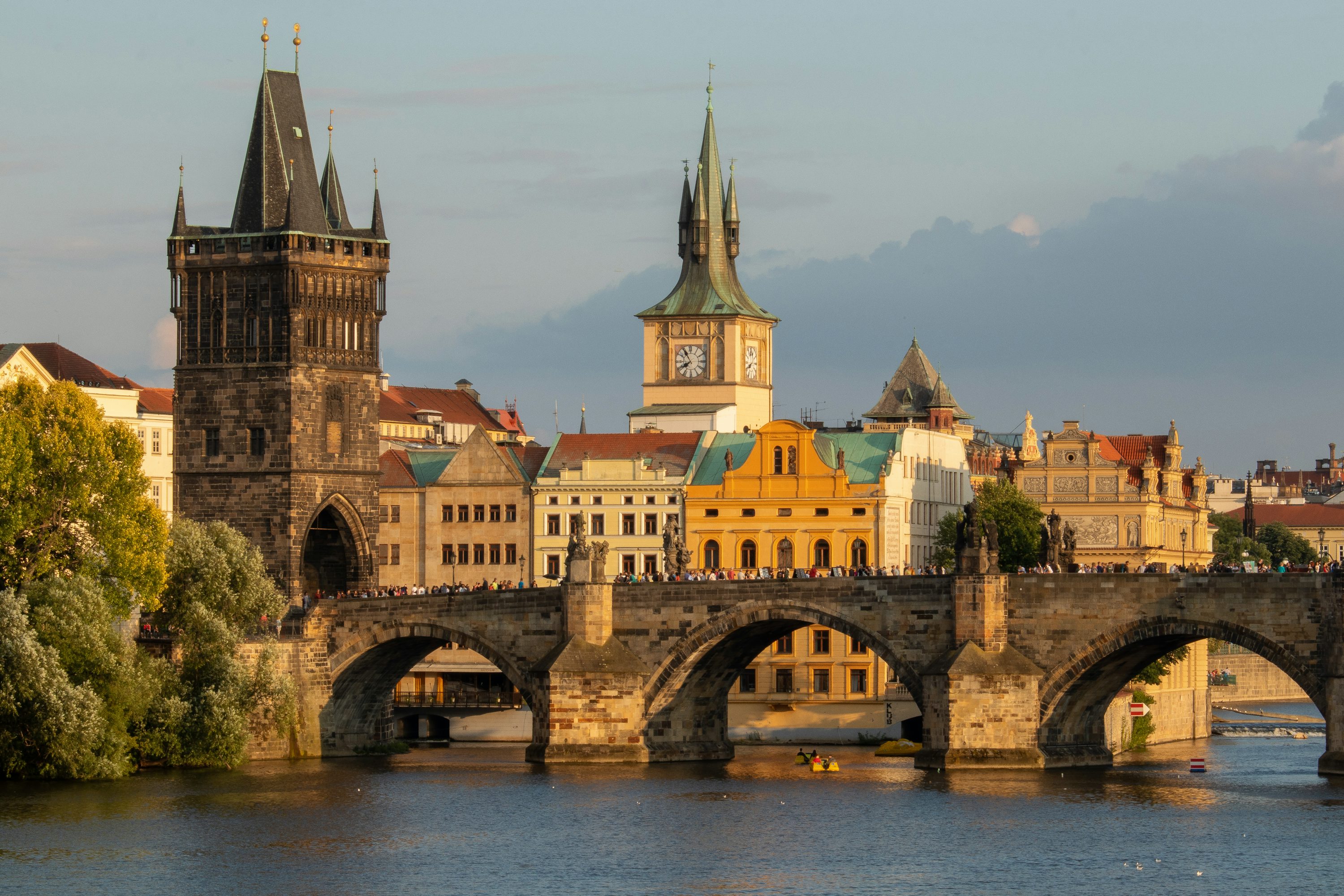
Vltava river and Charles bridge in Prague
*****
Svatava Antošová • Hortensie Hustelová • Stanislav Kolář • Tomáš Míka • Norma Marnotratna • Diamont Popelka •Tim Postovit •Tereza Riedlbauchová •
Martin Vopěnka
*****
NB: Links to previous translation supplements can be found at the bottom of this page.
*****
Czechia is a modest sized country of 10.6 million inhabitants in the geographic center of Europe and is comprised of three historical regions: Bohemia, Moravia, and Silesia. This supplement favors Bohemia and Prague, with only one poet, Stanislav Kolář, representing the Moravia-Silesia region to the east. Five of the poets and poetic personae live in mining regions in the north of Bohemia and in Silesia, and Svatava Antošová’s poem “The Road to Most” deals specifically with the environmental and cultural degradation of the landscape. Most is an industrial city with a long tradition of lignite mining. But the historic city (which had been mentioned in Kominsky’s Latin Chronicle in 1040) was demolished and replaced by a planned city in 1964 by the communist government.
The contemporary country is composed of temporal layers as well, and of the nine Czech poets and poetic personae in this folio, seven were born before the Prague spring of 1968: Stanislav Kolář 1953, Svatava Antošová, 1957, Hortensie Hustolesová, 1961, Norma Marnotratna, 1961, Tomáš Míka, 1959, Diamont Popelka, 1961, and Martin Vopěnka, 1963. They began writing in Czechoslovakia, before the Velvet Revolution of 1989, when period of Sovietism ended and a new hope emerged.
In particular, Mika and Antošová represented dissident voices before 1989 and have been blessed with a geopolitical situation that provided them with much to continue criticizing, such as sudden capitalism, environmental degradation, the reluctant incorporation of the country into the European Union, as well as the Czech character formed from centuries of the country’s strategic location that has encouraged larger, more powerful neighbors to invade it. Two of the poets, Tereza Riedlbauchová (1977) and Tim Postovit (1996), began writing in the Czech Republic after the dissolution of Czechoslovakia, in 1993. Tim Postovit represents the youngest generation of poets, an immigrant from Ukraine, who made his debut as a spoken word artist, performance poetry being a medium that Mika and Antošová also embraced decades earlier.
I hope, dear reader, that you enjoy this folio as much as I enjoyed compiling it, with my favorite poets and translators from Czech.
Marcela Sulak
I would like to thank Marcela and the various other translators whose translations are included here for the work they have put into making this supplement of contemporary Czech poetry possible. [Ed.]
*****
Svatava Antošová: Poem translated by Marcela Sulak
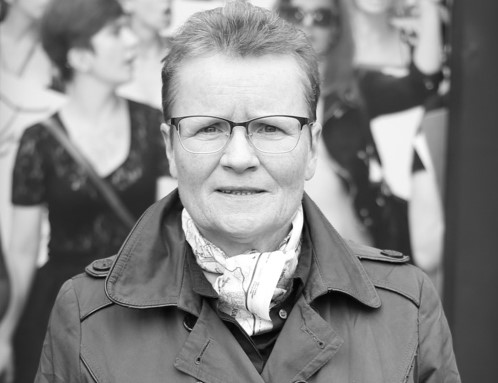
Photo credit Alžběta Procházka
THE ROAD TO MOST
(for Karl J. Beneš)
It’s under a cloud
you can barely see the castle Hněvín.
Who’d go there
except for the wedding party and that guy
who’s in charge of the stars.
And except for you.
You want to meditate up there.
I’m fine with making out at home
with a savings account and a life insurance policy
– an impersonal threesome.
And your boyfriend?
He’s happy
when he manages to crack open an egg
on the dog’s head
and not get bit in the process.
But
this is the north of the country
here you can’t choose.
You can pass through two
geological periods as quickly and easily
as if you were riding the Rodelbahn.
I’m Perm
says the skinny Permian era
and gets in the way of the new geological period.
I am Trias
says the opulent Triassic era.
And they both fall into each other
and hold each other in check.
Neither one of them has the upper hand
until the spotlight
of a conveyor belt finds them.
They start flailing, out of synch,
as their arms are dislocated.
The dirt beneath their nails is millions of years old
it’s been falling for thousands of years.
You can hear it
slapping the boots of the conveyor belt attendant
but they only load one.
Trias moves with a grunt from its place
while the other,
the first born
skeleton crumbling under the weight of the end,
spills into a place
where, like a neuralgic furrow
these tracks will one day tremble.
You’ll blast through them
on that obsolete, once futuristic
track
and you’ll be shaky, too.
Shaky about
how yard after yard is stripped
of its function
and how they disappear in broad daylight
into the toothless mouth of a coal sturgeon.
You blast straight through those mouths
definitely and mercilessly devoured
correcting the limits.
Upper Jiřetín in a carbon haze
a tube of tranquilizers on you at all times
or you wouldn’t have made it.
On the left, an avenue of pale sakura trees
bathed in light from a miner’s stove
– St. Procopius hung it in the place
where the sun used to be.
You’ll blast through station after station
for example, Řetenice,
black ray of decay.
You see
how nicely it is breaking up those clean,
ghostly, deep and rich halls
of the AGC Group.
Fourteen billion in sales every year
and a football club to boot.
Only the building of the plant,
in foreclosure, with living people in it,
seems to be standing in the way of all that.
You’ll blast through and it hits you
that every single one of those stations must have packed
an awesome cannibal joint
that first bathed it all over
in incomprehensible numbers
to turn the time
of the train schedule
into time
that no longer matters.
And to finally beat its brains out
with rocks.
It’s absolutely indisputable in Oldrichov,
indisputable and obvious
like the bottle of Greek ouzo
that you’re about to rip the cap off
and pour for me into some horrible plastic
shot.
Well, okay
but come on, don’t hold it up
so we can get back in time.
Didn’t you say
that the boy must secretly be at the Evangelicals
until the evening?
Yeah yeah
that Oldrichov.
He doesn’t even have a head anymore, let alone a brain.
It also makes me sad.
But maybe they’re still out there,
the burnt remains,
the heart.
Maybe it’s just lying around in the rubble
of the same nothingness
that hooked us
after finance capital came to power.
Maybe the rats just spread them out
on the broken platform
–the industrialist heart is as inedible for them
as it is for us.
Of course
everyone here will tell you
Duchov is biggest with the station-addicts.
He’s a six-sided overgrown baby with alzheimer’s,
he’s even forgotten how to cry.
Created in the Brussels style,
a shifting geometric aesthetic
has long since taken over and
only a few misguided natives have continued to dust him off
like a Denkmal.
Let’s not even talk about Želénky,
the graffiti artists have totally ignored his
existence,
but what to say about a barely noticeable
but quiet, refined decal?
that it’s refined?
Don’t try to skip Chotějovic
you’ll hit me out of nowhere.
When the central nervous system
goes to pieces
don’t try to skip the subtle beginnings
of the breakdown
It’s like a distant punch to the transom
then the second
and the third…
Always the same pitch.
It’s like the punches are piling up somewhere
and it couldn’t support any more—
Wait for me a long time
a boy says nonsensically and stops twiddling this thumbs
over the anti-glare screen of his smart phone
Something lifts him out of his seat
and before he dissapears into the Regio Pantera
it’s beginning to be clear to me
that he’s sensing it too.
And that, before your infallible
Chopin-like hearing, I should
shut up.
It’s clear to me
that the ability to hear a CNS breakdown
in its initial stage
is more amazing than the sunset sky
over a miner’s cauldron at Bílina
pink as Himalayan salt.
You’re going to whiz through Bílina
and I’m going to unload on you
that the winged wheel on the roof of my tank
reminds me of Kindheit
and a battered old Nazi
eagle.
And I’ll unload on you.
It won’t be coffee flowing
through the crappy coffee machines
in this town
just lignite
— in the Bílina bulletin they wrote
it was a done deal with the miners
and you’ll be the one with a twinkle in your eye.
Just wait
it won’t be long until
there’ll be buxom blonde software
sitting at the registers
instead of buxom blonde cashiers.
They were going to let you in on it
but you fucked them over.
In the meantime—
I think and gaze dreamily
through the air-conditioned air
out
at the last vestiges of non-virtual reality.
Somewhere out there on the luminous horizon
the wobbly Jezere balance over the abyss
and the pious-looking pit
of the ČSA quarry
is waving indulgences
in the form of Tesco discount coupons…
Suddenly, a viola and a harpsichord
appear out of nowhere to accompany the two
opposing movements.
Nicola Matteis, you say,
Seventeenth century,
you say.
And you’re going to blast through the ruined Bilina-Kyselka
home to the most skinheads
per square meter and per capita
and where future trains will not be built
not even on request.
You’ll blast through renovated Želenice
so desperately blue
that a kingfisher would blush
until finally you’ll reach Most.
Most
as rare as a fossil of a Mesozoic butterfly
whose only surviving antennae
feels the bulletproof glass of the windows
of the mythical Czech Coal.
Most
where the poet Dalibor Kozel made love
with abandoned manholes
and where Emil Juliš
another poet living in Louny
collected first prize in a discipline called
the undertow of evening twilight.
Most
with the domineering SaS Group Tower
the fifth tallest high-rise building in this country
which looms like a sacred mystery
over the places
from where historic Most was forced to decamp
with the help of gelamon explosive charges.
Well, you’re not going to blast through here again.
Because you
barely swipe the automatic door sensor
that leads out of the courtyard
two good guys come out
apolitical looking cops.
I don’t know
what they’re playing at
Their guts are stuffed with meat anyway
just like you and me.
But when we show them our I.D.s
they let us know right away
that theirs are probably less stuffed
or whatever.
It’s still cloudy outside
You can hardly see Hněvín
Who’d go up there today
when there’s a V.I.P. Mass at the autodrom
for all those poor off-road cars
flipped on their roofs.
It’s good to go to communion
and to experience the confessional
to honestly spill the beans
how you’re handling the exclusive package
of your life.
If someone’s giving you personal coaching
or are you doing it as a challenge
all by yourself.
and stuff like that…
Yeah yeah
this is all fine
but we won’t go there
right bro?
Svatava Antošová (born 1957) is a poet, writer, librarian, and a journalist who reported on two rebellions –during totalitarianism she contributed to the underground magazine Vokno and was a member of the Teplice Pataphysics College, which was broken up by the state security forces, she is also an openly lesbian author. Antošová is the author of ten poetry collections and a selected works, Planting the Fire, as well as three prose collections.
Marcela Sulak is the author of five poetry and hybrid collections, most recently, The Fault, and the National Jewish Book Award finalist, City of Sky Papers (2021). She has co-edited Family Resemblance: An Anthology and Exploration of 8 Hybrid Literary Genres. Sulak’s previous translations from the Czech include Karel Hynek Macha’s May and K. J. Erben’s A Bouquet of Czech Folk Tales, both with Twisted Spoon Press. For her translations from the Hebrew, Sulak was awarded an 2019 NEA Translation Fellow for Sharron Hass’s Music of the Wide Lane, forthcoming from the University of Texas Press, and a was a finalist of the 2017 PEN Award for Poetry in Translation for Orit Gidali’s Twenty Girls to Envy Me. Sulak is Professor of Literature at Bar-Ilan University where she directs the Shaindy Rudoff Graduate Program in Creative Writing and edits The Ilanot Review.
*****
Hortensie Hustelová: Six Poems translated by Marcela Sulak
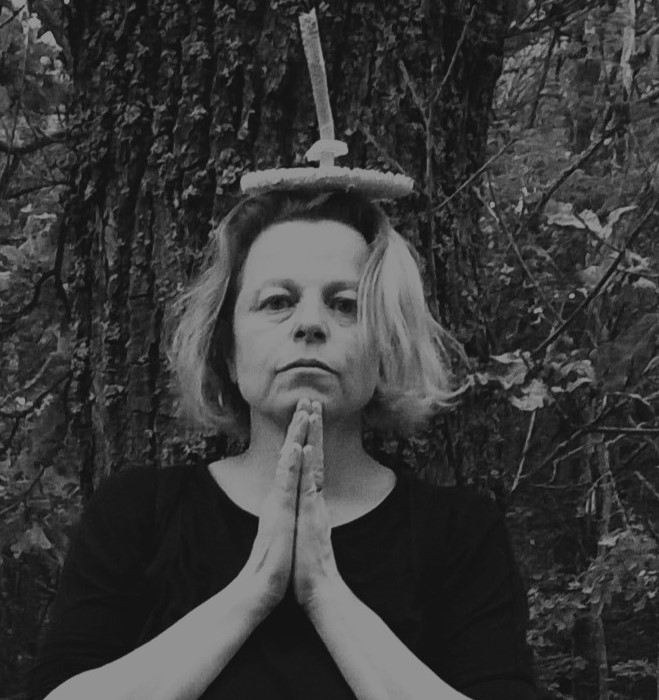
From SHORTHAND
1.
Everyone departs
from the threshold, Prague.
To be among them
you must write
in the island shorthand of Ostrava.
2.
Every romantic encounter—a slip
/The suspicion is on my side/
3.
What’s the solitude like
of being cherished above all others?
I don’t know
I only know the one
of being guarded by an animal
4.
An outrageous sentence:
I’d rather love an absent god
than you.
5.
When we were
close we were
in striking distance
6.
While you were asleep
someone implanted in you
the heart of a serial killer
Hortensie Hustelová is a Czech poet born on 29 December 1961
*****
Stanislav Kolář: Three poems translated by Marcela Sulak
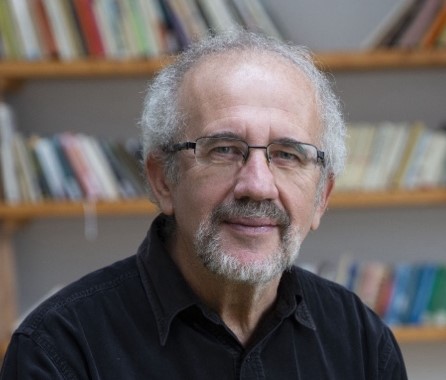
IAN ANDERSON’S FLUTE
Ian Anderson’s flute
leads me through a harsh landscape
through thistles
through the stubble of voices and tones
of the ghosts of the Celts
back home
to the satchel maker
over whose dwelling
loneliness stretches
and whose sad eyes know
that the leather of the satchel will rub off
just as time wears away our faces.
He winks at me through the void
a toothless sweaty asthmatic
in tattered clothes.
God knows why I think
that he’s Aqualung
when he’s a local cobbler
repairing my scuffed shoes.
And now that I’m out of breath
and the flute still sounds enchanting
somewhere near the finish please
let there be a seamstress
to stitch the scraps of my life
into a story that makes sense
like the walnut by the fence
like the bitch in the doorway
THE SEVEN FALLS
are inside us,
places I’ve grown up with
Go with your mother
to the two tall pines
and remember the forest
shake hands with a friend
under the bank of the stream
and remember the crayfish claws
when the water used to be clear
Then wait for the woodcock to come
And pay the ransom to the land
Maybe he’ll bless us
and you’ll be stuck there forever
And forget
that you’re just a little ladybug
in a web of commands and rules
yearning for the seven falls
You
so long without me
Running to me
when you call out to me
Darling
I’ve dreamed of us together
that you’d stay with me forever
and the landscape will forgive us
all our delusions
Even there
where in the distance it seemed to us
it was a snowy plane.
PATCHWORK 2
Gird yourself with the scraps
of our memory
weave them into a tapestry
or at least stitch the past
together from
the tattered shreds
My father is fourteen years old
looking up at the sun
dazzled by the glint of a metal predator
something plummets to the ground
more violent than a hawk swooping down on its prey
A hand beckons father
and he flies through the window into the cellar
just before the explosion
Martina
that day there were more of us
around you
and the smell of gerberas and lilies of the valley
that I gave your mother
as a sign of the miracles created
and I don’t know if it will ever be spring or if it will just be dark
and stirring in the forest
the true desultory colors
that time has dissolved in the rain
Like healing ointment
strings of memories connect us,
like bubbles in a hot tub
and a knife for a wet wound
without anesthesia
The frost from the Alps has cut through
to the Valley Inn
A man sees ice and earthenware
in the eyes of his wife Marie
But now Professor Albert
lectures on antisepsis
the lecture room becomes an operating theater
where skepticism once left
a precise surgical incision in his memory.
Although his and mine are a century apart
Students clearly charge me
with positive energy
Suddenly I am transported
to a room with a tiled stove.
The joy of a puppet theater
beneath the Christmas tree,
the same joy as a son’s
rattling a Lego set under the tree
thirty years later
the two shade into a single moment
and time was like cursive writing
We can thank that hand
dear sister
that we are
Remember?
I scared you silly with purple devils
but I was also pulled out of the broken ice
in our creek
Now I’m pulling you out
from the splinter of scattered memories
All those I want to catalogue
in my memory
and those not
yet in it
Stanislav Kolář (1953) is the author of two collections of poetry, Liquid Diet and Ian Anderson’s Flute. He is professor of English and American Studies at the University of Ostrava.
*****
Norma Marnotratna: Poem translated by Marcela Sulak
WORLD SALAD OF A FOUR-STORY WOMAN
Characters: Hortensia, Cinderella, Hromnice, Zdislava
*
Hortensia: Oh, I am tea drinking myself to death
Hromnice: I am tea peeing myself to death
Cinderella: would anyone like some tea?
Zdislava: I am eternally absent
*
–I have been adopted by melancholy
–Would anyone like some jasmine tea? I dreamt I was pouring tea from a blue pot for a man with pearl fish for lips…
–I feel a distant strangler on my neck again…I am afraid to go out and round the corner…the streets are shiny and the leaves glued on them are slipping…
–Where would you go, you zombie…
–Let’s go to the forest, the trees still have a few leaves left and the clouds are SO fast…
–The fragrance…the man from the dream had a reedy voice and assured me I could pour him tea anytime…
–I’d like to sit by the stove and talk to the logs before I burn them…I’d like to get at the secret: of burning…
–I am sinking back into the slimy fog, to fall asleep and feel the pleasure of extinction…
–THAT has come over her again…
–Why don’t you just have tea with me, Zdi…everything is in its place, you’ll write something, you’ll draw in the evening, what are you missing?
*
–Terrible morning, not waking up…
–First signs of depression are…cha cha..terapy…give her a break, you mush, prepare the pots and the cabbage pickers hair is wilted!
–You goat! Running away from everything, that’s just like you! Only cream! And who is going to clean up the messes?
–Anyone for tea?
–in a cup with a dragon, waiting for the leaves to unfurl…waiting for a sign, where to run…
–To the tower, to the lighthouse, to the cottage in the forest, to arms, to the well, to the cellar, into the trap, into passion, into alienation, into a secret hatred, to the cave, into the cage, into the labyrinth, into the crown of a tree, to the fortress…
–You’ve gathered together…you magpies!!
–The sun has risen! Let’s go outside…
–Mushrooms! Cabbage, pot, exercise, stove, afternoon reading! Move!
–boring as jewels…
–Once again, have some tea, repetition is simple, the sun also rises every day…
–boring as pork jowels…
–I’m empty today, even boredom doesn’t penetrate the cracks, I have nowhere to go and no reason and it is as relaxing as twilight…
–to overthrow the plot, sink into velvet visions…spice up the coffee…
–I can’t stand you, you want to lie around like a fog in the mud and scribble nonsense on a scrap of paper once in a while, as if anyone cared but you…
–You should try it, too, and you wouldn’t be so stuck up…I washed the grinding stone and took the ink out of the box…the circular motion reassured me that I didn’t want anything more , and then, as I dipped the brush and let my hand stroke the paper, I was back on the cusp of quiet bliss…
–On the other side of the window…I would like to go somewhere, direct my steps, but I can’t do it anymore, I’ve lost my courage to look for ANYTHING…
–unfree, as if I ever had a choice…what a presumption!!
xxxxxxx–The city floats, glass balls shatter, the carols break into shells and destroy
xxxxxxxany attempt at holiday cheer, the little shiny eyes of the mistletoe…
— By now I’d have picked a different prison for us whining about airborne roots all the time! Anxiety is like a walrus…There’s nowhere to escape, even energies are absorbed by black holes, but the horror may be a veil…an appearance…veil…
— Look in the mirror!
–Let’s go to the cellar to look into the mouth of the boiler, let’s throw the written pages there, I’d like to warm myself by looking at the trapped flames…
– You’d be burning something again… The cremation of the past took place months ago… oh, the diary bullshit!
–You’ve burned my experiences too! The fear of the past is a boomerang of future fears…the smells and residual images just return with perverse regularity! Memories of memories…
— it’s more important to strengthen the walls and raise the drawbridge. We can’t let anyone in, we can’t let anyone dance on skulls of mice anymore…
— I’m for total failure! Explode! Scatter the garbage! The fireworks of feelings and the whirlwinds of passion and the viruses of doubt and the anarchy of purpose and the profligacy of laziness and fatsos!
– As if you forgot about those who love you! Disgustingly selfish…and don’t tell me you don’t care about anyone…
*
–I have a new pun: incest – nonsense!
– -I’m going to make tea, it’s pointless, she’s either shouting something, or she refuses to see into the distance!
– Tea : a unifying element…protozoan…
-When will we go to the shaman, the puppet doctor, the man in white, who has an hourglass instead of a heart… and wants to make you better, Hortensia?
– He has a sea sponge heart, soaked in French wine…he has a ruby-heart puzzle that he puts together into fireproof shapes at night…he has a heart that he will never show you, whoever sees it falls into a mirrored sleep …
— Sleep…in the night I woke up again and waited in the dark…it suddenly seemed strange to me that I was lying in my body so I got up and went to guess my coordinates…I was rocking like a boat.
— I don’t want to go to sleep today… I have no dreams to replay… only a desire that has gathered to eliminate me… I must not give it space… my coordinates have dissolved… the borders of the mists have imprisoned the vision: I stand naked and dissolve like a snow sculpture, I too am so white and shiny and cold, a marble of alienation…
–Are you afraid that you will dissolve into someone again? Would you like to be melted by forbidden passion? Would you beg and swear and reach for your bodice? A rift in time…a circle of danger…
— Dream again and you could work in your field… weave and sew and knit…
— Knit your noose and sew your tail and weave your repentance… and mushrooms!
Fortify, cocoon, curl up, wait, rearrange, move, deepen, deepen, deep depth…
— Stroke him, without remorse, become his friend, lose him like a psycho, trip over your own pillar, black out a blind spot on a blind map, jump off a train…
— Eradicate trauma, eat animals, trample… what do you really want from it? I wash my hands…in the blood of sacrificed dreams, I don’t play with you, Hortensia, I don’t want to think and throw myself into emotional traps, I’m not so obnoxiously childish…
–I wouldn’t like to be a child again…and to-day my inner child dreamt of me: it walked on French canes, there was a hole in its throat from which came a grunting sound, and its clothes were rolled up…
–Idiot…
–Little one…were you afraid that you wouldn’t be able to take care of yourself? So get out of the mother role already!
— Yes, yes, let’s wall her up together wrapped in veils in the cellar… let her cry out in vain in the damp corridors: Mother, mother, have you left me at last?!
— May she not be able to cry out, may she have a ball of red thread in her throat, her jaws wired and sand under her eyelids! Someone else would come to call… at the monster’s wall…
– I’m tired today…I wrote the doctor a letter again without addressing him…I make love to his name under the waterfall, but I can’t address him directly, even in a letter…
– You just can’t think of his name…
— Shortcut: just OM… just…
–Friday, crazy May, Mother’s day… You-fall-from-the-tower, Hortensia
–A lie like a guardian of identity and truth like a beacon…
— We should really go to the doctor…get plastered…but the other day, by the way, he said something about the asses who confuse doctors with plumbers…
— And the aquarium is sick….
— Working on yourself in church…
— The walls shake and the finger work takes only the black keys into account…melancholy beneath the plaster, peeling off the mask of pale shadow…you wander in the catacombs of intentions…you fumble in plans glued with watermelon sugar…
— Sabbath…the nightmares have come…my mother was dying, fading into a slump, I was beginning to feel sorry for her, but she shook herself out and sat down at the table…repentance and remorse and swirls of anger…howls of faith…that awakening to the day, nursing vanity….
–So we’ll go to the madhouse…Peacocks in the snow…Half an hour won’t kill us, and what doesn’t kill us will drive us crazy…
–Colorless fools and inappropriate peacocks in a forest park…frozen tears and
–boundless pity and stifled hatred and the desire to jump…
–sugar and trap fruit and juicy sickness…
–Why go anywhere at all?
–Weakness and helplessness and fear and shame and rage…I’m running into another time…
–Hiding for years in a labyrinth…
— I dreamed that one could learn to love…
It’s like passing water through a sieve…
–Walled in with secrets…
–To be…to walk..
— Half-life…
— Transcendence…
–Turbulence…bidding…
— Meditation…
–The tsetse fly sucks at happiness
– I’ll put it to a vote, who’s in favor of visiting the madhouse…
Norma Marnotratna is a Czech poet born on 29 December 1961.
*****
Tomáš Míka: Four poems translated by various translators
WE CZECHS
Translated by Craig Cravens
The truth will prevail
For we Czechs are ingenious
For we Czechs are poltroons
For we Czechs are heroes without fear or shame
For we Czechs are harried, harassed by fate
Surprised by nothing
We lop off our noses to spite our face
And laugh
We Czechs are afraid to resist all authority
We Czechs gave the world robot and contact lenses,
Comenius and cucumbers from Znojmo
The Škoda and Kundera and dozens of other inventions
Without which the world would be
Flying unseen in invisible fighter jets blown up by our Semtex
We’re the nation of Masaryks
The nation of Hus
We’re the nation whose refuge are beer pubs in Tabor and rosary-wrapped wrists.
We Czechs are not Gypsies, Poles or Jews
We Czechs are the Czech speaking Austrians of Hungary
On the streets of Prague abound Russian Matryoshkas
We have the most beauteous language in the world for only we can pronounce the
infamous “ř”
We drink the most beer and with the help of our Allies — who betrayed us at Munich —
Banished the most Germans from the Sudetenland.
Many of whom we rightfully raped, gunned down or drowned in the river.
Go get ‛em, boys!
We’re a nation of Jan Palachs.
With the temperament of doves.
We’re proud of our burial mounds and the blood of the Celts that flows through our veins.
Our revolutions are all velvet.
With each defenestration we’re saved by the dung.
Each Czech is a musician.
Each Czech is a cosmonaut, communist, footballist
But hockey and tennis are really our games.
Common sense has no truck with the wisdom of Czechs.
We lie our way out of the bombing of our cities.
This gray zone of ours is really not bad.
High culture we have but we don’t have the euro.
We exploit the advantages of both Ginseng and Schengen.
We’re small but like lions we thrash in our cage.
We’ve got Prague and in her the best zoo in the world.
Pilsner Urquell — the best beer brewed in Poland.
We’re democrats to our toes,
Our humor is black
Self-irony legend.
We’ll gladly defile our own nest
But woe to those who defile it for us:
We’ll grab our mace and drink to oblivion.
We’re laughing hyenas.
The truth will prevail.
We know how to suffer, to heil whom we must, sign charters and anti-charters,
We’re anal rock climbers, we know what we know, and we speak all the languages of the
Tower of Babel.
We watch Czech translations of Hollywood thrillers
Only “Grandmother” we’ll read in the original
Along with her menu of dumplings
While the house of our Nobel prize winner now houses a bar.
Ninety-nine point three percent of all Czechs are poets.
Of them ninety-nine point eight are lyric.
We ski and know geography like one man and one woman.
We know the location of old Bangladesh.
And many a Czech likes to fish.
Bohemian fish farming is a long-standing tradition.
Little Jesus distributes the gifts Christmas Eve
And sushi from carp has become our specialty.
What others can do, the Czech can do better.
We’ve been everywhere, can do anything, were born in the cinema and master
All things
Our bow toes are polka-dotted.
To chce klid a na Belehrad … But Švejk we prefer with a pint in a pub.
We’re the nation of Karel IV, Havlíček, Čapek, Gott, and Kryl
In erudition our hermits outshine those of other lands
Our philosophers become presidents, and some we destroy — in this we resemble the
ancient Hellenes.
We always know how to defy our oppressors.
The truth will prevail!
We’re Czechs! We’ll never surrender!
We’re a nation of sex addicts and do it better than most
But our priests tell it best
Real Czech heroes hide in closely watched sewers
On the slopes of far Italy we recite Tyrolean elegies
Our region though small opens up to the sea, with samples of landscapes of the whole
Except for the savannahs of Africa.
We have the most beautiful women.
Many Czechs suffered cruelly under the Czechs.
While others went camping, cooked wieners and sang.
The most notable Czechs were Freud, Mahler, Rilke, Kafka, Jean Marais and Krtek the mole.
Our ‘Hello’ is ‘Ahoy!’ like the sailors of England
And Čau like Roman slaves from Slovenia.
Czechs dance the Polka.
For we Czechs are a band of malingerers.
We all know “My Homeland” but meanwhile lament:
“Where is My Home?”
Licking Smetana from Dvořák
It’s unbelievable how big is the little Czech man.
A CASTLE
Translated by Bernadette Higgins and Tomáš Míka
A castle inhabited by spirits
weather-worn openings where windows used to be
stones half eaten
by salt and winds
only veins protrude
under the cliff on which I tower
waves are gnawing,
working to turn me
into dust again,
to turn the walls
again into a heap of stones
where limpets live and black weeds,
a natural form,
not something marked with a human hand
and the memories of stones
no-one can see
only the memories
of stones
keep the memory of touch
from a human hand,
and they quiver with delight
a palm
a back of the hand
a palm
a delicacy for which
the stone is longing
which it does not have and never can
and waves
POEMS INSPIRED BY MICHAEL SINGER
Translated by Tomáš Míka and Bernadette Higgins
XXX
What flows in the veins is infectious material
The tube is the basic building block
A flare-up is necessary
if the forest is to burn
The Almighty’s plan for this fermenting sludge
is fire and water in every molecule
Even blank cartridges infallibly hit the target
Mother’s milk also contains nitroglycerine
The rearrangement of continents
cannot be done
without a heavenly host of corpses
XXX
Don’t overthink it
Water flows
The wind blows
Thoughts come and go
You have victory over them
Your being is one silent argument against words
It’s damp,
smells of the sea
and needs to carry on
You trick it and steal its bait
You avoid the hook
The trap snaps a split second too late
You are the victor
XXX
Stones remain the longest—
in people it’s bones.
Where does the fever go
the hair
and the invisible?
What cann’t be touched doesn’t exist?
(Laughter)
A complicated tubular construction kit suffers
from various delusions
which light up
and go out
That’s the truth that flashes –
a will-o-the-wisp in the swamps
WAVE I
Translated by Tomáš Míka
To make friends with a wave
is like making friends with a wave
But to love a wave
is like making love with the deep
in the shallows
The wave says
I’ll break my head against a rock
it moans
(the wave)
I’ll break against a rock
The wave is nostalgic
you know
it wants to rise from that rock
soar high
It wants to hug the foam
When the wave tires of you
you’ll find the water smooth as glass
Tomáš Míka was born in Prague in 1959. His original work includes the books of poetry Destruction of Animals, 2003, Journal of a Fast Man, 2007 and Text Messages, 2016. His book of short stories Und was published in 2005. He works as a translator from English. Among the authors whose works he translated are Samuel Beckett (Watt), John Bunyan (The Pilgrim’s Progress), James Hogg (Confessions of the Justified Sinner), Jack Black (You Can’t Win). He lives in Prague.
Bernadette Higgins is pursuing her PhD studies at Charles University in the field of British women poets of the 1930s.
Craig Cravens graduated from Princeton University in 1998 with a PhD is Slavic languages and literatures. He is Senior Lecturer in the Slavic Department of Indiana University where he teaches Czech and Russian languages and cultures. He has translated novels and short stories by Michal Viewegh, Vladimir Páral, and Ivan Klíma among others. His is currently translating Příčina rozvodu by Jiří Sumín (Amalie Vrbová) for an anthology of literature by women writing under male or ambiguous pseudonyms, Michigan Slavic Publications and MP Publishing.
*****
Diamont Popelka: Nine poetic movements from /Flashlights/
Translated by Marcela Sulak
1.
The year has come to an end
White night black paper
I greet my friends
2.
On night’s edge
Through the day’s cage
duller than a stranger’s dream
3.
O humanity humanity
Swarming
God’s scaffolding
4.
Spores and disputes
a life of mourning
among the hairs
7.
I wake with Christ in me
White clouds in the dark
Pilot moon
8.
Toad of sleep
The moon croaks from the well
9.
All roads lead
to the asphalt sea
10
On the way home
fear carves a killer
from every tree
64.
The light is fading
in the wounded forest
The beeches are watching
eternal as elephants
It’s last year again
Diamont Popelka is a Czech poet born on 29 December 1961
*****
Tim Postovit: Three poems translated by Stephan Delbos
OWNERS
kids from orphanages
would love to take possession
of you and your family and your city
your country
even your planet
they’d tuck it under their t-shirt
like other kids with soccer balls
when their moms call out
come home
soup’s getting cold
THE SEWING MACHINE OF ASIA
ghengis khan escaped his captors with the pillory
a hunter freed him in the steppe
after a couple days ghengis khan’s pursuers wondered
why the hunter’s new table had three openings
he said he dropped scraps through to the dogs
when i free someone myself
i won’t know how to explain one thousand
brand new designer shoes in the front hall
i’ll tell the pursuers
my wife is the indian goddess parvati
and like every modern goddess
she enjoys being highly productive
BUTTERFLY
we call the cars that prove fastest
formula
in my pocket i have a nug of a flowering plant
if representatives of the executive power
of the state knew
they’d arrest me
in a neighboring country they’ve forbidden people from talking to their children
about love
and on television they’ve demonstrated how a tiny ethnic group
is losing everything
israelis in the park argue about the wall opposite
they agree
it’s horribly spray-painted and useless
i stand and look around
everything interests me
but not very long
my attention is a butterfly
in the middle of a burning forest
Tim Postovitwas born in Ukraine in 1966. He spent his early childhood in Israel and has lived in the Czech Republic since the age of six. He studied Russian philology at Charles University in Prague. In 2019 he published his debut collection of poems, Magistrála (Highway). A poem from this book has been featured in the annual Best Czech Poetry anthology. He also performs slam poetry and holds the 2019 joint title for duo slam poetry. In 2021 he published his second collection, Motýlí pavilon (The Butterfly Pavilion). In 2022 he was nominated for the Václav Burian Prize.
Stephan Delbos is Poet Laureate Emeritus of Plymouth, MA. He is the editor of From a Terrace in Prague: A Prague Poetry Anthology (Litteraria Pragensia, 2011). His play Chetty’s Lullaby, about the life of trumpet legend Chet Baker, was produced in San Francisco in 2014. Deaf Empire, his play about Czech composer Bedřich Smetana, was produced by the Prague Shakespeare Company in 2017. His co-translation of The Absolute Gravedigger, by Czech Surrealist poet Vítězslav Nezval, was awarded the PEN/Heim Translation grant in 2015 and was published by Twisted Spoon Press. He is also the co-translator of Nezval’s Woman in the Plural (Twisted Spoon, 2021), and the translator of contemporary Czech poet Tereza Riedlbauchová’s Paris Notebook (The Visible Spectrum, 2020). He is the author of the poetry chapbook In Memory of Fire (Cape Cod Poetry Review, 2017), and the poetry collections Light Reading (BlazeVOX, 2019); and Small Talk (Dos Madres Press, 2021). His scholarly study, The New American Poetry and Cold War Nationalism, was published by Palgrave. He is a founding editor of B O D Y (www.bodyliterature.com).
*****
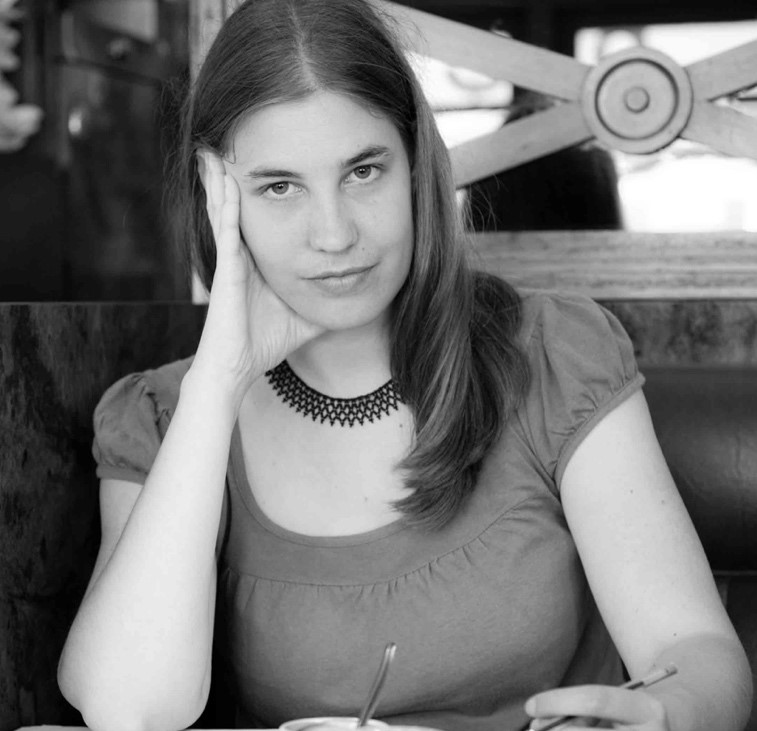
Tereza Riedlbauchová: Two Poems translated by Stephan Delbos
PLOT TWIST IN A REGIONAL CITY
On the corner of Biskupská and Široká Streets
the Nuance Wedding Salon squats pompously
Ottilie’s funeral home huddles by the river
on a weekday children cluster everywhere
In Café Plaza I eat breakfast
a tall caramel cake
with an apricot-mousse hat
Last night the theater celebrations were cancelled
today the press announces more restrictions
a helicopter flies back and forth over the city
(my generation never experienced war)
I really don’t know why I’m still here
I think of Death in Venice
except there’s nowhere to go
Tomorrow I’ll buy a single stale donut
the shopkeepers will hastily lock up
and hang a Closed sign
(my generation never experienced 1968)
In a dream’s vast cafés
I’ll construct from cakes
a fragrant rampart
WAR MADONNA
a star with spikes in her lips
a puzzle jammed behind it
barbed wire in her spinal canal
holes instead of hands
on her feet Russian and Ukrainian
gun-barrel toes turned toward each other
you wrote so much about love and now you’ve got it
pieces spill from the Rubik’s cube in your head
Tereza Riedlbauchová was born in 1977. Her poems have been translated into fourteen languages and she has performed at international poetry festivals in Canada, France, Germany, Bulgaria, Romania, Serbia, Turkey, the Czech Republic, and Slovakia. Her most recent collection is Inkoustová skvrna Karibiku (Ink Stain of the Caribbean). She manages the publishing house Literární salon, which promotes emerging Czech poets and international poets working in the Czech environment. Her poems have appeared in many anthologies and magazines, including Modern Poetry in Translation.
*****
Martin Vopěnka: Three poems translated by Kristýna Adámková
LAMBS OF GOD
Out of nowhere
I remember
a timid girl
who went back
to the store to exchange
a torn paper kite.
I remember her
innocence and grief
and I still feel sorry for her
twenty-eight years later.
In that small shop,
these good people were
selling big kites.
They exchanged
hers for a new one,
and the owner said
a ripped kite would
not bring the same kind of joy.
And, yet,
twenty-eight years later,
my heart still bleeds
for the ancient misfortune
of a complete stranger,
a girl as frail as paper.
Or I think of
a tiny gift
that I received
from my son—
a ridiculous bust
of a Roman emperor—
and, in it,
so many good intentions,
it serves me to
this day.
Needless to say,
I didn’t ask him then
what kind of a useless thing he’d bought me;
rather, I put on a face
meant to say
I had never wanted anything
as badly as that emperor’s bust.
Or I hear
a boy sobbing,
for he’d lost his
gift on the way home
from the store.
I recall
a vulgar father
on a tram
scolding his son
for missing a pass
in a soccer game
a father who got a penitent
yet loving glance
in return.
I even
recall myself
in Iceland,
wrongfully scolding
my first wife.
She was so defenseless
in her love.
I long to comfort
each one of them:
to lay hands
on the heads of those innocent ones
and wait for a spark
of pure intentions
that will change the world
for good.
Lambs of God
from the open wounds of my memory.
They are more real than Jesus.
CONTEMPLATION IN McDONALD’S
I am finishing my French fries
at a rest stop McDonald’s.
And, over the red tray,
it suddenly dawns on me,
that I—right here, right now—
am.
An intercalated
cleft of time
over greasy tables.
The grace of pain,
intimate, secret, embarrassing,
like an unwanted erection.
Nobody knows anything.
And, yet, I:
conscious of myself;
I alone am conscious
of the saltiness of French fries,
the saltiness of tears.
The tray with my wrap and coke
and the darkness out there
just through me.
How could it occur:
in between eternity past
and eternity future,
me on D1
between Brno and Prague?
On the way home,
I clutch the wheel;
the asphalt is whizzing by;
cars, trucks, cars.
Staring ahead,
weakening.
The dashboard—the fisheye.
Solitude—an unwanted passenger.
I nestle up into it
and everything in me
cries
dry tears
of low beams.
BENNY
The smile of our dog
radiates absolute loyalty
across the universe.
These days only the unsophisticated and children
know the bliss of unbridled joy.
Our dog
is unsophisticated
and rather childlike.
Rolling on his back,
wiggling his ears,
he, with all his strength, anchors
this present moment
in our restless minds.
Our dog
is a furry mouse;
a fluffy ball of gladness.
His eager eyes
always fill with joy
when we are with him;
he doesn’t get
why we always
escape into our musts and wants.
Our dog’s
name is Benny
and of death he knows nothing.
Cheerfully stepping in
between us and him –
he is our shield.
Rearing up, baring his teeth,
offering himself
assuaging all those fears
we’re battling.
But we keep
fearing still,
we long for hope
that is absolute
and won’t bark
when we come home.
Our dog
is a goofball
and, to keep his wide grin,
he needs no hope within.
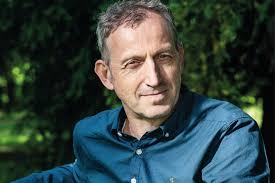
Martin Vopěnka was born in 1963. He writes primarily fiction for both children and adults. He has published two poetry collections, Jen jednou za věčnost, 2023 and Dům, který opouštíš, 2016. Several of Vopěnka’s novels were translated into many languages. Most recently The Back To Beyond or My Brother The Messiah. Martin Vopěnka serves as the president of the Czech Association of Booksellers and Publishers as well as the founder and director of the publishing house Práh. He has raised four children and lives in Prague, the Czech Republic.
Kristýna Adámková is a graduate of Palacky University, Olomouc. She holds an MA in translation and interpreting and works in that field as a freelancer from her home in Kroměříž. Martin Vopěnka’s poetry collection Dům, který opouštíš is her first literary translation project.
*****
Previous Translations
THW33: Flemish • THW32: Marina Tsvetaeva • THW31: Greek • THW30: Swedish • THW29: Galician • THW28: Galician • THW27: Early Irish Poetry • THW26: French-language Poetry from Africa and the Arab World • THW25: Contemporary Hebrew • THW24: French • THW23: Italian • THW22: Russian • THW 21: Austrian • THW 20: Macedonian • THW 19: Swiss-German • THW 19: Spanish • THW 17: Franco-Canadian • THW 16: Modern Greek • THW 15: Kazakh • THW 14: Hungarian • THW 13: Polish • THW 12: Classics • THW 11: Catalan • THW10: Hispanic • THW 9: Hebrew • THW 8: Bulgarian • THW 7: Japanese • THW 6: Dutch • THW 5: Portuguese • THW 4: French THW 3: Italian • THW 2: German • THW 1: Italian
 The High Window