*****
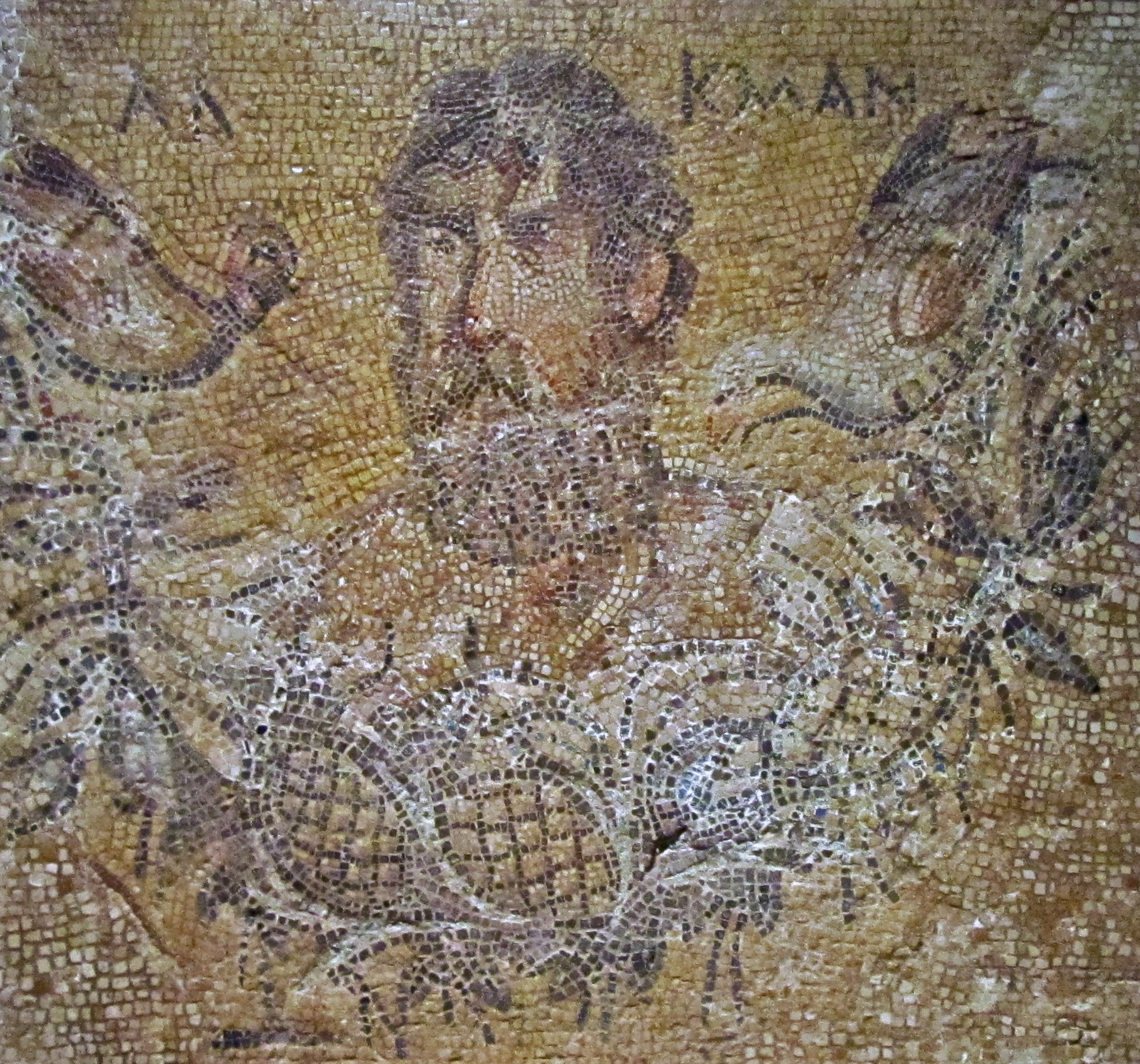
Alcman was an Ancient Greek choral lyric poet from Sparta. He is the earliest representative of the Alexandrian canon of the Nine Lyric Poets. He wrote six books of choral poetry, most of which is now lost; his poetry survives in quotation from other ancient authors and on fragmentary papyri discovered in Egypt.
*****
Peter Reading (27 July 1946 – 17 November 20110 was an English poet and the author of twenty-six collections of poetry. He is known for his deep interest in nature and the use of classical metres. Widely regarded as an influential alternative presence on the UK poetry scene, The Oxford Companion to Twentieth-Century Poetry describes his verse as ‘strongly anti-romantic, disenchanted and usually satirical’. Interviewed by Robert Potts, he described his work as a combination of ‘painstaking care’ and ‘misanthropy’.
*****
Alex Barr
Alcmanics: Good for a Rant
Searching for a form to express an embittered and satirical theme, I heard in my head a line that seemed a perfect fit:
This is unclean: to eat turbots on Tuesdays
It came from an untitled poem by Peter Reading which I quote at more length later. Reading is a poet I’ve always been fascinated by. His work is refreshingly varied. The way this particular line stuck in my memory is a testament to the power of the form. The poem is in dactylic tetrameter, associated with Alcman, a Greek choral lyric poet who lived in Sparta in the seventh century BCE.
Apparently the Doric vernacular he used was considered harsh by contemporaries. I wasn’t aware of that when writing my own Alcmanic, but harshness seems appropriate to the form and to my purpose. The rhythm is just right for a scathing delivery.
The beat we hear most often in poetry is iambic. A line of iambs contains equal numbers of stressed and unstressed syllables and feels smooth-flowing, whereas in a line of dactyls, with twice as many unstressed syllables, the stressed syllables stand out more.
Of course, dactyls occur here and there in most poetry, but usually in isolation. When four of them follow in succession the effect is inescapable. It’s like the emphatic telling-off we got from our parents:
Did it on purpose didn’t you? Look at me!
Just right for vituperative verses. When the last foot of a line of Alcmanic is truncated, losing the last two syllables, the effect isn’t lost. When the last foot is a word of just two syllables, the first of the two unstressed beats acts as a pause, like a ‘rest’ in music, which gives the word more significance.
Those like myself without a classical education would struggle to get a feel for the original Greek Alcmanics or the work of Latin poets who followed using the same form. Reading (1946-2011), considered one of the finest poets of the generation that followed Ted Hughes and noted for his bleak pessimism, studied classical metres in depth. Many of his poems have titles such as ‘Ovidian,’ ‘Thucydidean,’ ‘Lucretian’ and so on, referring to a style and/or a theme. Here is his four-liner titled ‘Alcmanic’ whose mood of fragmented despair is captured by the form:
[That which remains is incongruous; frail bond
palimpsest crumbling, with it the notion;
utterance utterly lost in hiatus;
all that remains is fragmentary:] ear-ring
Here are the first few lines of two of his untitled poems in Alcmanics:
This is unclean: to eat turbots on Tuesdays,
tying the turban unclockwise at cockcrow,
cutting the beard in a south-facing mirror,
wearing the mitre whilst sipping the Bovril,
chawing the pig and the hen and the ox-tail,
kissing of crosses with peckers erected,
pinching of bottoms (except in a yashmak) , . .
And:
These are the days of the horrible headlines,
Bomb Blast Atrocity, Leak From Reactor,
Soccer Fans Run Amok, Middle East Blood Bath,
PC Knocks Prisoner’s Eye Out In Charge Room.
Outside, the newsvendors ululate. Inside
lovers seek refuge in succulent plump flesh,
booze themselves innocent of the whole shit-works.
Robert Southey uses the form to effect, expressing bitterness:
THE SOLDIER’S WIFE
Weary way-wanderer languid and sick at heart
Travelling painfully over the rugged road,
Wild-visag’d Wanderer! ah for thy heavy chance!
Sorely thy little one drags by thee bare-footed,
Cold is the baby that hangs at thy bending back
Meagre and livid and screaming its wretchedness.
Woe-begone mother, half anger, half agony,
As over thy shoulder thou lookest to hush the babe,
Bleakly the blinding snow beats in thy haggard face.
Thy husband will never return from the war again,
Cold is thy hopeless heart even as Charity –
Cold is thy famish’d babe – God help thee, widow’d One!
And here is my own example, the first verse of ‘Ipsissimus’ which appeared previously in Last Stanza Journal #11:
Fiddling with twiddles on some fancy temple
moaning orgasmically, “This is amazing,”
while bemused natives gather, uncertain
whether to look at the camera, or you,
doesn’t impress, Adrasteia. Your books,
TV series, accolades, weighed in the balance
are wanting because you don’t mention the most
remarkable, gemlike, iconic construction:
the big cooling tower in the centre of Stockport
(sadly demolished back in the seventies)
Dave and I christened The Mayor’s Pepper Pot.
Finally, in complete contrast, the lyrics of ‘Lucy in the Sky with Diamonds’ from the Beatles:
Picture yourself in a boat on a river
with tangerine trees and marmalade skies
somebody calls you, you answer quite slowly
a girl with kaleidoscope eyes . . .
It’s interesting that this is the only example using rhyme. It seems appropriate here, but in any of the other examples would detract from the rawness of the voice. It’s clear the Alcmanic form doesn’t have to be a vehicle for bitterness. But I argue that when it is, it’s more effective than any other poetic metre.
Alex Barr’s third poetry collection Light and Dark was published this year by Kelsay and features poems appearing in magazines in the UK, USA, Canada, and India. Previous collections are Letting in the Carnival from Peterloo and Henry’s Bridge from Starborn. He is co-author (with Peter Oram) of Orchards, a verse translation of Rilke’s French poetry sequence Vergers, published by Starborn. Before moving to Wales, where he now lives, he taught architecture at MMU.
 The High Window