******
The poets
Hugo Claus • Herman de Coninck • Peter Verhelst • Stefan Hertmans • Paul Demets • Miriam Van hee • Tijl Nuyts • Astrid Haerens • Lies Gallez • Annemarie Estor • Dominique de Groen
The translators
David Colmer • Donald Gardner • Judith Wilkinson • David McKay • Egan Garr • Michele Hutchison
*****
Introduction
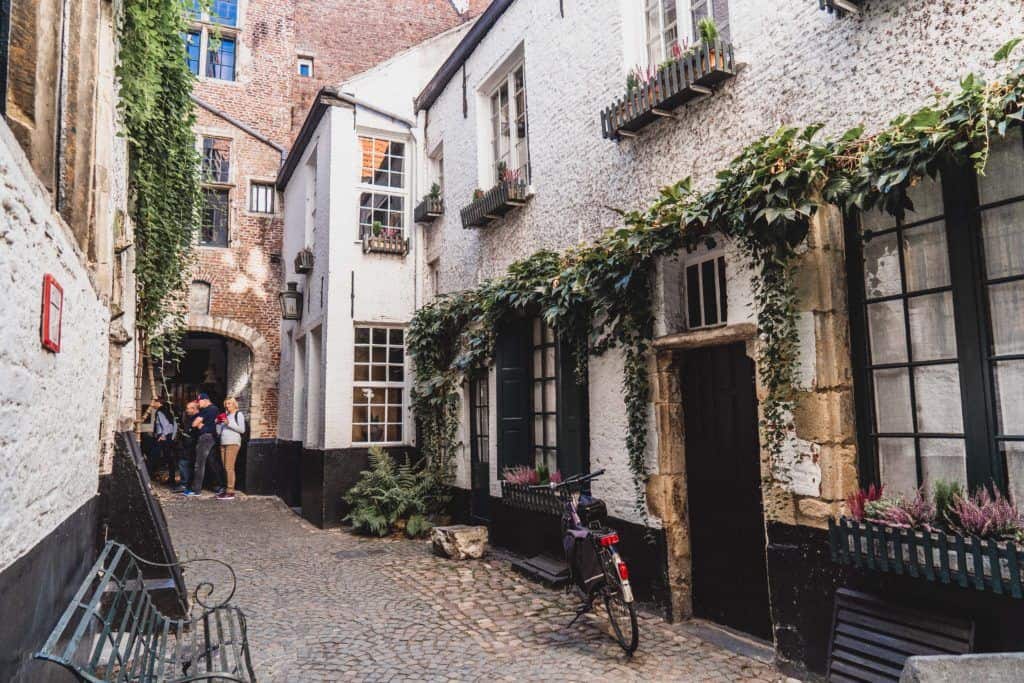
When The High Window’s editor, David Cooke, gave the go-ahead for this special edition, I arranged for a stay in Antwerp’s Translator’s House during the annual Flemish ‘poetry week’ in January*. I read and heard the work of many more interesting poets than I could fit here. My inclusions are an attempt to show the range of different styles and the general shifts in tone and approach over recent decades. Translators and poets put forward their own choices of work, too, so this is effectively a collaboration more than the simple selection of a single guest editor.
Flanders is the Dutch-speaking part of Belgium but you can’t comfortably throw Dutch and Flemish poetry into the same basket. If Paul Evans compared Dutch poetry to Mondrian’s work as ‘freedom within a box, within a strictly delineated framework’, I would say that Flemish poets tend to beat against the restraints of form. Lines are often overly long; I’ve struggled to fit some to the page. Poems can be prosaic, are often experimental; they include lists, go off on riffs, even take the form of questionnaires. They can be introverted, romantic, lyrical, futuristic, and are often politically and socially engaged.
The issue kicks off with Hugo Claus’s famous poem ‘Ostend’ translated for the first time by David Colmer. It’s quite a coup to be offering readers this. The poem fortuitously links Belgium and Britain across the English Channel: “And over Ostend a cloud of sand / Fanned out from the invisible opposite shore, / From hazy England” [trs David Colmer]. There are a few more poems that convey Flemish experience, whether through Tijl Nuyt’s train rides or in the subtle backdrops to poems by established poets Miriam Van hee and Stefan Hertmans. The poets travel to other places too: to Carteret, Gorno-Altaysk, or a fictive Jerusalem.
Dystopias and concerns for the future of the planet become stand-out themes in this age of undeniable climate catastrophe. Peter Verhelst’s speculative poems focus on the future of humanity, Dominique de Groen’s on the ills of late Capitalism, and there’s our threatened pastoral in Paul Demet’s ‘The Dance of the Bees’. The poetic voice becomes a lament, or attempts to jam, jar or disrupt. But there is solace too, as young poet Lies Gallez writes: “comfort is also slowly moving in the direction of the other. comfort is the other. comfort is / everything that at first glance doesn’t seem to help but is desperately needed anyway.” [trs Egan Garr] Translation unites us in shared experience, even if our existence is threatened.
*Many thanks to Flanders Literature for sponsoring my stay in Antwerp Translator’s House as well as the translation costs of this special edition. [MH]
*****
Hugo Claus: Two Poems
from Gedichten, 2004 (Bezige Bij) – permission granted by publisher
OSTEND
The place where my existence started to pass.
Nineteen years old, I slept in a room
Under the roof of the Hôtel de Londres.
The mail boat put out below my window.
At night the city surrendered
To the waves.
Nineteen years old, I played cards
With the fishers from the North Atlantic fleet.
Back from the Big Freeze,
With salt on their ears and lashes,
They sunk their teeth into hunks
Of raw meat.
Ah, the click of the dice. In those nights
Of trictrac and darts, I always won.
Later, dawn saw me stagger past the cathedral,
That stone-spun web of fear,
Past the abandoned promenade,
The Casino.
The late-night bars
With hollow-eyed croupiers, bankrupt bankers
And English girls suffering from TB,
While over the turquoise sea,
The cruel gulls screeched.
‘Come in, Mister Wind,’
An ecstatic child shrieked
And over Ostend a cloud of sand
Fanned out from the invisible opposite shore,
From hazy England
And the Sahara.
Past the windows of chemists who whispered
In those days when selling prophylactics,
Past the pier and the breakwaters,
The fish market with its monsters from the deep,
The racecourse where one Sunday
I no longer won.
Sundays came and went.
Nights in the Palace of the Thermae
Where her groaning shocked me.
Her sighing, singing,
The noise she made still plagues
My memory.
I have known other islands,
Seas, desert plains,
Istanbul, that castle in the air,
Chiang-Mai with its landmines,
Zanzibar in the cinnamon glare,
The lazy lazy Tagus. They disappear
In time.
Sharper in the light of the North
I see the childish face
Of the Master of Ostend peeking over his beard.
He was made of cartilage,
Then wax,
Now bronze,
The bronze in which he
Grins about his stone-dead youth.
LUMUMBA’S TEETH
“Lumumba,
the god of the Albinos has sat down
on your dead body as if on a toilet,”
I wrote thirty years ago in a poem
and only now has it slowly come to light
how Lumumba was destroyed.
How the Belgian police inspector Gerard Soete
went to work on the body
with a saw and sulphuric acid.
“Until nothing was left,” he says.
Nothing left? He prised two
gold-capped incisors out and kept them.
“As a souvenir,” he says. When he turned eighty
he hurled them into the North Sea.
Nothing left?
Soete, you illiterate, butchering mercenary,
think of the Argonauts
who sailed the Mediterranean
in search of the Golden Fleece.
They tore the teeth out of the Dragon’s maw
and sowed them in the sand
and the teeth begot a hundred warriors
with spears and swords
and they have formed a line.
And will come these very nights
screeching to your bed.
*Editor’s note: Patrice Lumumba was a Congolese politician and independence leader, the first prime minister of the Democratic Republic of the Congo .The Congo had previously been a Belgian colony. Lumbaba was assassinated in 1961.
Hugo Claus (1929-2008) wrote many novels, plays and poetry and is widely considered one of the greatest of post-war Dutch-language authors. Several of his novels have been translated into English. In 2013 Archipelago Books published Even Now, a selection of his poetry, translated by David Colmer.
David Colmer, a prolific translator of Dutch-language literature in a range of genres, was born in Australia but has lived in the Netherlands for most of his adult life. He has published some twenty volumes of translated poetry and is currently working on a series of essays about poetry translation.
*****
Herman de Coninck: Three Poems
from De gedichten, 1998 (De Arbeiderspers) – permission granted by estate and Singel for a three-year period
1958
1
My uncle’s dead and I have come to his funeral
with my mother. It’s rare for me to be so fully hers.
Afterwards coffee, funeral reception, the raging hunger
of grief. How’s my father doing? He isn’t here.
Nor home either. And my mother’s blank silence
is too prolonged for the death of just one brother.
The priest is visiting too often too.
Turns out: my father’s had to stay with the police
because his books weren’t up to scratch.
There, he’s fallen ill from being kept from us.
So now he has to stay until he’s well again.
There, it soon turned out, was prison.
Other boys’ fathers take them fishing.
I have a father who’s sick from missing me.
2
Years later, I’m twenty, old enough to know.
I have to understand how hard it was
for him, you see, he wasn’t homosexual
or maybe just a little: paedophile.
And that is why they locked him up back then.
I’m four. He calls me to him on the couch.
I have to act like I’m asleep. He does the same.
And all at once I’m a hundred thousand tiny hairs.
It’s horrifying being me. Once it’s over,
for a long time afterwards, I feel
how tensely each one stood on end.
It’s only now I think, he tickled me,
for hours, not to make me laugh,
but because he didn’t dare caress.
[UNTITLED]
The way this island belongs to the gulls
and the gulls to their cries
and their cries to the wind
and the wind to no one
is the way this island belongs to the gulls
and the gulls to their cries
and their cries to the wind
and the wind to no one.
CARTERET
Nowhere is low tide lower, nowhere
must the sea come from further, from the depths
of the ocean, from five shades of mud, from war.
Just as I’ve come to you from 1944.
A mountain path like a gutter along the edge
of the abyss. The sea, the lowermost there is.
I hold your hand tight.
What am I getting into?
Translated by David Colmer
Herman De Coninck (1944-1997) was an influential poet whose work combines lyricism and accessibility. His first collection, De lenige liefde (‘Lithe Love’), was wildly successful and established his lasting popularity. Thirteen collections were published during his lifetime. De Coninck was also a prominent essayist.
*****
Peter Verhelst: Four Poems
from Zabriskie, 2023 (Bezige Bij) – permission from poet
SNOW LEOPARD ON THE WAY TO JERUSALEM
What are you taking?
Strapped to your back?
What you eat now
you will vomit up later, in the dark,
and eat again.
You have diamonds in your eye sockets – at night
you stand motionless on the street, one arm raised
to protect you from the headlights.
What is happiness to you?
You’ve slid the rings of loved ones
over your knuckles.
Look how beautiful and lithe they are,
dancing blurs in the shape
of a creature running on all fours
with diamonds in the sockets of its eyes,
tiny explosions that hang
in the air long after the bodies
have disappeared.
SNOW LEOPARD ON THE OUTSKIRTS OF JERUSALEM
With something shoved half up us we walk
no bent over we sometimes stop when we notice the shimmering
the plume of smoke in the shape of our house we remember our house
something that has half-buried itself inside us
hands on our knees for support we walk straddle-legged
is something swinging to and fro in between with each movement
swinging between the knees drawn half out of us
pale creature in an amniotic sac peering through the membrane
in the end only that look only that look will be capable
of saving us but what is draining out
is anyone left anywhere who can still pronounce
the name of where we’ve come home to?
JERUSALEM
The love we lost. The mother we lost.
The faith we lost.
The dream.
Above the sand hill the shimmering oasis
explodes as a starry sky the moment the sun sets.
The stars we lost.
We stand in a circle, arms around each other’s shoulders,
and lean forwards – some bend their knees,
others walk off shaking their heads, a few die.
Legs and backs, the walls. Arms and heads, the roof.
Eyes, stars. As long as we stand here, our house stands.
The moment we leave, it will become paradise.
THE PROMISED
Does anyone know the name of the land
of morning light. Of mist.
A sod, torn out of the ground, thrown over
the skeleton of an oak like a spotted coat
to grow legs, flanks, a tail, a head
that keeps turning towards us.
The land that was promised to us
in the days when lands were still promised.
*****
Translated by David Colmer
Peter Verhelst (b. 1962) is a novelist, playwright and poet from Bruges. He has won many prizes for his poetry and fiction, most recently the Dutch Grote Poëzieprijs for his 2023 collection, Zabriskie, from which these poems were taken. The collection is the third in a dystopic series that revolves around climate breakdown and environmental destruction and has a strong mythic tendency. Verhelst was also awarded the 2021 Constantijn Huygens prize for his oeuvre and is often described as a post-modern poet.
*****
Stefan Hertmans: Three Poems
‘Take and Read’ and ‘The Chosen One’ are from Onder een koperen hemel, Bezige Bij, 2018. ‘The Best Years’ from De val van Vrije dagen, Bezige Bij 2011 – permission from poet
THE BEST YEARS
Tonight the ants and stars have a date in the café;
we are lying on the warm rocks, spread out like shards
of future past, and singing voicelessly.
Above us the Milky Way glitters, white umbilical cord
in growing darkness; irony is far away,
parables get transmitted while lips,
hardened with knowledge, drift high in space,
whispering everywhere, a squeaking of bats
and recklessness, because nothing was hoarded,
everything was squandered, because that’s how it’s always been,
even without us –
this lying on the warm rocks, separate and together
the ants and the stars out on a date in the streets
of the firmament, and just for a while we are
an ancient whole where Descartes loses track,
until the threads snap, we let go of our hands
because finding is losing, and we stay where we are
just for a while, we are part of it without knowing,
listen to them singing along the horizon, down there
the rocks without water, where the rod rules
our lives and saves us from drought, just for a moment,
the last words of a new beginning, but without us.
THE CHOSEN ONE
When Flora dances
he sits in the front row.
He takes his glasses off
and shuts his eyes, delighting in
the way she glides.
How he can see her
no one has ever understood;
only an angel’s eyelids
are translucent.
She brushes past and flutters by,
strews light and shadows
around the sandy circle,
she shakes her lissom body and
like a snake with limbs
she writhes and coils, fragrant and
seemingly blind.
And all the time she sings,
high-pitched and rather wild.
Suddenly she stands before his throne;
she pants and shivers.
And he, his eyes still closed,
he lisps towards her breath
and the pulsing arteries in her throat,
applauding what he doesn’t see.
TAKE AND READ
You can study history,
riddles, rumours and gossip,
pages of crazy electronics,
but suddenly you’re facing
a beggar in the rain and no longer
know what you are doing in the world.
A ghost grows warm beside you
and taps you on the shoulder.
Golden shower, Danae in foam,
the glitter of life.
You’re being hugged; the sun breaks through.
Someone deciphered a brand new
cuneiform, kids on their Vespas go
in hot pursuit of Vestal girls.
Everything costs, and everything’s null.
Tolle, lege, St. Augustine,
take this poem and read.
Don’t mention us
in your unbearable prayers:
it wasn’t for us
your God once suffered.
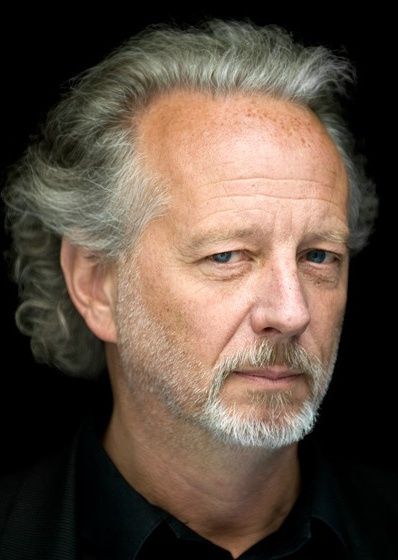
Stefan Hertmans (b. 1951) is an internationally acclaimed Flemish author from Ghent. Originally a prolific and influential poet, he has also written novels, essays and plays. His first novel in English (translated by David McKay), War and Turpentine, was longlisted for the Man Booker International Prize. Goya as Dog, Donald Gardner’s selection of his poetry, is shortly to be published by Shearsman Books.
Donald Gardner is a poet and translator. Originally from London, he has lived many years in Amsterdam. He has translated work by many Dutch-language poets and in 2015 he was awarded the Vondel Prize for In Those Days, his selection of Remco Campert’s poetry. His versions of Dutch poet, Vrouwkje Tuinman, ‘Outflanking Manoeuvres’ can also be read on The High Window website. He has published eight books of his own poetry and in 2021 his New and Selected Poems (1966-2020) was brought out in London by Grey Suit editions.
*****
Paul Demets: Two Poems
from The Dance of the Bees, De Bezige Bij – permission from the poet
[UNTITLED 1: FROM THE ‘BEE BREAD’ CYLE]
We are blinded by the light. The north wind wafts
over the fields. Not a cloud in the sky. The blue
has a chewing gum breath. Something is blowing
that refreshes everything: the dust is gone, old habits. Boreal.
Time for a sacrifice. Who still dares to burn potato leaves
in the field? Not the leaves in the field, but your hands.
Someone casts a line. We see how it
grows. The wind tugs at the duckweed
on the water. The willow has taken off her dress
and just stands there with pollarded shoulders.
Hide a branch in the ground, tamp it down
and change nothing. Everything screams
at the wind and holds its breath.
[UNTITLED 2: FROM THE ‘BEE BREAD’ CYLE]
We are the public. The meadows
behind the new housing estate are being sluiced out.
In the mud the animals are becoming dark.
A dog barks to the moon. We swallow
our tongues and sniff each other’s armpits.
Nobody left on the street.
The windows have closed their eyes. The zero hour
worker leaves on his moped. He is our nomad.
We don’t have to; we’re indoors already. Should anyone take a chance
and ring the bell, the camera lights up
friendship and treachery. We buzz around the tapas
and taste each other’s bee bread. Now the evening is deepening
we become immune to risk
and insure ourselves against death. beneath the nightlamp
duty keeps watch. We are only safe together.
Translated by Donald Gardner
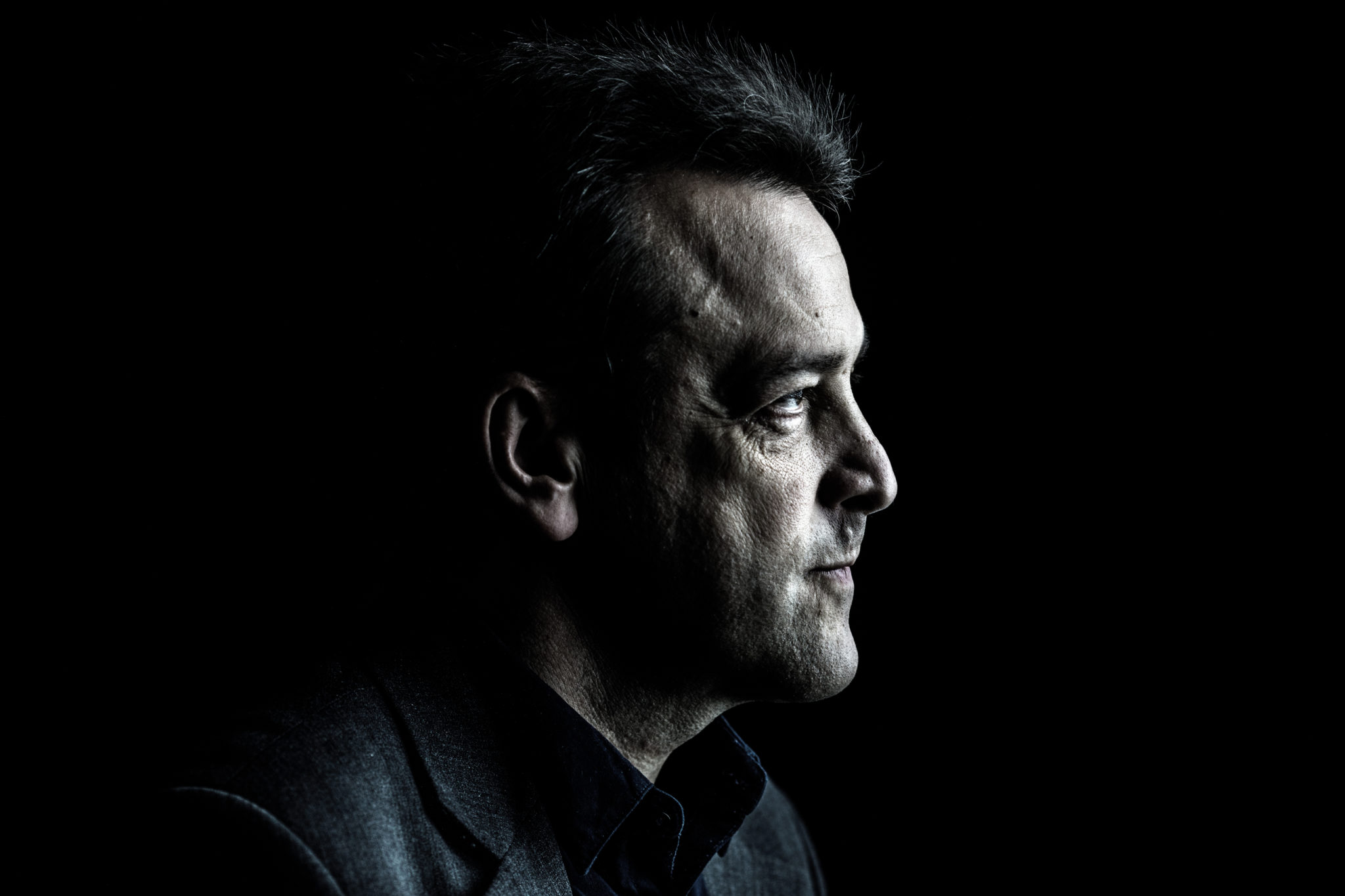
Paul Demets (b. 1966) is a poet and lecturer at the Royal Academy of Arts in Ghent. He has published several collections of poetry, and received various awards, including the Province of East Flanders Prize, the Herman de Coninck Prize, the Jan Campert Prize and the Paul Snoek Prize. His most recent book, De Bijendans (The Dance of the Bees) is a book-length sequence with social and political themes, such as climate change and the rightward political and social shift in western countries. Its opening sequence appeared in Long Poem Magazine, issue 29, Spring 2023 in Gardner’s translation.
*****
Miriam Van hee: Four Poems
from Voor wie de tijd verstrijkt, De Bezige Bij — permission granted by poet
MUMMY
once a month a princess is on display here,
in the museum, today is the wrong day, she can’t bear
light, says the guide, she lived in the iron age
you can see her in a photo, nothing regal, a skull,
teeth, but on her hand and shoulders are drawings
of a leaping deer and on her fingers bird feathers,
beauty couldn’t save her, ice preserved her for us,
she could converse with the dead and the gods, she
succumbed to an illness that we still fear today, and it
creates a bond, she gave us something lasting,
a signature, it was enough, she must have thought, to
draw wings on your skin so you fly, time passes quickly,
the guide announces they’re about to close, it’s getting dark,
we step into clotted snow, we won’t come back
Author’s note: mummified woman, known as the Siberian Ice Maiden (5th to 3rd century BC), discovered in the Altai in 1993, exhibited in Gorno-Altaysk. There are well-preserved tattoos on her skin.
CITY BREAK
they smile at the screen after
first stroking it, to court its favour,
and then attaching it
to the end of a stick, they stay
in the picture, this portrait is the message,
the outlook, the insight, they smile at themselves
and you, where are you, you gaze into
the ravine, where a straw hat with pink ribbons
has caught on a rock, you see what
there is to see, the empty landscape as it
fades and looms up again through curtains
of mist, and shines after the rain
DUCKS
between walls of maize you searched for the scent
of the earth, from a bridge you looked out
over ponds where ducks bobbed up and down,
they all gazed in the same direction, you were
struck by their silence and their muted
colours, their unity of purpose, they were
not real but so-called, they served
something beyond themselves, it was ingenious,
art at first glance, denatured on further reflection,
there were gaps in the border, behind a shrub
cars with blacked-out windows were parked, come
you said to the wind, spread their wings
EGYPTIAN GEESE
they’re not on the list, but i noticed them,
their dark-rimmed eyes, their feathers more colourful
than those of the native geese, there are too many of them,
but that is their strength, they are to die for, but
beauty can’t be the criterion, their noble origins
perhaps, they have flashy coils around their wings,
they’re as noisy as a train on a prairie
when they gather to organise wintering, breeding
and feeding, they know all about such things,
nothing about the cutting of their numbers
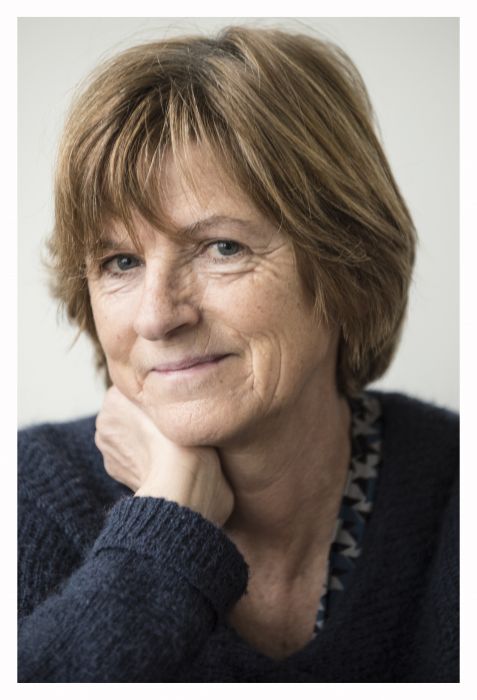
Miriam Van hee (b. 1952), is a well-known Flemish poet from Ghent, with a long list of awards to her name. She studied Slavic Philology and is also a translator of Russian poetry. Van hee has travelled widely and in her poetry often draws on her experiences abroad. The poems translated here are from her most recent collection, Voor wie de tijd verstrijkt (‘For Whom Time Passes’), De Bezige Bij, 2022
Judith Wilkinson is an award-winning poet and translator, who has translated many Dutch and Flemish poets into English. She is currently working on a new Selected Van hee, a sequel to Instead of Silence (Shoestring Press 2007), which was a Poetry Book Society Recommendation.
*****
Tijl Nuyts: Three Poems
from Vervoersbewijzen, Wereldbibliotheek, 2021 – permission granted by poet
ANTWERP CENTRAL (17:06)
J’ai – j’ai vu dans ma tête
Romeo Elvis and Angèle, ‘J’ai vu’
The thing was brought
in secret
to my bed
because I felt such a strong tension
that I could no longer be among people.
Somewhere in Belgium
one naked body moves over another,
listing seven fascinating facts
about sleep. A man falls
through the crystal roof of a laundromat,
and a female mystic is found dead in a manger.
The perfect time to take the train.
We stand on the platform in our pyjamas,
with folding bikes, gauntlets, and heads filled with sorrow.
Side by side in a sea-green-scaled pasture.
As if skimming surrealist comic books
or hanged highwaymen,
we gaze absent-mindedly at the names
and meanings in the trees, we lick dust
and suck honey from the thorns,
we think about the thing.
ANTWERP-BERCHEM (17:11)
The doors hum.
The hypochondriac shepherd
is the first to board. We follow.
That’s how we were raised.
The mirror air melts. No one talks
because everyone is sick in the senses.
The conductor’s whistle blows
and my brain springs up like a bird.
The train groans into motion.
Outside the window we see a tree
spreading its roots like capillaries
into the sky. Lambs
with henna-red fleece nibble
stoically at the branches on the ground.
Behind me, the shuffling
of my fellow passengers, like guinea pigs
in sawdust flakes. The train is a garland
of sarcophagi, stopping at every station.
Commuters are shy
about the things
that matter most to them.
Outwardly onrushing,
inwardly waiting beings.
But someday, they say, everything
will come streaming out.
We read holy books
the way we look through greasy windowpanes.
The cat pulls on her nylon stockings,
the train tumbles, we slowly transform into static.
WEERDE (17:53)
And then, when I least expect it,
just when the time is right,
comes an interlude in the form
of a troop of garden gnomes
boarding the train.
I shove the bunches of mistletoe aside, watch
them stuffing chloroform rags into passengers’
mouths, loading sluggish bodies into
barrows, doing things with pointy caps.
A canary-yellow silence sets in.
They get off at the next stop,
helping a veiled woman with a buggy
on their way out. ‘Merci, c’est gentil.’
When the doors hum shut and the train
heaves itself out of stasis, builds up speed,
I can just make out the silhouettes
of the gnomes opening the bodies,
as their quest for precious stones begins.
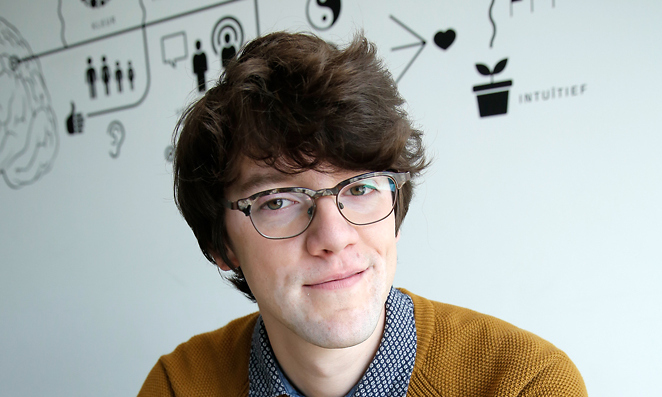
Tijl Nuyts (b. 1993) loves to travel by public transport and is especially fond of double decker trains. He was born in Istanbul, lives in Brussels and recently finished a PhD on the uses of medieval mystical literature in the making of collective memory in multilingual Belgium. His debut poetry collection was nominated for the C. Buddingh’ Poetry Prize in 2017. In 2022, his second poetry collection Vervoersbewijzen (Transports) was awarded the Herman de Coninckprijs and shortlisted for De Grote Poëzieprijs. These poems are taken from the ‘Commuter’ series in that collection.
David McKay is an award-winning literary translator, best known for his translations of historical novels by the Belgian author Stefan Hertmans. His recent book-length translations include Off-White by Astrid Roemer (with Lucy Scott) and Revolusi by David Van Reybrouck (with David Colmer). Some of his translations of poems by M. Vasalis, Tijl Nuyts, and Elske Kampen can be found online.
*****
Astrid Haerens: Three Poems
from Oerhert, Atlas Contact – permission from poet
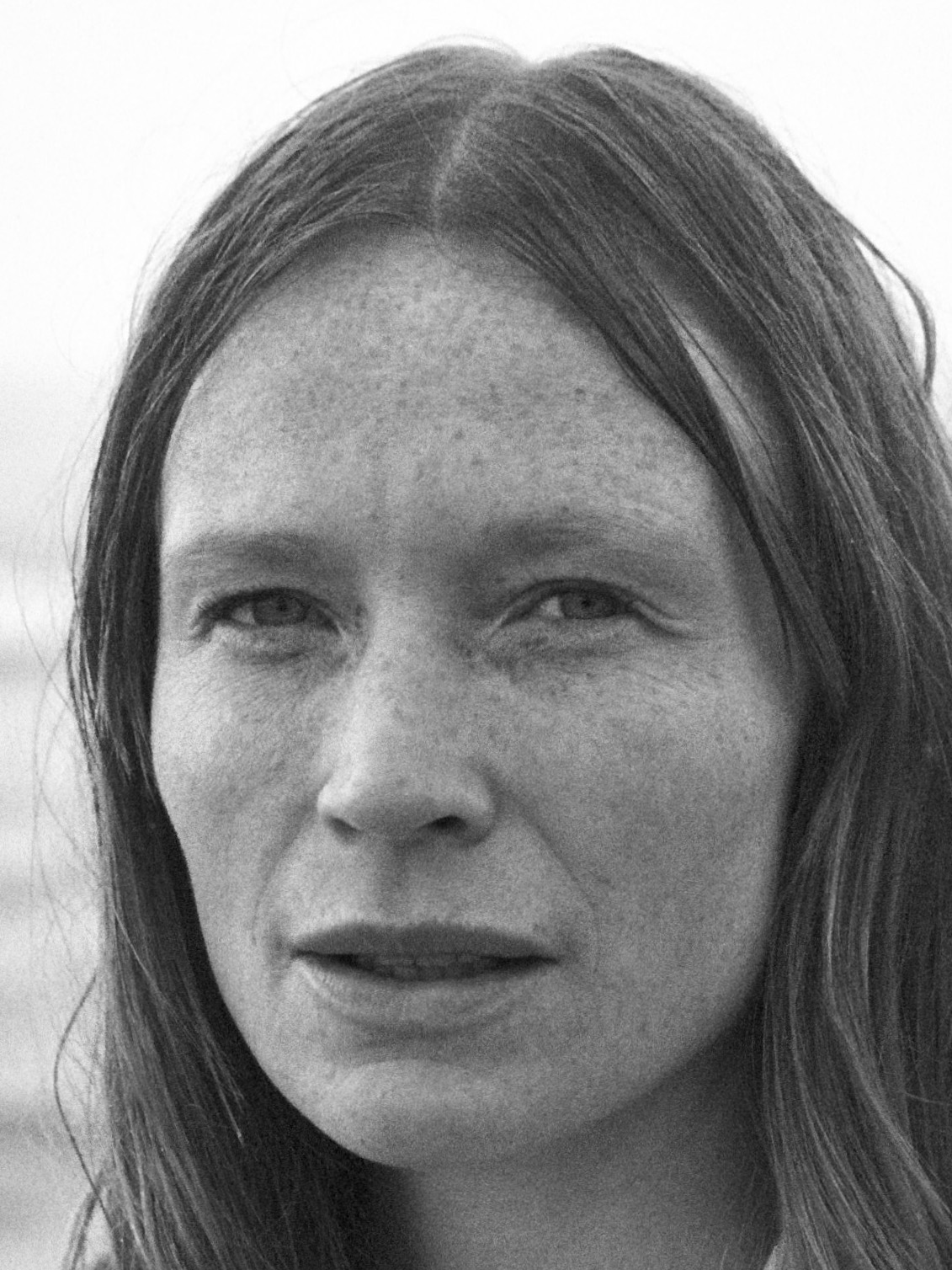
Photograph © Stine Sampers
LETTERS TO MY FICTIONAL CHILD
dearest,
every day I do not choose you. believe me when I tell you I’ve already had to decide so much, hundreds of lives cancelled. but it seems, even by not choosing you, you’re here anyway, my mind triggers the sharpest sensations in my body but actually nothing is going on – the curtain is the fridge is the chair the rug the stillness of this rental hangs like a noose around my neck, I know it’s looking at me just like I know every day again I do not choose you.
dearest,
an ancient reptile is lodged in my body, my abdomen expands and contracts I know there’s an ancestral plan that we can follow but they don’t tell us how much we’ll have to suffer how to treat a beloved then cracked urn in the room’s corner clenched rage in a name a scrape of the past, there’s so much to do without you and with which arms should I carry you tell me what no one ever told me what no one ever learned—
dearest,
if I want to forget you I step into the soaked streets of my city the pattering echoes of my heels, thirsty, my eyes glossy like salmon, looking glasses in the night. the sound of a bass in the distance a faint peel of the powder moon I use to slip deeper into the darkness where we dare to gamble, a fervour pours like vapour out of a half-open door pitched shrieks night shop joy. a metro shuts the doors sighs leaves but I follow my legs that carry me through the night like a horse faster faster the streets arms spread a wind through my whole body, until I halt at a sea aimless the water where I dip my fingers. a voice far off, an idiot singing off-tune from a bridge, no one is needed here—
Astrid Haerens (b. 1989) grew up in Zwevegem in Flanders and studied at Antwerp’s Conservatory. She is the author of the novel Stadspanters (‘Urban Leopards’, Polis, 2017) and the poetry collection Oerhert (‘Elk’, Atlas Contact, 2022). Oerhert won the Belgian Poetry Debut Prize in 2023 and was nominated for the 2023 Herman de Coninck Prize and C. Buddingh’ Prize. The ‘letters to my fictional child’ published here is an excerpt from a longer series.
Egan Garr is a poet and translator from the American South. They have lived in Amsterdam since 2001, where they co-founded the small press Versal. Garr translates contemporary Dutch and Flemish poetry into English, including work by Simone Atangana Bekono, Astrid Haerens, and Iduna Paalman.
*****
Lies Gallez: Three Poems
from honger, heteronormativiteit en het heelal, Querido – permission from publisher and poet, three-year period
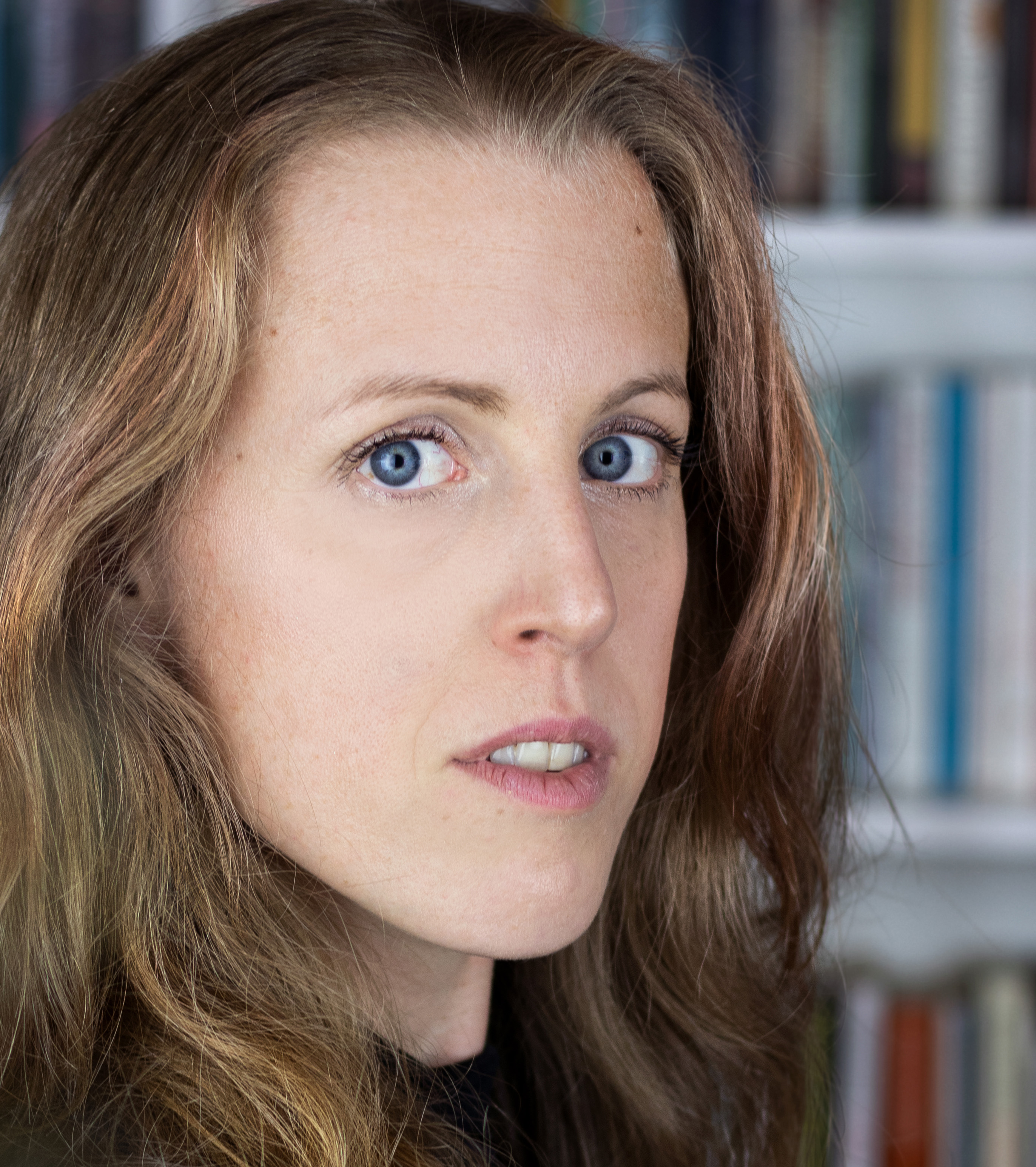
Photograph © Iris Kelly Kuntkens
IF YOU’VE NEVER BEEN COMFORTED: A GUIDE
imagine this: you’re sad about something or other. you can pick: your favorite cat was run over by a speeding car, your heart’s about to break, the leaves are falling from the trees too fast, all the fruit in the grocery store is lonely.
for the first time you have to be comforted, but your body doesn’t want it. don’t resist, comfort means giving yourself over, loose shoulders and loose cheeks where the tears will roll. (but tears are optional.)
we need a vacuum to gather the cups of coffee, breaths and stares. then a room, a chair, a couch and at least two people. comfort needs bodies. comfort is slow.
now you can pick again: you can say why you’re sad. you can keep quiet or laugh or everything all at once or nothing. nothing is good. also, keep breathing, that’s important. comfort will bring you to the other side of grief.
someone will talk to you, whisper, maybe lay a hand on your tight shoulders. and you can stare at your feet. with everything that’s happening, you can trust the ground the most, as long as your heart stays open a crack.
imagine this: you’re comforted about something or other. you don’t know exactly when the comforting started, but there’s a hand on your shoulder. your body is growing heavier. you think: this hand isn’t helping. you think: give into it. (and all that thinking is fine, as long as you feel something too, that fly crawling on your leg for starters.)
comfort is also slowly moving in the direction of the other. comfort is the other. comfort is everything that at first glance doesn’t seem to help but is desperately needed anyway.
RED
sit in the dark of shut curtains. bared forearm. adopt a stick insect. you can’t work out why you keep exposing that forearm. so no more asking questions. name the stick insect Timo. think about adding red to the dark. and later a longing to pound the dark one day with a fist. sometimes you feel as see-through as Timo’s terrarium.
( ) find the love of your life.
( ) buy a house.
( ) have kids.
( ) smile at a sunset.
( ) save it in an album for the grandkids.
can’t check off a single thing. your checkmarks are birds you just cannot catch. break off the thumb of your Kipling monkey. write in glitter pen in your diary that you want to ask out a boy and a girl. that you want to check off two boxes. chew on the top. lose the diary’s key. fantasize what life would be like if you couldn’t thumbs-up anymore.
while cleaning out the terrarium you accidentally break the walking stick. stare at the empty corners. stare at the red in the dark. this is you. is you. know that when it stops, it won’t be the dark you can pound with your fist but yourself instead.
HELIOCENTRIC LOVE
I want to show you the universe and tell you stars are holes in the firmament that I poked with a thumbtack to let the light in for you.
I want to show you how the universe is a patchwork of quiet. how we let our eyes slip over the quilt. that the quiets undress our words. again and again and again, how naked can language get?
I want to bring you the moon without leaving a crack in the firmament. I want to show you how careful I can be with fragile things.
I want to show you the universe while we’re lying on a blanket and kissing as quietly as we can so we don’t bother the stars. I want to show you the centre of the universe by not saying a word. by undressing you. by asking will you be that centre for me.
Translated by Egan Garr
Lies Gallez (b. 1990) has a master’s in (script)writing from the Royal Institute for Theatre, Cinema and Sound in Brussels. She debuted in 2021 with her acclaimed short story collection Het water vangen (‘Catching Water’, Querido, 2021). That same year, NRC Handelsblad named her a “rising star in literature”. honger, heteronormativiteit en het heelal (‘hunger, heteronormativity and the heavens’, Querido, 2023) is her poetry debut.
*****
Annemarie Estor – Two Poems
from Nanopaarden, megasteden, Wereldbibliotheek, permission from poet
IN HOSPITAL
It is evening and the day
lands purplish in the sulphurous ditch.
The cows, vicereines among farmstock,
go doolally in the meadows’ night dew.
And one by one they start to call:
peacocks, the marchionesses of fowl,
foxes, princes of the wild-faced,
wolves, wet nurses of Europe,
and us, patients
in hospital beds.
Each night is a descent into the bestial,
with silver punch-holes perhaps.
We tug open the sliding windows
throw out the furniture
and start to howl.
Even Jan, who, tied to a chair
can no longer show off his stuff.
Even Miet, whose eardrums
have been burst.
We trusted them once.
Our mourning is excessive.
We suffer from separation anxiety, institutionalized
we are, perverse and bedridden,
screen-protected. Under embargo.
The chickens were the ones
who cackled with us in our childhoods,
who taught us to brood
in their language.
The sheets are hanging
from the windows
and the evening has gone to roost.
With stars in our lashes
and sill-prints in our abandoned bellies,
we howl at kangaroos dressed as hares
and exhausted truck drivers
who shake their fists at us.
We once dreamed of owning a truck.
Now we’ve stopped greeting anyone.
We see who can spit germs
the furthest along the fairway.
We’re no longer bothered about
the bitcoins of our buddies.
The last person past the post
has the goldest teeth.
The soil becomes acidic.
The truck never turns back, hesitates
at most. The pain drags on.
The pain drags sheets.
We bite at the knots with our real teeth.
And plan to astonish the cows
with the lasses’ laughing blue gums.
THE BOMB OF THE DISAPPEARANCE OF THE SELF INTO THE OTHER
On Mediaplein in Antwerp where they say poets,
influencers, Flemish celebs, yes, ought to be Dutch
and fill the weekend supplements,
nobody has ever heard of Bea.
Bea works as an undercover poet.
Hell-bent, bent-backed and brilliant,
rummaging around in the depths of the parliament building
armed with her botanical box.
She doesn’t work with left- or rightisms
but with motives and seeds,
parables and spores and malapropisms
and no one has ever seen her face.
For centuries Bea has diligently gathered her raw materials,
she fears nothing, losing herself ever more earnestly
in the shadows of ferns, she is dazed there
eyes open and closed and herb-filled.
In the Garden Of False Suspicions Of Fraud, she finds pretty verbena,
in the Pleasure Garden of Premiums for Sycophants, summer pheasant’s eye,
in the Compost heap of Conflict of Interest, bitter winter cress,
salvia leaves at the back of the Herb Garden of Fake Sector Committees.
Bea sticks the flowers and leaves she collects
into the Herbarium of Evil and Language
drying everything there for later.
She carefully picks up dead butterflies,
the butterflies of speaking before you have anything to say,
the beetle corpses of the ease of influential families.
In the Butterfly Garden of Denial and Forgetting: flax,
loosestrife between lucrative deals regarding profit certificates,
cow parsley and fipronil from the bird garden filled with
broody quails with poisonous eggs.
Leftover bits of power sifted from the earth.
All the while as she sorts and sifts, things
find their way home.
The bomb she builds there,
the bomb of the disappearance of the self in the other,
is the most explosive kind.
It is a metaphor-seed-bomb
with which everything will become something else
and everyone another.
All the dried pistol and calyx-characters,
all the preserved pod characters,
all the deceased birds, beetle idioms, including antennae,
all of these will form the raw material
for the firebomb of imagery
that Bea will launch
from the Enchanted Being’s Crossroads,
which Bea will shoot
at the world covered in screaming me’s,
and which will land with a perfect bang that will dissolve the I into the other,
the other into me, the you into the we, and the you into me
and in the core of the dissolution
deeper cores will fuse as they split
and split as they fuse
into the chain of Plurabelle
with the fuses of Loki
into the energy of Enkidu
into the laughter of Anansi.
Everything melts in the explosion,
including your book, your screen
and the whole of Mediaplein:
heat, a shockwave and radiation,
all the me’s evaporated by the heat,
transformed into an infinitely more radiant you.
Annemarie Estor (1973) was born in the Netherlands but lives in Flanders and Aragón, is the author of seven books of poetry in Dutch and the recipient of several literary prizes including the 2013 Herman de Coninck Prize, the 2018 Jan Campert Prize, and the 2024 Frederick Turner Prize. She likes genre-blending innovations and crossovers in general, especially with music and the visual arts. This resulted in her illustrated poetic indictment Onster Target, in storytelling performances with accordionist Raquel Gigot, and in the mail art project Het boek Hauser with Lies Van Gasse.
Michele Hutchison is a translator, editor and writer based in Amsterdam where she has lived since 2004. She translates fiction, non-fiction, graphic novels, children’s books, and, her favourite genre: poetry. Earlier in her career she worked as Editor of Poetry International Web, an international offshoot of the famous Poetry International festival in Rotterdam. Her most recent poetry translation, Virgula by Sasja Janssen, was published in 2024 by Prototype.
*****
Dominique de Groen: Two Poems
from unpublished new work, Waiting 4 Spring – permission from poet
1.
Tattoo the outline of the wasteland on your organs before it shatters
the cold mud hardened to mirror glass, the desiccated grass crystallizes into shiny towers
without an internal structure or clear function
the temperature pleasant and regulated automatically, coffee streams from dispensing machines, no one ever has to open a window or imagine an outside world
bodies and goods circulate in glass and steel carapaces but they are secondary to the flow of
data, affects extracted from the flesh in which they were once carved
not containers but conductors, solid and opaque
made of abstract forces and flows
a grid of amulets, a cybernetic Stonehenge, geometric stones glistening maliciously
they reflect the complex patterns of migratory birds, data clouds, escape routes but if you look up all you can see is an empty sky
uniform grey stasis because you paused the lot, the clouds of information, gas, frozen
kerosene, the flocks of shiny black feathers
and afterwards you erased everything: the lines the vectors
and you stared at the sky until your eyes filled with tears and all the bodies became translucent
most of all your own
you saw fat flow through your veins, strawberry milk, sugar crystals
memes about dolphins, work, trauma
you wanted ten thousand bees, a gothic love affair between zooming servers deep underground, your skin soaked, wrists and thighs bound with fiber-optic cables
you wanted something expensive, something shiny, something rare
which someone or something had suffered for
but, like, not too much
you got checklists, scripts, procedures, regulations
grey wall-to-wall carpets that absorbed ambient versions of pop songs, the variants began to generate themselves in codal nether regions where you go in search of the sublime
4.
Your whole life you’ve been waiting for
trams lifts emails
a document from the temping agency a payment
that one letter from the Federal Treasury Department that will ruin you
a message from fuckboy or just him liking your story
the end of work
the start of work
the deadline and the feedback
a red star or a black mark
having a fully charged body battery
your emotional metal physical upgrade to the promised 2.0 version after the dip
for the therapy to work the filler to settle the definition to fit
the kick
the climax
the afterglow
you’re always waiting for spring even when it is spring but you want a different kind of bloom
not a zone in the calendar but a tangible luscious area that doesn’t belong to anyone
where everyone is free and lies naked on the banks of a champagne lake, biting into a chunk of watermelon smiling as the juice runs down their necks and bellies and thighs dripping down and feeding the seeds in the soil
the grain that no longer has a name but belongs to everyone
in the meantime you’re also waiting for a big disaster that doesn’t yet have a name
but will change everything
you wait for sleep you want to return to the dream
in which you thought you saw angry purple fish nibbling at the edges of the hours
to change the shape of a workday into something unpredictable too capricious and prickly
for the soft clean hands of the manager
as you wait for the coffee to cool you sink your teeth into the rim of the cardboard cup
and fantasize about tipping the hot watery drink over those pale weak clammy hands
that know how to take streamline discipline
but not how to give care comfort nourish
but mainly you wait for a revolution
systematic political economic cosmic astrological
honestly anything at this point
you interpret the stars the planets the headlines
and the thing moving slowly under the light and the ink
a squirming birth
but for the time being you stick to the rhythm of waiting
you have caffeine for lunch, scroll until you dissociate, hallucinate in silence
sometimes you dream, not about fish
but about finding a dragon’s egg at the bottom of your bank account
a blood-red polyhedron which breaks, covering you in a shiny slime
the afterbirth of a monstrous work
that hooks itself into your skin, your flesh
boring ever deeper into your organs
you root around madly in that slippery financial matrix not because you want to but
just because you do it
(driven by something pressing on you and in you)
and after that you learn to want it
you fix fragments of the cold geometry of that dark agency in your brain
it is spring not the kind you want but the other
it helps too
with the windows open
in the grass with coal tits, dandelion clocks, daisies
you remember for the first time in ages that you have a body
workers crawl through nature’s underground tunnels
produce grow
filter cleanse
transport transubstantiate
generate metabolise
raw material components energy
they’re not dead they move and breathe and flow
they pump wood and salt and coal through your veins
you trace their bodies with your selection tool, human vegetable mineral
and move the opacity slider down
no pixel is allowed outside the dotted line
the soft angry hands typed up the briefing
rebellious elements no matter how small can also unite mutate mutiny
develop into aberrations in the tissue
their secret invisible labour carries yours, supports it
their forces flow to where the supply chains guide them but they can, they whisper,
work for other things
for a different world than the image frozen on the touchscreen
which your finger hovers above
circles
hesitates
do your fingers remember the thieves knot
does your body remember the pleats the twists and turns, the way it didn’t fold into right angles, the way it unfurled into a formless spring tide like wolfsbane in the scrubland
Translated by Michele Hutchison
Dominique De Groen (b. 1991) is a writer and artist. She lives and works in Ghent, Belgium. Her poetry collections included Shop Girl (2017), Sticky Drama (2019) and Offerlam (2020). Her work has been nominated for and won various prizes. Dominique De Groen has become one of the best-known poetic voices of her generation. Her work addresses the great challenges and threats to our society: the excesses of late stage capitalism, climate catastrophe, exploitation and neo-colonialism, and discrimination.
 The High Window
Lovely work, thank you so much.
LikeLike