*****
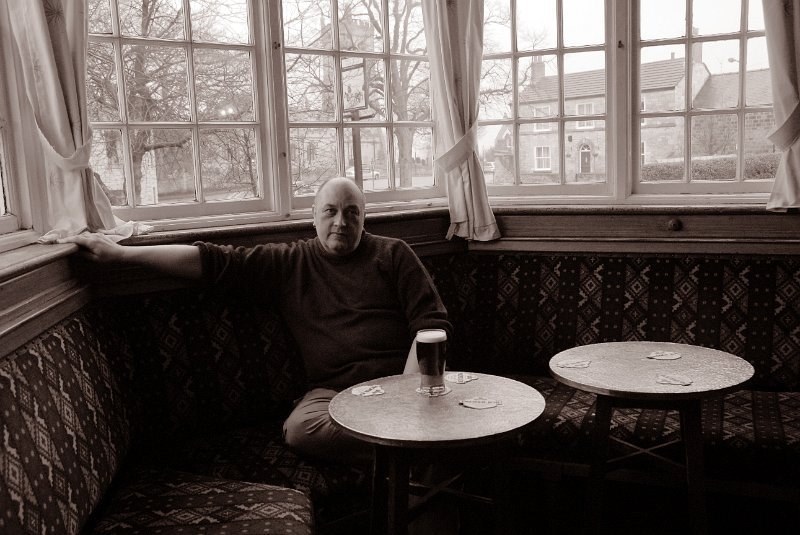
Ian Parks was born in Mexborough in 1959. A poet and academic, he is the editor of Versions of the North: Contemporary Yorkshire Poetry and The Selected Poems of Harold Massingham. His versions of the modern Greek poet Constantine Cavafy were a Poetry Book Society Choice. His own Selected Poems 1983-2023 has now been published by Calder Valley Poetry.
*****
Review • Introduction • Poems
*****
Ian Parks, Selected Poems 1983 – 2023, Calder Valley Poetry, £12.00. ISBN: 9781838275563

Ian Parks has built his considerable reputation on his love poems; poems which are romantic but never sentimental and which avoid sentimentality by observing both the beloved and the loving with a detailed and evocative eye. In the poem, ‘Seahorses,’ from Shell Island (2006), the beloved and the narrator contrast their memories of a holiday together on Crete. The poem begins with a typical Parks emotional sleight of hand, ‘As I remember, you start to forget / the long road winding nowhere, / except back…’ Parks’ sharp emotional intelligence begins the poem by ostensibly offering up the memory of the narrator, as if that were the natural place to start. But that opening phrase, ‘As I remember,’ subverts the narrator’s perspective even as it states it; its almost cliched sense undermined by its very banality, with the emphasis on that first, tiny adverb. Then we are tugged into the narrator’s perspective on the memory of the other; the narrator seeming to undermine that memory too. And just the other side of this seeming emotional smoke-and-mirrors is the long road, the concreteness of which is not only displaced by what has gone before, but also what follows. What better metaphor for the particular state of a relationship than a long road winding back.
If that were Parks’ only tactic, then the reader would be left on eternally shifting ground. But what Parks does next is to move to a description whose concreteness is not in dispute, even as that description, too, has real emotional power;
… the Cretan fisherman
who emptied out his net
onto the quayside smiling
his toothless, pleading smile,
imploring us to buy and eat
the live catch flapping hopeless
on the slab.
The poem continues with, ‘As you remember, / I start to forget…’ And the memory here is of the narrator swimming in a rock pool among live seahorses, ‘and wanting love to last / a little longer than we said it would.’ That last phrase deftly inserted in the arc of the narrative as if to remind both the reader and the narrator of the uncertainty of the relationship as a whole.
The poem ends with a section that starts, ‘What we both agree on.’ And what they do both agree on is an unspoken revulsion at the line of dead and dried seahorses ‘strung out along the shop front…and you not looking, holding back, /keeping to the shadows like a child /who’s met them in their element / and couldn’t bear to look upon them dead.’ Here, too, the narrator recognises both the behaviour and perspective of the other, but also how, in writing it up in the text, the text can falsify. Although the narrator sees the other as ‘holding back’ and ‘keeping to the shadows,’ those words are subtly contextualised by the very rhythms and cadences in which they are couched. The other, here, is realised, reified, in ways which almost allow her, her own voice.
I say, ‘almost,’ here because what I have tried to indicate by looking at the poem, ’Seahorses,’ in some depth is that Parks’ poetry recognises the possibilities of its own colonizing nature even in the moment of its utterance.
In the poem ‘Standards,’ Parks examines his very complicated relationship with his father. In this short, adroit, and very fine lyric, Parks describes his father going out into the clubs and singing, becoming ‘a third-rate Sinatra.’ These performances are taking place during the complications of the miners’ strikes of the 1980s. As Parks writes;
His flattened vowels drifted through
the crowded concert room.
Anything was better
than the failing picket line.
He sang, the women swooned.
Speak Softly Love, My kind of Town.
There was snow and bitter fighting.
My father slicked his hair back,
disappeared into the night
and one by one
the earmarked pits closed down.
Again, what Parks depicts so deftly is the very complex nature of life in a mining community during this time. Into that community, Parks’ father brings songs and entertainment, but Parks interweaves into that presentation, the outside world of the pickets, and the closure of the pits. But he also weaves into this what his father meant to others on a personal level and the inevitable ambivalences that would have created. The final sentence almost establishes a kind of mystical connection between the absconding father and the loss of a whole industry. And other poems in the collection explore that time including the wonderful ‘Orgreave,’ ‘my father bringing home a bloody nose / to show he’d not been slacking in the fight.’
Unsurprisingly for a writer who has a doctorate in the poetry of the Chartists, Parks is also profound history poet. Much of the history poetry is concentrated in his 2017 volume, Citizens, but the perspectives of the past occur throughout this new Selected. His poem ‘Levellers’ describes the bitterness with which the Levellers were fought and, ultimately conquered. It opens, ‘More radical than Cromwell, more extreme, / he had them lined against the wall and shot / in Burford where he tracked them down.’ Again, it’s that first, pre-empting mention of Cromwell, that does much of the heavy lifting. It is clear that Cromwell is the one from whom all the hatred is emanating. On the opposite page is ‘Registry of Births and Deaths,’ a persona poem written in the voice of the Registrar. Here the registrar registers the deaths ‘of husbands, fathers, brother, sons / who died in some disaster underground,’ what the persona calls ‘the deep successive tides.’ Parks’ Registrar incurs a kind of administrative PTSD from all this misery, which is, in turn projected out from beyond the office: ‘At night I blink back darkness from my bed, / lie sleepless in the timeless air. / The town itself is riddled and subsides, / the barefoot shuffling of their feet / a tremor running through the downstairs rooms.’
Thus, Parks is not simply a poet of emotions, but he is a poet compellingly adroit at showing how the concrete and the human build, contain, and refract those emotions. And that adroitness is shown, abundantly clearly in the kind of ‘simple’ language that Frost would have recognised, driven by a daunting yet always subtle sense of rhythm.
Ian Pople‘s Spillway: New and Selected Poems is published by Carcanet.
*****
It’s taken me a long time to put together my Selected Poems, mainly because I kept writing new ones that I felt should be included. In the end I opted for those two dates – 1983 and 2023 as they acted as bookends for the whole collection. 1983 was when I wrote the first poem (aged twenty four) that I felt happy enough with to own, and 2023 (aged sixty four) that brought an end a new batch of poems which I’d written since my last full collection, Citizens, which was published by Smokestack in 2017. Putting a Selected together is a serious business for any poet because it presents you with a series of questions that you have to encounter head on. Do you present the poems in chronological order? In which case, is the order dictated by when the poem was written or when it first appeared in print? And if not a chronological approach, then is it a matter of approaching it thematically? That was always going to be a temptation for me having ‘shifted’ from writing primarily love poems to writing poems about social justice – or, more accurately, social injustice – against a broadly historical background, and in consultation with my editor Bob Horne, we decided to go with a selection based within the contents of individual collections while allowing some leeway in terms of thematic considerations. I feel very strongly that what connects the poems – personal or public – is a concentration on what Wordsworth would have called ‘spots of time’: those intense moments when the membrane thins and we see through to the inner reality of things. And that observation applies as much to the political, public poems as it does to the private ones.
I hope, too, that the poems as they stand in my Selected have a narrative element too (and an autobiographical one also) in that they explore the ‘story’ of my development (if you can call it that) as a poet and the key moments in the paradigm shifts that makes this collection what it is. The poems here constitute about a quarter of all the poems I published over that time period whether it was in full collections, anthologies, magazines, pamphlets, and journals. The poems range from Gargoyles in Winter which is about going to see the gargoyles around Mexborough church when I was a child, to Mermaid’s Hair which remembers taking a girlfriend to see the long stands of green weed flowing shallow over the river bed and realising that there, in that moment, were the first poems of my life. And in between my experiences of the Miner’s Strike, my imaginative encounters with the Chartist poets, and the loves of a lifetime. Selecting one in four was a challenge too. Primarily these poems represent a life in poetry; a life where the challenges and possibilities of poetry have been the prime moving and motivating force. Holding the collection now is like holding my life there, in my hands.
*****
Ian Parks: Two Poems from Selected Poems
A LAST LOVE POEM
I was thinking how the daylight disappears,
how one thing blends into another thing
as over river, rooftops, silent park
time slips away without our noticing:
the wave collapses and a cold wind veers
through all the public places where we loved.
That’s what it feels like these years on:
you were quite unexpected and it seems
I’ve used up all the images I know –
midnight stations , coastal roads,
red wine, high windows, lace and sudden snow.
Don’t be surprised if language fails me now.
I turn to face the sunlight. Let it go.
THE MIRRORED ROOM
The airmen etched their names
and the names of their new lovers
with penknives in the bright
reflective glass. We traced
their fragile lettering
as darkness spread outside.
It was your city after all:
its overrated skyline
cutting shapes into the dark,
the river threading solitude
through regions of the heart.
Whoever stands there,
turning to the light, discovers
that they went from here
to death above the Channel,
France or Germany,
leaving a scratched reminder in the place.
I don’t know what it meant to you
but what it meant for me
was sudden recognition:
of how love looks
when circumstance
has stripped it cold and bare
and how those random pairings
made tenable by war
were overlaid across your searching eyes,
rewritten in your raised, enquiring face.
Ian Parks: Four new Poems
THE BONE BOX
The Roundheads climbed to the top of the screen,
prised off the lid and peered inside
then used the bones to smash the coloured glass.
The monks came later and swept up
eight kings of England and a Norman queen,
two princes of the royal blood
where thay lay scattered in the nave:
fragments of breast-bone and a skull
all jumbled in a gilded chest
no more than thirteen inches wide.
Our task now’s not to venerate –
to measure, not to pray,
assisting in the details of the coming miracle –
to reassemble and identify,
to find the reason and the exact date
of finger-bone and clavicle;
shake off the fetters of the grave
so they can rise together and apart
unresisitng after their long sleep
to face the scourging fires of judgement day.
WAR EFFORT
My granfather came home on leave
to find his pots and pans were gone.
Outside the air-raid shelter
with the corrugated roof
he lit a woodbine, stood alone.
Likewise the railings and the gate –
all comandeered and carted off
to forge the bombs they said we’d need
to make the final push.
He tuned the wireless, waited for a sign
as the contents of his kitchen
screamed and hurtled down
on women, children, and old men:
the unsusupecting citizens
of Dresden and Cologne.
PEACE CONFERENCE
It is beneath my dignity
to wait for hours like this.
I huddle closer to the stove
and hear the snip, snip, snip.
My overcoat is heavy with the rain.
Go to Sheffield Pablo.
It will do your image good.
And get a haircut while you’re there.
The delegates are waiting for my speech
but while I’m sitting in the queue
I come up with the image of a dove –
a few bold curves, my signature,
the suggestion of spread wings –
and once I’m sure that it needs norhing more
I set it free in flight.
Get them to do something
with your fringe they said.
It makes you look like Hitler.
I stare in the mirror opposite
and think they might be right.
RAVENSPUR
They came ashore at Ravenspur
and fell down on their knees.
The sea was level with the land
and where the tideline curved
into a bay of dunes and twisted trees
he disembarked his men-at-arms
then stooped to kiss the sand;
gave thanks for a peacful crossing
as his banner was unfurled:
the sun in spelndour caught the wind
and held the moment, fluttering.
A beach of shingle and white bone
where exiles huddled in the cold,
the salt air blistering their lips.
The horses cautious on the planks.
A brown swill frothing on the surf.
The man, the moment, and the place
all lost from sight, all gone
under the North Sea labouring –
something in the quality of light,
an ink blot on a sepia map
where Edward of York
came back into the world
to claim his birthright and his throne.
 The High Window