*****
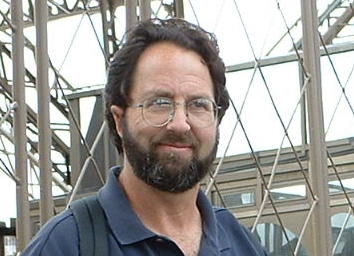
Neil Shepard’s ninth collection of poetry is The Book of Failures (Madville Publishing, 2024). His previous books include How It Is: Selected Poems (Salmon Poetry, 2018) and Vermont Poets & Their Craft (Green Writers Press, 2019). His poems appear online at Poetry Daily, Verse Daily and Poem-a-Day, as well as in several hundred literary magazines. He founded and edited for a quarter century the Green Mountains Review, and he currently edits the online literary magazine Plant-Human Quarterly.
*****
THE WASTING
*
He was deep in coma. He was warm
to my hand on his brow. Whatever furrows
the world’s concerns had plowed into
his forehead were smoothed over now.
A bed lamp shone overhead. Now he was
inert as a sunlit stone, ready to merge
again with the earth. His breathing,
when it came, was even. No rasping
or panting. Someone said his breaths
were triggered not by the body’s need
for oxygen, but by the buildup of
CO2 in the lungs, our waste, needing
to be released into the world, and so,
the exhale, before the next inspiration.
Someone said, your dad is taking in
less from the world, no food, no water,
and so, less energy, less carbon, merges
with the body’s oxygen, and less reason,
therefore, to exhale. Wasting away, we say,
wasting away, when there is no waste left
to promote the next breath. That was the stage
I found him in, or on, playing his part
in the final act. Someone had brushed his hair,
had placed a breathing tube beneath his nose.
Two hospice workers entered and said,
We’re here to honor and to love your father.
Had I misheard the second infinitive?
They said it again: to honor and to love.
And thus began all my woe, as they placed
two pillows under his torso, gently
turned him first one way, then another,
to keep off the bedsores. Each time they re-
arranged his open mouth, which had crumbled
from the pull of gravity, until it was,
again, mostly a round O exposing
the speechless tongue, the shadows in his throat.
*
Speak. Tell me of the blood rush and the blockage.
Tell me how the senses close: first the blackout
of the eyes, then the body’s lost bearings
in the world, the tongue teeth-bitten as it
tries to describe the whirling vertigo,
the fire in the temples, the enormous
ache that comes from nowhere you can name.
Almost last, the scent of burnt fuses, smelling salts.
Speak. You can hear me. The last to go
are your ears. You can hear me saying no-
thing, struggling with that long suppression:
feeling. What do I have to say to you?
*
I plant my hand on his forehead. Caress it,
I tell myself. I turn my hand over
and with the knuckle side, caress his brow.
Talk to him, I tell myself. No words come.
Say nothing, especially now, in his dying,
that is not true. Others would say otherwise:
Give comfort at all cost. My creed, such as
it is, is otherwise from their otherwise.
I will say nothing, or a few vague things:
Well, here we are, at the end. You look calm.
I hope you’re calm. I’ve flown through a storm
to be here. Can you hear me? I’m here now
at the end. At your end. At the end.
*
The doctor said, Without food or water,
a failing body lasts at most a week.
A hospice worker whispered, I’ve known some
to last for two. Someone on the night shift
swore the record was a month: A body
lived without nutrition for a freaking month,
he said, a freaking month. So much distance
in my gaze, I’m ashamed. We’ve never been
particularly close. That word, particularly,
the culprit. He’ll die by degrees, my voice
said to my mind. My anger will leach, my love
will come, or, at least, I’ll arrive at a neutral place.
As if perfect neutrality were peace.
*
We sat another hour or two. I checked
his toes and fingers. Not blue. Not curling.
The doctor came to check his heart, his breath,
and feel his left leg. It’s getting cold, he said.
And that means? It could be days, or hours. Hours?
It would be days, my voice said to my head.
I brushed my knuckles over his warm brow.
I listened for a minute to his five or
six breaths, I smoothed his hair, and then I left.
*
That woe. Those Oreos stacked before him,
like Midas gold, gleaming in his eyes:
two piles, five-high, ready for devouring,
his just desserts for a day’s work well done.
We are carbon creatures, our foods carbon,
our acids breaking it down, extracting it
from the body’s deep mines, for energy.
So much, so much did he consume. The waste.
The want. The sugar, salt, and fat. The snack.
The snacking before meals. The meals.
The snacking after. The snacking between
TV ads, tubs of ice cream, bags of chips,
candy bars, cashew nuts, cans of Coca-Cola.
From dinner to bedtime, thousands of calories.
How does a man on a couch elevate
his respiration rate? How does a man inert
burn off the consequences of his waste?
*
That woe. Because I could not love him.
Because unlike those hospice workers, who
knew him not, who honored him only
as generic man, because unlike them,
I who had lived with him had so much un-
resolved, so much deep, unacknowledged…
whatever it is that tears the world apart—
from him to me, from me to him—till death
us do part, so help me God I do have it.
*
What was the ancient grudge between us?
That you banished my world, as I banished yours?
If poets are the unacknowledged
legislators, then legislate this: Traverse
the no-man’s land between business
and verse, war and peace. Because you were
a foot soldier of the Second War and
I, a war resister. Because you could recall
all the war songs yet balk at the poetry
that shaped them, balk at that one word (of surrender),
poetry, province of the lily-livered, limp-wristed aesthetes…
now, near death, I will teach you its province and provenance.
Start with that sound you tartly called your art form:
It involves the mouth—as mine does—if not
the mind. You did this thing with your lips pulled
back, tongue pushing breath through your teeth, a quick
whistle, a word you made up, onomato-
poetic sound from your cheeks, a sissle,
grimacing like a gargoyle, a sissle,
whistling an old war tune, “Yankee Doodle.”
This is my art, you said. It rhymes with fart.
That’s your business, isn’t it, big shot?
*
Because unlike those hospice workers, who
knew him not, I had lived under his roof,
had broken his bread, had owed him all,
then nil, had played the prodigal, had not
returned, or had returned only in body—
Just spend time with him, Mother said, just sit
beside him on the couch and watch TV
together and have a snack—had struck
tennis balls back and forth across a net;
had struck golf balls together toward a distant green;
had struck up one faltering conversation after another—
because what I loved was nothing to him, nothing.
*
That TV show from which he quotes:
Yabadabadoo! That’s Fred Flintstone, actor
closest in looks and actions to my father.
And he’s a fucking cartoon character!
Yabadabadoo’s not rocket science.
Not E=MC2, not Cogito ergo sum.
It’s paralingual sound, that is, sound
streaming alongside language, without
the smart referentiality. It’s
pragmatic, expressive as an upraised
club swung around a yawping caveman’s head.
Yabadabadoo! Yabadabadoo!
Which could mean, I feel great! or Go cook me
a flaming brontosaurus steak, and I’ll
feel even greater! It sounds like a noogie
to the noggin. Like a happy wedgie. Like
a victory lap after Flintstone’s feet
have raced the caveman car around the track.
It sounds like Archie Bunker’s Edith! or
Ralph Kramden’s One of these days, Alice—pow!
Straight to the moon! but with less meaning
and less aggression. It’s an exultant
sound—Happy as a pig in shit—my father’s
other Top 10 Hit in the annals of analogues.
And now he lies all out of words
or paralingual meaning, just the steady
six breaths in a minute, each one heavy
as a stone at the caveman quarry.
*
A call from hospice: 2:00 a.m. The night
nurse reports my father’s done with sleep,
with breath, the brief ritual of details:
diuretics as his lungs filled with fluid,
morphine as panic and terminal pain
seized the body. And then he slipped away.
*
I said I wouldn’t, damn it. No metaphors.
But God, when the chapel director
shows us a side door, we enter and see
the body laid out in a cardboard box,
as we’d agreed, the body in its hospice
gown, as we’d agreed, the body slightly
bloodied at the breastbone from where they plucked
the pacemaker, a slight shock, and more shocking,
the body’s face made up to look like—no,
this simile, this counterfeit, was not
my doing, I who long ago despised
the mortician’s deceitful hand—this face,
this old-man’s face looks like a youthful
father, facsimile of someone I’d known
in boyhood when he lifted me skyward—
but no—being in cold storage for three days,
his face, when I touch it, is, as the dead
metaphor goes, cold as stone.
*
Rest In Peace. Why is the acronym
an antonym: RIP? Where he is: peace.
Where I am: torn. Broken piece of the world.
And, therefore, shorn of peace. He’s cremated,
his body gone to ash, his wholeness
delivered out of whole cloth to an urn.
Ridiculous. Why purge and burn the corpse
if not to cast him broadside by a generous
hand? Not one of us is so generous.
My mother wants his ash if not his essence
sealed in an urn sealed in a mausoleum
beside her own corruptible body.
Did he wish some dollop of him had been
scattered into mountain wind or sea breeze
or gusts along a golf course? No one knows.
His living will and last testament are
silent on the matter of scattering
matter to the four winds or windless tomb.
What’s the answer to the riddle of a man
with no last wishes? To follow mindlessly.
*
Rest in peace, father. That faker in the cardboard box
is not you, nor is that cheated ash and dust in the urn.
Rest in peace, our memories remain the only vessel
worth mattering, worth holding your matter, father.
Conflicted, conflated, shrunk, or smooth as death on your brow,
these memories are all we have of you now; they’re ours until
they pass with us, or pass out of our minds, into timelessness.
They are what we know as love for a father, a stranger,
who brought us here to matter, and to the brink of matter.
Rest in peace, father. You have carried our terror farther
than you could know, simply by being father, carrying
our fears a while in the world, carrying us out of many
dark places, carrying us now to the edge where your own
small matter expands into the gathering immensity.
*
Now you’re gone and that mouthed sissle sounds
in my head its untranslatable
intimacy. It is sound beyond sense,
though not senseless—echo of who you were.
That sissle and those round Oreos you
once consumed are now consumed in my mouth
after the memorial service, sweet
chocolate and cream wafers linking time
to timelessness. And the sound that swells
triumphant from your throat long after
your breath is stopped is Yabadabadoo!
as meaningless as it is enduring.
 The High Window