*****
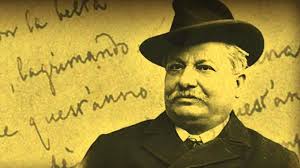
Giovanni Placido Agostino Pascoli (31 December 1855 – 6 April 1912) was an Italian poet, classical scholar and an emblematic figure of Italian literature in the late nineteenth century. His first publication, Il Fanciullino, in 1897 emphasizes the importance of the particular and the everyday, while also evoking a childlike, almost primal dimension.
Although he did not actively participate in any literary movement of the time nor show any particular inclination towards contemporary European poetry, he manifested predominantly spiritualistic and symbolistic tendencies in his production, typical of the decadentist culture of the end of the century, marked by the progressive fading away of positivism.
Overall, his work is characterized by a constant tension between the classical tradition inherited from his teacher, Giosuè Carducci, and emerging decadent themes. Understanding the true meaning of his most significant works is challenging without considering the painful and tormented biographical and psychological elements he obsessively restructured throughout his life, forming the foundational semantic system of his poetic and artistic world.
*****
Giovanni Pascoli: Five of his poems in versions by Stuart Henson
HEDGEROW
A few sloes shiver and their branches reach
into the icy road to pluck your sleeve.
Your steps, like walking on a grave,
ring hollow on the earth beneath.
The wren skips in its thorns to feed.
Fieldfares pluck berries from its crown.
The flock comes rattling as they tumble down
at dusk, roost in its solitary trees.
I was there too in seasons gone
stretching my hands for purple blackberries—
too many for the birds, for me to keep.
The woods, the wings, the skies, the songs!
Old glades where leaves fall silently
each one its moment—its heartbeat.
*
La siepe
Qualche bacca sui nudi ramicelli
del biancospino trema nel viale
gelido: il suol rintrona, andando, quale
per tardi passi il marmo degli avelli.
Le pasce il piccol re, re degli uccelli,
ed altra gente piccola e vocale.
S’odono a sera lievi frulli d’ale,
via, quando giunge un volo di monelli.
Anch’io; ricordo, ma passò stagione;
quelle bacche a gli uccelli della frasca
invidïavo, e le purpuree more;
e l’ala, i cieli, i boschi, la canzone:
i boschi antichi, ove una foglia casca,
muta, per ogni battito di cuore.
***
POPLARS
A lazy morning fog smokes through them
clouding my thought and memory
this barren, grey seed-sowing day,
irradiating bud and stem.
Till breezes rise and swirl it all—
leaves yellowing, spirals of light,
so even I might still cry out ‘Let’s go!’
Then heartache and mute sorrows fall.
The snows will cloak the mountains next.
Dull rain already drums the door
by night—and the wind’s unrest.
These shallow days and early sunsets
that linger, snuff out, disappear…
and chrysanthemums, the flowers of death!
*
I gattici
E vi rivedo, o gattici d’argento,
brulli in questa giornata sementina:
e pigra ancor la nebbia mattutina
sfuma dorata intorno ogni sarmento.
Già vi schiudea le gemme questo vento
che queste foglie gialle ora mulina;
e io che al tempo allor gridai, Cammina,
ora gocciare il pianto in cuor mi sento.
Ora, le nevi inerti sopra i monti,
e le squallide pioggie, e le lunghe ire
del rovaio che a notte urta le porte,
e i brevi dì che paiono tramonti
infiniti, e il vanire e lo sfiorire,
e i crisantemi, il fiore della morte.
***
BRANCH LINE
Along the embankment where cattle
graze idly—a mirage of distance.
The steel lines shimmer and rattle—
bright parallels that vanish in a pearly sky.
The poles diminish airily: insistent,
less insistent, as they fade away…
And twice a day the hum, the ringing,
grows like a woman’s howl and iron grinds.
From time to time the wires sing—
like a giant harp plucked by the wind.
*
La Via Ferrata
Tra gli argini su cui mucche tranquilla-
mente pascono, bruna si difila
la via ferrata che lontano brilla;
e nel cielo di perla dritti, uguali,
con loro trama delle aeree fila
digradano in fuggente ordine i pali.
Qual di gemiti e d’ululi rombando
cresce e dilegua femminil lamento?
Il fili di metallo a quando a quando
squillano, immense arpa sonora al vento
***
LEVEL-CROSSING
The barred white gate squeaks slowly out
to block the road. The women lean athwart it,
gossip, set the world to rights:
‘Her oldest’s twenty and her youngest’s one.’
‘Another? Who’d have thought it !’
‘Country’s in crisis. Nothing’s done!’
They talk of politicians, children, prices,
piglets that eat but fail to thrive…
The black and thunderous locomotive passes,
distant, inconsequential in their eyes.
*
In capannello
Cigola il lungo e tremulo cancello
e la via sbarra: ritte allo steccato
cianciano le comari in capannello:
parlan d’uno, ch’è un altro scrivo scrivo;
del vin che costa un occhio, e ce n’è stato;
del governo; di questo mal cattivo;
del piccino; del grande ch’è sui venti;
del maiale, che mangia e non ingrassa —
Nero avanti a quelli occhi indifferenti
il traino con fragore di tuon passa
***
THE LAUNDRESSES
Almost forgotten in the mist
there’s a plough left where the day’s work stopped—
between the new black earth and old grey dust.
And from the river-bank beyond
washboards and voices, their half-lost
and half-remembered cadences cast on the wind…
The branches shed their leaves like snow.
If you came home it might not be too late.
You left a year ago, and still I wait—
as the plough waits at the end of the headrow.
*
Lavandare
Nel campo mezzo grigio e mezzo nero
resta un aratro senza buoi, che pare
dimenticato, tra il vapor leggero.
E cadenzato dalla gora viene
lo sciabordare delle lavandare
con tonfi spessi e lunghe cantilene:
Il vento soffia e nevica la frasca,
e tu non torni ancora al tuo paese!
quando partisti, come son rimasta!
come l’aratro in mezzo alla maggese.
Stuart Henson has published six collections of his poetry with Peterloo and Shoestring Press, including The Way You Know It, New & Selected Poems (Shoestring, 2018), which contained versions of Pushkin and Bertrand. His collection Beautiful Monsters (Shoestring,2022) included The Rooftops of Paris—versions of Baudelaire, Gautier and Rimbaud. In 2025, Shoestring also pubolished A Handful of Wasps, a book of 72 haiku following the Japanese concept of micro-seasons.
 The High Window