*****
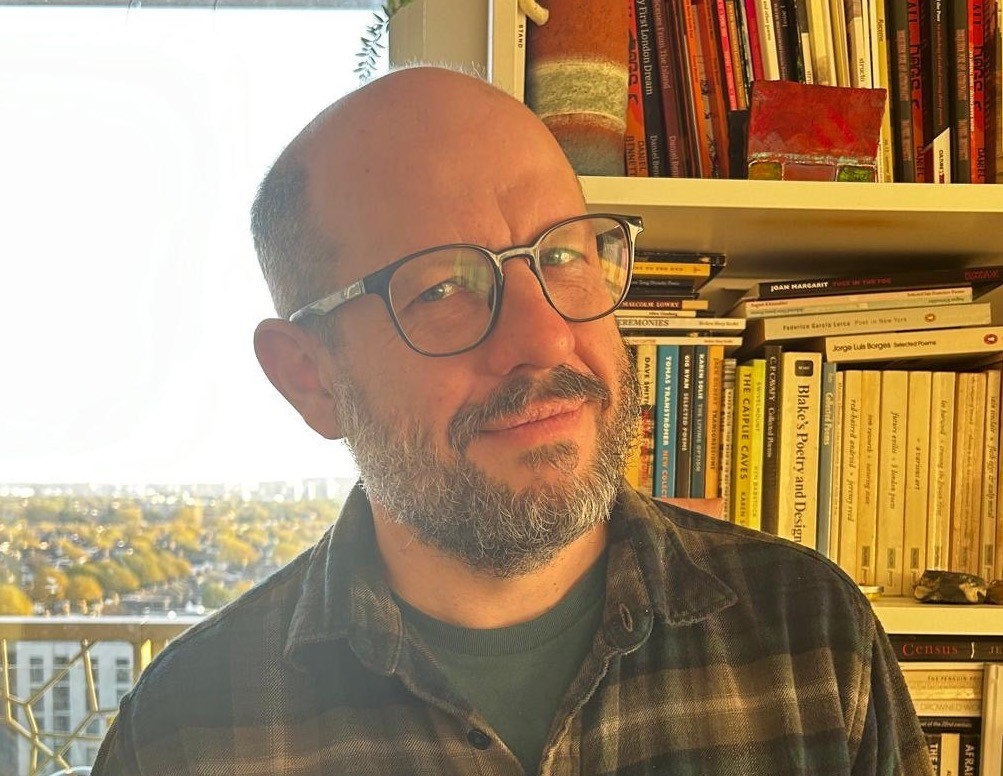
Daniel Bennett was born in Shropshire and lives in London, where he teaches for the Open University. His poem ‘Clickbait’ was commended in the 2020 National Poetry Competition and his work has been published in a variety of places, including: Wild Court, Stand, The Manchester Review, and Structo. His first collection West South North, North South East was published in 2019 by the High Window Press. You see more about his writing, both poetry and fiction, on his website: https://absenceclub.com.
*****
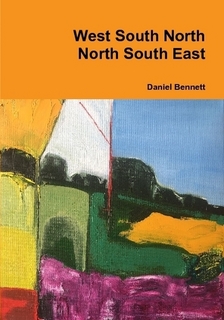
NB: Copies of Daniel’s debut collection are available here:
*****
Introduction
I grew up in a small hamlet in the Shropshire countryside, on the face of it a perfect upbringing for a poet. And, while this landscape has never been far from my writing, and I never seem to escape the topography of this isolated place, I’ve always shied away from nature writing, in part because I don’t think I do it very well, but mainly because I’ve ended up following wilder paths, however much the straight track might have eased my way.
Besides, even in childhood, the natural world was never enough for me. Maybe it was the triumph of electronic media, the doomy eighties news stories of impending nuclear war, or all those odd invasion fantasies proliferating in television: I became more concerned with what the landscape could become more than I did investing real time in what it was. A friend and I once conceived of an ideal community, a way of updating our humdrum neighbourhood. We took the project quite seriously, designing maps and drawing up plans for a future beyond automobiles and conventional modes of transport. What we were building, I think, was a perfect city, even before I ever visited a city, ever really thought about what it might be like to live in one. Later, I moved to London, a collection of villages and hamlets that has fused at the edges, blurring like pin mould, and I found my home among the relative distinctions of Highbury, Finsbury Park, Acton, Brixton, Streatham, or East Ham.
Back when I had definite ambition, I gave up poetry for a time, and turned to fiction, writing a novel which ended up being based in the landscape of my birth. During a testing period of my life, my fiction began to fray at the edges. I turned to poetry again to make something out of those years, not so much to confess (I don’t have much to confess) but to record. I’ve been lucky enough to spend the last few years travelling abroad, and the method of the tourist— making notes, attuning myself to a certain scene or space before moving on— has become increasingly attractive. Whenever I think of myself as a poet at all, beyond the other roles I have as a husband, father, son, colleague, painter, tutor, writer, it’s to picture someone at the edges of a city, recording the exchanges and memories: someone perpetually longing for a place, beyond the place he seem to be occupying, whether for the people who inhabit those places, or out of some barely-understood wanderlust. [DB]
*****
Daniel Bennett: Seven Poems
SPITALFIELDS
Count the ghosts— they’ve gone.
The louche antiques dealer
of Vesalius etchings and tribal masks.
The tender spiv selling waistcoats,
Hawaiian shirts, a broken Leica.
The women from the commune,
offering the sour steam of lamb.
Why fall in love with places, times?
Why expect them to always remain
steady and tolerant as parents
as you roll back in, after years away,
to tell stories of divorce and yoga,
your shoes all over the sofa cushions.
You’ll know the cry when you hear it.
It echoes inside a sherry cask,
wobbling against sticky lees,
becoming scratchy, interminable:
it’s the sob of lazy heartbreak.
The whole world passes through
a flea market, eking out one last sale
before throwing itself on the junk-heap.
Somewhere, a hospital bed waits,
its springs already shrieking
with the weight you’ll bring.
A line of red earth is buried deep
from the times this city has burned,
and it ghosts your steps as you tread
west south north, north south east.
DRY DOCK
An inlet along that ragged creek.
Hemlock beading in hedges,
cow parsley, elderflower, the lump of summer
thick in our throats; the tones
of water drawn out over mud
where we tried paddling once
when you were very young, and found
an oiled impasto of squelchy green
mixing with rust, petrol, pig iron, steel.
Those areas along the bitten coast
were alighting points
to different levels of nowhere,
gnarly scraps of pooled waste,
a litter of fuel canisters and sordid plastic,
rusted shotgun pellets, fishing tackle.
We came across the dry dock
beyond a place renting stretch limousines,
which said much about someone’s priorities.
The boats lay stacked above us in rows,
emblems of disaster, orderly markers
of a great flood, long since passed.
Sloops and cutters, the pleasure craft
we’d watch making serene chaos
as they slid down our local channel.
On a landing sloped towards the water,
we found a boat pulled up for works
a water line blurred against its blue paint,
a dandelion-yellow cabin, flowers daubed
around the portals, an island even on land
and later I’d feel we’d found our place
in that soupy geography of your childhood,
despite landing here by accident.
And although some nights I still wake
imagining I’ve left you alone
by the edge of those incongruous waters
to make your own way home,
I’d like to place this memory
deep into your mind,
a seed pushed into earth.
THE DIVES
I tripped into a former life
by Seymour Place, Cato Street,
the corner pubs named after trades
I might have taken as my own—
Shepherd, Carpenter, Bricklayer—
although I’d worked in a wine shop
at the time, handling bottles
of Fronsac, Thalbert, Meursault
with a kind of saintly dedication,
back when my cheeks were blue
and my heart held this colour
sealed inside, like blood starved
of its oxygen, like slender ice.
The acid of spoiled ale lingered
in the dark wood, bitter as varnish
brown as malt vinegar, its mystery
returning to me from the years
I would walk past the village local,
too young to step beyond the door,
before the days I came to know
the inches of sadness gathered
in the bases of half pint glasses
of Fosters, Stella, Heineken
discarded by a vacant dartboard,
the longing and hopeless energy
of spectators drowning themselves
in an aquarium of sports television,
the nights I’d appraise the shapes
barmen would pattern into foam:
a clover, a smile, a heart, a crown
commemorating my entrance
to the city, the palms scattered
through the streets I would claim,
and I chased this shadow of myself
back across the days of no promises.
THE LAST WATER
We came to the lake through a wood,
the cold waiting for us in shadows,
like puddles of autumn, the world
already drowned in our longing.
Granite and oolite studded the path,
rough quartz, brazen as sea shells,
although our heathen days
made us resist the lesson of parables,
as we had moved towards stories
of pure invention. Birches grew close
to the water but we dreamed
beyond them. Our lovers gathered
in the tree line, static and implacable.
An ideal of water drew us onwards:
its colours of steel, lead, petroleum
and the light crinkling on waves
is the light running off mountains,
a cold tincture of prehistory.
We looked for shortcuts to the edge
scratching shapes in the dust
to those who will follow this path:
the forms of stick people, and lines
illustrating our rude topography,
the hideouts woven from branches,
we hoped would outlast our passing.
Our children had grown older
and would not let us carry them,
and we had forgotten the last time
they allowed us to carry them.
Instead, we rediscovered play
for ourselves, old as we were, pinched
and asthmatic under the white sun,
leaping from crags in volcanic rock
out in the far depths, as fish
stirred fins through silky mud,
and we lost our senses to the chill.
THE PENGUIN BOOK OF AMERICAN VERSE
I saw a city and walked a town
not knowing I would reach a city
and imagine home. One summer,
I rode shotgun with my father
to the fire station where he paced
the routine of work, as I traced
tumbleweed of western dreams,
library-bound, a satchel stuffed
with paperbacks, to the stacks
which offered portals to beyond.
A town became a desert, a road
a road movie, and the fields
of yellow rape I crossed to reach
the boredom of a Saturday job
became a proxy for cinema:
retreats where streams rinsed
through sad backwoods of sticks
and brambles, hard orange earth.
My father tried to ground me
but I floated through elsewhere,
adopting Americana as a system
of making strange, liberating
imagination from the realities
of place. Where does it come from
this longing, like loss? My father
drove fast along the rural roads
always impatient for home and
we felt disaster wait at each corner,
as his radio called out accidents,
houses on fire, a world fit to burn.
90s ROAD MOVIE, POSSIBLY MISREMEMBERED
Black and white, maybe. The chiaroscuro
of noon sun on chain link fences,
a close up of tarmac, kerbsides,
the grungy outskirts of the mute city.
Something bluesy on the soundtrack,
a slide guitar chiming over steaming pipes,
rolling stock, a piebald dog, the credits
a funky scrawl. Here we inhabit
the borderland between cliché
and the reinvention of myth,
between form and its zealous pastiche,
an extended advertisement for an ideal
where narrative shape is offered only
by forward momentum. Story
is landscape and landscape is story.
Landscape is character. Landscape is everything.
Done with the city, the parabolic scuff
of rattlesnakes in white sand leads us
into a desert realm. An eagle circles
in the sky, its wild hover a clatter
of wing feathers. Lens flare. Fata Morgana.
A bird handler waits beyond the rise,
an old man who might be played
by Harry Dean Stanton (if we’re lucky)
who guides us the remaining miles
to a forgotten border town. Here
the pace will pool. Phone lines thrum
with ambient tension. The residents
open up homes, offer minor comedy
of frontier manners, scratchy TV.
The grotesqueries of outsider art,
provide the mise-en-scene: sheep skulls
on staffs, windmills clacking through
the hours, a junkyard patina. The return journey
will always pull at us: like the final call
of lost longing, like my poor naive hope.
THE FOX AT THE DOOR
She said the fox called at her door
every morning that summer
when no one went anywhere
and the city blurred into nature,
a wilderness of grounded flights,
cancelled flyovers. I imagined
that it had never been a fox at all
but an errant father, making peace
through emptied out alleyways
and brutalist shopping precincts,
or a mother escaping remission
inside a grungy coastal town
reaching across back streets
towards a daughter estranged
by train lines and circumstance.
We should beware of such magic.
On moving to the city, I saw foxes
as ragged emblems of a country
upbringing, shabby interlopers,
reckless as empathy. Such myths
end badly: ex-lovers reunite
in tricksy disguises, lost children
return to us mutable and strange.
Or we transform nature into traits
explaining only ourselves, or even
take someone’s life and make
what we want of it. Fox politics,
she called it when the visitor left,
pushed out by a territorial shift.
Only a fox could have returned
to receive the egg from her hand
that final time, closing the ritual
which had occupied her days
and race into a blank morning,
through a chamber of the blown city.
 The High Window