*****
Author’s Note
This work began life as a half dozen translations of Horace for my own amusement. Such was the richness of the source material, however, that soon I was reading enthusiastically beyond Horace and working up versions of Catullus, Propertius, and others of the Ciceronian period and the Augustan age. The plan was to develop versions that would stir readers, first and foremost, to investigate the originals and the full span of work of these great Roman poets. The body of work presented here draws on poems from a period of about one hundred years, from the birth of Catullus (c.84BCE) to the death of Ovid (c.18AD).
The poets of this time drew on a pool of common tropes and themes and ideas and recycled and revisited the work both of the artists that had gone before and of contemporaries, in tribute and dispute. Amidst the great variety of works, then, there emerged as I read the potential to make something of those lines of influence and commonality and draw out a story of a kind, a poem cycle that I’ve called The End of the Affair. The (perhaps heretical) editorial decision to name the woman at the heart of the cycle “Cynthia” is purely at the service of this narrative; I rename Tibullus’s “Delia”, Catullus’s “Lesbia”, Ovid’s “Corrina” in the interests of continuity. Readers seeking literal translations will be disappointed with my efforts but I am not so concerned with accuracy—I make no claim on precision; these are versions, in some cases very loose, the relationship to the original tentative at best in quite a few instances—but with the effect of the work as a whole.
I drew on the excellent translations and versions by many greater poets in making my versions. Readers are encouraged to explore the translations of Guy Lee, James Michie, David R Slavitt, AD Melville, and Peter Green especially as well as wonderful versions by Ranald Barnicot, David Mulroy, Peter Whigham, Frederic Raphael and Kenneth McLeish, Patrick Worsnip, AM Juster, Harold Isbell, Ronald Musker, Len Krisak, Rodney Dennis and Michael Putnam, and the eccentric but fascinating versions of Catullus by Louis Zukovsky.
*****
Propertius • Propertius and Catullus • Ovid • Tibullus
*****
After Propertius: Four Poems
PROPERTIUS 2.13
Love’s assault flings at me more arrows
XXXXXThen ever shot by Parthian bowmen.
*
I offered him poems as lightweight as leaves on the wind
XXXXXAnd he bade me not despise the work.
He ruled that I should remain on Helicon
XXXXXBut not to stupefy the beasts and trees,
Rather to bewitch Cynthia with fine words
XXXXXAnd be praised like Linus for his songs.
*
I do not care if she can trace her lineage
XXXXXBack to the Lupercal, nor do I care
Overmuch for her good looks. My joy is when
XXXXXShe gathers her skirts around, folds her legs under
While I kneel beside the bed reading aloud,
XXXXXAnd quietly nods and weeps and rewards me
With kisses and more—and more!—through an endless night.
XXXXXThen I can ignore the hostile gods!
*
I dream of watching my own funeral. My wish
XXXXXIs for a pauper’s grave and a simple rite:
No trumpet sounds, no entrance hymns; no long parade
XXXXXOf mourners; no keening girls; no wearing of
The wax masks of my dead ancestors;
XXXxxNo crimson priests, no white-clad acolytes;
No casket framed in ivory, no shroud of gold;
XXXXXNo bowls of perfume carefully set in rows:
Just this book of poems, a miserable gift
XXXXXFor Proserpine, the Queen of the Underworld!
And you following, of course, your fist on your bare breast
XXXXXGently rising and falling, blaming yourself.
You lay an onyx box between my feet. You kiss
XXXXXCarefully my blue, my icy lips.
By evening the funeral pyre will be cold—
XXXXXGather me then into an earthen jar,
Plant a laurel tree on the spot where the fire had been
XXXXXSo that it may cast its shade over
The place where last the glorious sun regarded me,
XXXXXThen carve out on a simple stone that here
Lies one who once had loved, and loved once only.
XXXXXThey shall come, blazing with desire,
And sit by that little stone which will be more famous
XXXXXThan the blood-splashed tomb of Achilles.
And when your time comes, and your hair turns winter white,
XXXXXRemember I have walked the road ahead.
Come lie down on the grass beside my monument.
XXXXXI will know, wherever I happen to be.
*
The Fates cursed us with birth; o that my cradle
XXXXXHad been my tomb. The broken promises!
Why give life to a creature and then uncertain days?
XXXXXNestor lived to meet legions of heirs
Before he slipped away; had some Trojan soldier
XXXXXCut him down on the city steps
He would not have witnessed the death of his son
XXXXXNor had to cry out, “why did I live so long?”
*
Yes, you will sometimes be touched by sadness for
XXXXXThe love, the steadfast lover, you have lost.
Though she tried to hold him back, white-skinned Adonis
XXXXXInsisted on the hunt, and, powerless,
Venus heard his death-cries, saw him struggle with
XXXXXThe beast, and fall in agony, and die.
O you came to him with streaming hair, Venus,
XXXXXAnd bathed him with mountain water and tears.
Cynthia, you will call out in vain for a sign from me
XXXXXBut will hear nothing, for I will have nothing to say.
PROPERTIUS 2.1
Am I to blame if all I can write
Are sentimental lyrics about her?
She crosses the sun-washed square in a yellow robe,
Pauses halfway to fix her breeze-stirred hair:
Who would deny the poetry in this?
Later she will sing and pluck the lyre,
And later still, her head on my shoulder,
Fall into an innocent sleep. Like laughter
Feigned, the poems tumble from my mouth.
But were we to bring our other selves—all want—
And stripped and cornered were we to give our hands
Free rein, our tongues to say what must be said,
Then you would see an Iliad unfold,
Our heroes lovers, our battlefield the bed.
PROPERTIUS 2.2
For once I was at peace, happy to sleep alone,
But I was duped by Love again and overwhelmed.
Who permits her walk in mortal form?
Jove, I understand your failings now!
Write of her slender fingers, her tawny hair …
She carries herself as armoured Athena,
Her breastplate with the Gorgon’s head adorned,
Approaching Ithacan altars without fear.
She has the power to tame horses and yet
She glows as one betrothed to Mercury.
She is as Venus stepping from the sea,
Beyond judgement! Hold, you goddesses,
Who naked on the slopes of Ida sought
To convince a shepherd of your glory!
Let it not be your envious touch destroys my love;
Let her witness the ages turn and the gods fall.
PROPERTIUS 1.2
Why hide your best features, my dear,
Beneath your piled-up hair
And that rippling silk dress
When naked Love herself
XXXXXAdmires nakedness?
Why mask yourself with jewels,
Perfume from Antioch?
Such beauty is facile;
Why hide what truly glows
XXXXXBeneath a painted smile?
For artless are the birds;
The wild ivy thrives;
By itself the stream
Will find its course; the sea-
XXXXXPolished pebbles gleam
Bright as any gemstones;
In some lonely place
The strawberry tree
Abhors the gardener:
XXXXXIt flourishes when free.
Leucippas’s daughters both—
Hippodamia,
Marpessa—not one
With glitter and artifice
XXXXXStirred up their men.
The pictures Apelles made
Show them in muted colour;
With grace they part their thighs
And look back at us
XXXXXWith pity in their eyes.
I know I am alone.
And you should no longer fear
You have a rival, C.
I nourish your grace
XXXXXWith my fidelity.
You have been blessed; your tongue,
Charmingly will form
Inspired words; you’ll speak
With a winning lilt,
XXXXXSing your own fine music.
So charm me, dear!
Instead of dressing up
Wear next to nothing,
Stretch across the bed,
XXXXXJust one shoe dangling,
A bow around your neck
And on your slender wrist
A plain bangle, maybe—
Show me who you are
XXXXXSo you can conquer me.
*****
After Propertius and Catullus: Poem
PROPERTIUS 1.13 AND CATULLUS 64
HE:
Since I was the one to walk away, it is
Appropriate that I’m the one at sea,
Seagulls circling, white-capped waves
Carrying me far from Cassiópe,
Out to where prayers go unheard,
Out at the edge of your anger, Cynthia.
The wind howls in the sails—threats mouthed
Back in Rome in the mania
Of passion end up here, battering
The boat. Do you not care if the sands
Of some foreign beach are my last covering
And you have no grave at which to stand
With a crumbled flower in your fist?
Curse all you like the man who built this ship!
Still, I should be in Rome, despite your rage—
When you’re angry you are beautiful,
Your eyes sparkling. Though you prayed
For me to die alone, in cold exile,
Staring at a barren uncharted coast,
I should have braved your wrath and stayed in Rome
And been buried there: you could let fall
Petals on my grave and a lock of hair,
Whisper the story of our time together, and prayers
For a soul that was always yours to call
Your own, O Cynthia.
XXXXXThe stars wheel.
The boards groan. The white sails flap and swell,
The wind making the rigging seem to sing.
I saw a mermaid, found her eyes lingering.
SHE:
You carried me here with your promises and honeyed words,
Snatched from my father’s house to this wind-blown shore
Wrapped in your warm arms, my legs quivering.
Now I watch your sail disappear across
The blank horizon and hear on the wind your cry of “Home!”,
Your booming voice out-calling our kittiwakes and gulls.
Severe, your voice suddenly, merciless
In announcing your retreat from this, and me,
You whose tongue once whispered sweetly in my ear.
The slap of the oars diminishes, the birds take over,
Their hard cries the only marriage hymn I hear,
Their screams instead of my pleasure-groans and breathless yeses.
As a sign I hang my veil from the highest island tree
Where, whipped to ribbons, it waves its ghostly fingers.
I hear the girls crying too from other islands;
Still, there is no solace in bitter sisterhood.
What do they expect, that I read to the others
The dark words tattooed on my bleeding forearm,
The words you said, your hand on the door: “I like this but
I cannot stay”? Expect us to find common cause
In men’s betrayal? But what men! And you are mine!
I long for your throbbing prick, though once (quickly!) sated
You left the hotel room with muttered apologies
And a guilty conscience, left me sobbing there.
Who would change those soft tears for women’s rancour?
I rescued you from the dark waters, fought the gurge
That snagged your heels and dragged you down halfway to Hell—
Close enough that we could hear the mewling of
My dead brother, pleading for his mother still,
Who I gave up to Death to spend my life with you:
Pitiful that I stopped my ears to the siren pleading
Of those suffering dead and pulled you back to shore,
Instead of joining them in oblivion;
Pitiful that I saved you while I released
My dear bother’s grip from mine and let him go,
Condemned, Theseus, as the price of loving you—
For which I’m thrown unshrouded on the hard earth,
Unblessed, carrion for the vultures and the wolves,
No one to throw dust on my rotting corpse.
What malicious snarling beast gave birth to you,
Out of what creature’s stinking bowels expelled
Thrashing where the waves beat the craggy rocks?
Six-mouthed Scylla? Dark, beckoning Charybdis?
Where were you conceived? From what raging sea
Outside the map did you emerge, spastic, coughing
Out the icy water? From the depths of Syrtis?
You choose your father over me, the old ways
Before the new: you chose custom over love
And custom forbids the marriage bed for me and you.
Still I could have been your slave—the prettiest,
The most favoured, the one to lay out your purple robe,
The one whose soft hands traced secret words
On the skin of your feet while anointing them, servitude
As blissful as a marriage, and free of guilt.
But who hears this? Alone, light failing, my lamentations
Cannot carry on the vicious wind, are lost
In the incessant waves, cannot find a way to you
Nor to the gods—thus we are further abused
For we are punished and denied means of complaint!
The black rocks are silent no matter how loud I scream.
That you had never dreamed of glorious adventure,
That the keel of your ship had never ground the beach sands here,
That you had never climbed the hill to pay tribute
To my unconquered darling simpleton brother,
That I had never entertained you in the house,
That I had never seen you, met your eyes, tasted
Your insistent tongue, shuddered under you:
O Jupiter, my road is paved with vain regrets.
My father’s gone, and in any case could I turn
To him that I abandoned for a fair-haired soldier
Spattered in his son’s, my brother’s, warm blood?
You cannot, will not, answer me, my cries drowned out
By your enthusiastic oars and your wilful disregard.
So into the silence of the star-strewn night
I pray, I pray to the ignorance of the cold earth.
I am Naxos. What soul I have is in the rocks.
There is something terrible in the island’s silence:
That is, me; I am the still black centre of it.
The endless sea surrounding me stinks of death.
These stones will be my tomb, but I will not close my eyes
In the blank earth, will not accept Death’s succour
Without my fast-retreating lover pays a price.
I make a pledge while I rest my hand on the cold and thick curled
Severed head of my brave beloved brother
And to that fat tongue falling useless from his bloodied mouth
Give voice again. We spit your name, Theseus,
A serpent’s name. You think I love you? Not enough.
This shell beckons Alecto, and Tisiphone
I summon with this coral shard. And Megaera
This crab claw. I cast them all into the sparking fire, pray:
“Come Kindly Ones! Come vengeful goddesses
That give substance to my blackest pain, my soul’s cries …”
Already I see their eyes flash against the stars,
Hear the rattle of their nails on the stones,
And smell their sour breath—in the madness of love,
I imagine them chasing down on your distant ship,
Spiralling from the night onto you like feathers,
My commands thumping in their malformed ears:
“Punish not him but his progeny. Breath on him
A curse that blackens his seed, that his sons, their sons,
Generations after suffer a pining for a woman’s touch
That is never satisfied. Let them pleasure themselves
In the blue light of a computer screen, or to the thin,
Bored, crackling voice at the end of a telephone,
Or over the knowing models in a magazine.
Let theirs be a cold, unholy, dark and pointless pleasure.
Their wives will always turn away. Their mistresses
Will always claim discontent. Show them how
Love half-given feels, year after year, to the end.”
Sextus Propertius was born near Assisi around 50 BC and published his first collection around 30 BC. He belonged to the circle of the patron Maecenas along with Tibullus, Horace and Vergil. His work is part of the Augustan elegiac tradition, after Gallus and Tibullus, and his Elegies focus largely on the relationship between the poet and a woman called Cynthia. He is perhaps best known to modern readers from Ezra Pound’s versions of some of his elegies in “Homage to Sextus Propertius” (1919). Propertius died sometime after 15 BC.
Gaius Valerius Catullus was born around 84 BC in Verona into a wealthy family and died, aged thirty, around 54 BC. He wrote in a variety of styles and meters, and his 116 surviving poems include lyrics, epigrams, mythical pieces, and biting satire. His love poems to “Lesbia” (thought to be a woman called Clodia, wife of an important governor) profoundly influenced the love poetry that came after him with their candour and with the intensity and wild emotional variety (sweet and savage, sincere and scheming) of the love landscape that he sketches out.
*****
After Ovid: Four Poems
OVID, AMORES 3.11b
I am afraid.
XXXXX Break me apart and see
How fickle, faithless, fanciful I am:
I want to hate but cannot bring myself;
Desire I drag behind me like a plough—
The ox deplores the yoke yet bears it still.
You bless me; I flee your manic gratitude,
Your anguished heart, come back again with dreams
Of the skin on the inside of your thighs,
Your body solid as the Temple. Who
Can know his own, never mind another’s heart?
Your lips part, your tongue ’s just visible …
I’ve begged you before for reprimand—a slap,
A splayed hand on the chest, a pointing finger:
You give me stockings, you give me a red dress,
A phony innocence you are quick to believe.
(“My only wish is for your happiness.”)
All choreography. Loneliness
Can breed delusion and foster wickedness,
And dress it prettily.
XXXXXI ache with want.
I think of you in your glory days;
I think of you blooming, pregnant with your son.
You say you pray for me, yet still you writhe
Enraptured on an unmade bed and moan
My name, and flick your tongue, tasting the air
And looking for a taste of me: “O sweet … ”
You swear by the twisted sheets that “Next time, I …”
You swear with your gorgeous eyes, “I only see …”
From your handbag falls a picture of
A timid Jesus, raising a long finger;
“I pray,” you say, picking it up, “this heart,
This love, will genuinely …” And still you smile.
“Draw lots,” you say, straight-faced. “The shorter straw
Must give, and proper pleasure mind …” You grin
When I admit I cannot choose; you laugh
At the poem I have been trying to write:
“The sails break loose, the storm obscures the stars,
And great beasts moan beneath the floundering craft …”
And yet you cry in my arms. You grind your teeth.
You are tortured in your sleep by wicked dreams.
Your shame is real as the hotel furniture.
You blow on the back of my neck as a child
Might blow a little windmill toy. The breeze:
Do I fall back into your welcoming arms?
Are you really urging me to leave?
OVID, AMORES AND METAMORPHOSES XIII
I avoid the mirror; that grey creep
Looking back deserves the knife, and so
I won’t defend myself or make false claims
That present me in a better light.
I admit my guilt. I confess
To everything I’m charged with. I abhor
What I have done, but I am what I do
And therefore, with a hatred that’s soul deep,
I abhor myself—this bag of skin,
This vile and vicious, miserable child.
I am a child, as powerless it seems;
I am a little boat whipped out to sea:
I lust for every girl I come across
And can’t commit to wanting simply one;
I’m dragged this way and that, and then apart,
By my skittish, distractible heart.
If she’s modest, and looks only at her feet,
I fantasise how shy she’d be in bed.
I know I can subdue a brazen girl
With careful kisses, and quiet, measured words.
A power-dresser, seemingly Sabine-cold,
Oh I can strip of her nobility,
Can take her down, along with her underwear.
I dream of the soft thighs of that smart girl
Who wanted to write a study of my poems.
I’m haunted too by that simpleton who praised
The colour of the cover of my books
But could not read—I long to tutor her.
Once I followed home that girl who wrote
That critical review of my latest book—
I wanted to be tongue-lashed face-to-face.
Another woman praised the poems: to please
Someone who pleases me is what I want.
And on the street, I like the way she sways
Or this one, graceful as a wading bird
That can be captured, so the story goes,
With a whispered prayer and a firm hand.
I want to steal some kisses from that girl
Who sings, eyes closed, strumming her guitar:
I watch her mouth, fall into it; I dream
Of other uses for those skilful hands.
The body of that dancer: it could sway
To another rhythm made in bed—
Even Hippolytus could not resist
A sweaty night under her grinding hips.
You, tall as an Amazonian,
Can occupy the full length of my bed,
While you—well, they say, the best things come
In tiny packets; small birds sing the best.
I’m happy to be sworn at: a foul mouth
Betrays a fouler mind; a cultured girl,
Meanwhile, appreciates some thoughtfulness—
A poem that points to precedence in myth—
And vulnerability: cry if you can.
I don’t complain if Venus is a blonde
But relish too some tumbling black curls
Against an ivory neck: if Leda’s fame
Lies in the darkness of her hair, surely
Aurora’s charm is in her golden display.
I’m stirred up by the beauty of the young;
The swagger of that older woman too
Delights—I long to probe her mystery.
I want them all; I want them all in you
My dear—oh the many spirits rise
When your body’s mine: my mind forgets
And I am most myself in someone else.
Indeed this lays it bare. Two-faced, I look
Both ways: down as, gasping, you rise to me,
As a frantic drowning seeks the air;
And in, along a tunnel, to my soul:
These women’s faces leering from the walls
Are versions of my own, their promises
Are to a dog-eared script written by me.
My desire pulls the curtain back
But only I applaud. There’s sorrow in
The music carried on the poison air.
You must leave. Remember the desperate king
Who devoured the world and then himself?
Ah me, Erysichthon … his kingdom gone,
His daughter sold, his worldly goods consumed,
And still with raging hunger cursed, the wretch
Began to tear at his own flesh, and eat
Himself, bite by agonising bite,
Until he dwindled to oblivion,
His final thought a burning wish for more.
OVID, AMORES 1.13
You come striding over the sea in a chariot of light,
Aurora, flooding the terrified world with golden light.
She is beside me sleeping. I watch the soft hair
On the nape of her neck revealed in the growing light,
Her bare shoulders in outline, the sweep of her slender arm.
The birdsong shrilly warns of the approaching light.
Her hand lies on the pillow, open palmed: better
She makes a closed fist against the strengthening light.
This is our place of happiness, here, the womb from which
She will be dragged, betrayed, into the burning light,
The quiet oblivion of love, that comfortable nowhere,
Not grim reality exposed by the morning light:
The stained carpet, the wardrobe with the broken door,
The crooked gap between the blinds admitting light.
Still, Tithonus is bound for eternity
To wash his ageing face in your rising light.
The price of love’s the phantom’s face in the mirror,
The guilty look in his eyes in the hard light.
.
She stirs and her lips move with a curse. She turns
Away from me, grumbles in your warming light,
Aurora—you for whom I wanted to write a poem
That could make you blush, something throwaway, light
To stir your empty soul and remind you of how you blight
Us with your accusatory, penetrating light.
How you take her from me. You say that we are rich,
Her days and mine glowing with golden light,
But, truly, awake we spend our time searching for love
And long for the darkness, free of your daily spite.
OVID, ARS AMATORIA 3
In this dream you spy the flattened grass
In the forest clearing where I sleep
And your body trembles, already wanting me.
You step out of your dress and then you hide.
Now it is suddenly noon and insects drone
Between the thin shadows and the trees.
Here I come, returning to the woods,
The skin on my bare chest nicked and scratched
No doubt by the claws of the red-eyed hare I fling
Onto the ground, blood on its white coat.
I strip and plunge my face into the crystal pool
That seems to spring from the earth to meet me,
Then, exhausted, I lie down on my back
In the grass, and cry out, “Come, you wind,
Caress me into sleep, you sweet air, come!”
At which point you step out from the trees,
Deathly white but for the livid scar
That is your sex and your welcoming mouth
And are about to call my name but I—
For I just see the bushes part and something
Running towards me, and I have heard the tales
Of the fearful creatures of the place—
Reach for the spear beside my bed
And throw it and as I do I know it’s you
For you hear me scream your name. It is too late.
The spear pierces your heart. There is no pain.
You are lying in my arms. I cover you
With forest flowers—bluebells, meadowsweet.
“I always knew that you would break my heart,”
You whisper. “Let this clearing be my grave.”
Now a dog rose blooms from your wounded breast.
“Let me lie,” you say, “I am the wind.
See, the hairs rise on your arms and chest!
I breathe on you, dear lover, my last breath
With pursed lips: this is not a kiss.”
Publius Ovidius Naso (Ovid) was born in 43 BC. A prolific and enormously influential writer whose works include the Amores and his monumental Metamorphoses, a mythological epic that has shaped Western literature since. Possibly some political misstep, possibly the scandalous nature of some of his verse led Ovid to be exiled by Emperor Augustus to Tomis on the Black Sea (now the city of Constanta in Romania) in 8 AD. From here he wrote Tristia and Epistalue ex Ponto but could not secure a reprieve and died still in exile around 18 AD. Ovid’s legacy is immense and amongst Roman poets his influence is arguably unrivalled.
*****
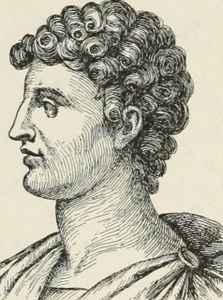
After Tibullus: Three Poems
TIBULLUS 1.8
O I understand lovers’ covert means,
The subtle nod across the table, the secret plans
And promises conveyed in the movements of hands.
I take no auspices to chart the course from glance to bed
For lash after lash I’ve been flogged by desire, tortured near death:
I’ve learned the methods of love through rope and a choking knot.
Spare me your charade. The gods, with cruelty,
In bitter temper, eagerly burn the hesitant.
Why thread those flowers through your hair? Why paint your nails?
Why shadow your eyes, cover up your cheeks with rouge?
The low-cut dress, the stockings and the tight shoes
Cramping your feet are all too much. Notice she
Arrives au naturel. She is not afraid to show
Her wrinkled skin. She has tied back her hair with a simple bow.
Do you wake panting in the early hours, my name on your lips?
Believe you’ve been bewitched, chosen by some crone,
Anointed, tracked, and, in your sleep, whispered to
In the same ancient language that would wither crops
And shake the moon from off her course—believe your body
Throbs because some witch desires it, some owl
Sighing ghost-like, invisibly passing, has influence?
I pay no heed to sacred songs, drumming, incense,
The laying on of hands; I am spellbound by
The twining tongues, groping hands, the heat of skin,
Legs tangled with legs, bare feet seeking a grip
On wet sheets, and a head pressed back into the pillow.
My arm is under her shoulder. Her tongue flickers.
“Too much,” she whispers—meaning her own close-eyed desire.
Her back arches. I nip the skin of her ivory neck
And rest my rough cheek on her heaving breast.
She has bitten one of her nails to the quick. Her scars stand out;
She keeps the story of her burns to herself.
She meets my eyes and scorns the meagre gifts I bring.
I am in love with her indifference to me.
Your bracelets chime on your bare wrist. Your fingers are heavy
With golden rings but the sheets are cold that you clutch in your fists.
Between your breasts that jewelled necklace chills your skin.
The young ignore us; we are phantoms in their world.
You may dream of a beardless cheek and a soft hand
And a lively, curious tongue; in truth, he is amused
By plucking the grey hairs from your head one by one.
You suddenly appear defeated, though you strain to catch my eye.
Where is all the danger? Like insanity
It passes. O had we used life’s full bloom at spring …
A white feather slides by on the relentless river.
She says she suffers at my hands: “You are no comfort.”
I say “her indifference” but she blushes
In my company. I can demand tears
By mocking her. When she complains to me
I flick my wrist; when I complain to her, she cries.
She shrugs as if to say, “This I deserve”
When I should hold her in my palm like a treasure.
She says, “We have shared those stolen kisses and much more,
And I have sat for you in poses of your making;
You saw me undress. And yet you fled a warm bed
Or, worse, never arrived when you had promised me.
I who have hung on every footstep dreaming of you!”
She is careful not to say my name. She licks my fingers.
Truly she mocks me. She has driven me to the edge of love.
Hers is a stern pity.
XXXXXI despise myself.
I have never had her, nor never will. A poem
Is not a teasing lover. You are here and help,
Across the table, warming your hands on your cup,
Your sleeves pulled far down. Out the window
A man has locked himself out of his truck—
The gods are cruel. He raves at the heavens in dumbshow.
You ask, “What is happening in your life?” With kindness.
I say, “I am watching that man try to break through
That door … His pride … The rain on the window … Your beautiful face….”
You say, “You wish to flatter me? That time is past.
Are you writing me into a poem? Write this: We’ve lost it all.”
I say, “I want to remember us, here, this place.”
TIBULLUS 1.9
Sated by her lover not an hour before,
Still she returns to lie between your sheets.
Not the first time the bed’s polluted by her lust:
You’ve found traces, smelled others in the house.
You believed it was her wanton sister’s doing—
The girl boasts of her love of drink and sex—
When it was your wife prolonged the midnight parties
And drunkenly greeted the dawn naked,
Your wife who features in the gossip of the town,
Whose name’s graffitied in the back alleys.
Your wife knows all the tricks, including tricking you:
It passed you by, the new way that she moves;
The stockings and the underwear, that purple dress
You failed to notice, or her painted nails.
She does not put it on for you, that gold bangle
She slides along her bare arm until tight.
Am I pretty? she asks you, going out the door.
When you nod, gently, she mutters a curse.
Do not blame your wife. Any woman in her prime
Would flee from your sour smell, your dry kiss.
TIBULLUS 1.2
Pour me some more wine, that my weary eyes might close
XXXXXAnd sleep come that comforts all who suffer—
For in soft sleep this overwhelming passion rests
XXXXXAnd I find some peace in oblivion.
I’m driven mad, for Cynthia’s now shut away
XXXXXBehind a solid door slammed in my face.
In the night I sneak up to her house and whisper
XXXXXGreetings, curses, requests to the dark wood:
“Let the hard rain hammer perpetually here
XXXXXAnd rot you!”, “Let lightning strike you open!”,
“No, no, if I have insulted you forgive me:
XXXXXI beg you open on a silent hinge!
It is my passion causes me to curse and rail
XXXXXAgainst you: think of the many past times
I hung garlands on your polished doorposts and stood
XXXXXHere leaning on you chatting. Give way, yield!”
Madness! It’s better that Cynthia sneaks away
XXXXXPast her husband and the guards. For Venus
Typically emboldens lovers when love is sure,
XXXXXHelps them slip out through locked doors and escape:
She will tutor you in all the tricks, how to step
XXXXXLightly from the bed not to make a sound;
The subtle glances, gestures that a lover needs
XXXXXAt a party when a husband’s watching
That still communicate a time, a place to meet,
XXXXXSeduction under cover of a code;
Tricks that if the heart is dead of course are useless
XXXXXBut are precious to the lively-minded.
Are you alive in there, Cynthia? Does Venus
XXXXXWaste her breath trying to teach you to love?
Of a wet evening I wander the city
XXXXXLooking over my shoulder. For what, Death?
No, Venus guards me; lovers are impregnable,
XXXXXAnd carry immunity from all harm:
Love will deflect the savage blade; love will convince
XXXXXThe growling murderer to go elsewhere.
I can pass through the shadowy places adorned
XXXXXIn jewels and robbers will ignore me.
Weather too is uniform in love and desire
XXXXXShelters from rain and warms against the cold.
This is heavy labour, but is easily borne
XXXXXIf she would tap the far side of the door.
Turn away, you other couples, when you see us:
XXXXXIt is dangerous to be recognised.
Put from your mind those faces you saw in the sweep
XXXXXOf the car headlights: our pleasure’s our own.
Say nothing of what you saw, and do not ask us
XXXXXWhat our names are, nor seek us out again.
Desire thrives in concealment. And remember
XXXXXThat Venus was born of anger and blood.
I am not afraid. Your husband will not believe
XXXXXThe truth about you, us. You bewitch him
Still with lies and more: I know a witch’s power
XXXXXAnd your feigned madness—chanting at the stars;
Attempting to heal the river; blessing the graves
XXXXXOf the long-forgotten with your soft tears
So that their spirits rest; and speaking with the dead—
XXXXXAll these displays distract your trusting spouse
Who, when you splash milk at his feet to ward off evil,
XXXXXOr spit in the air against some phantom,
Or circle him three times moaning, will indulge you
XXXXXAnd not trust his own eyes were he to see
You wrapped around me on the hearthrug in your house:
XXXXX“A sacrament!” you say, and he’d accede.
It helps he trusts me. He says, “I’m grateful to you.
XXXXXShe tests my patience. She needs a close friend.”
You give me “blesséd” stones, and other charms, and pray
XXXXXOver me, Cynthia: can I trust you?
Rise, a dark succubus to infiltrate my dreams,
XXXXXPatrol my mind and occupy my life.
I don’t want this to end. Honour your desires!
XXXXXSummon the hell-born demons on yourself!
That other man you courted showed his iron heart
XXXXXIn choosing fame and glory over you.
Let him drive a horde of captured Turks before him
XXXXXInto Rome and take their wives and children.
Astride a white horse, in gold and silver armour,
XXXXXLet him receive the plaudits of the crowd.
I imagine another fate for me: oxen
XXXXXDrawing a wooden plough, a flock of sheep,
And though the ground is baked hard I can sleep soundly
XXXXXBecause I lay my head in your warm lap.
I’ve adorned my bed with the richest purple sheets,
XXXXXSoft pillows, but still I wake in the dark.
The quiet splashing of the fountain in the street
XXXXXDoes not soothe me. I weep into the night.
How have I offended her, the goddess of love?
XXXXXDid I utter some words of blasphemy?
Did I take mistakenly from some holy place
XXXXXSome offering, some tribute left for her,
Perhaps the petal of a flower or its stem
XXXXXI picked up on my clothes or on my shoe?
If guilty, I will tear off my skin, strip by strip.
XXXXXI will lie before her blessed altar.
I will kiss the smooth stones that make the temple floor
XXXXXAnd beat my head against the temple door.
You, you write this as if immune from suffering,
XXXXXAnd you sneer, as if the gods ignore you.
You shut yourself away in mockery of love
XXXXXBut she will not be mocked. You will suffer.
There was once a man who thought passion was for youth:
XXXXXVenus clapped a collar around his neck,
Compelled him utter wheedling words to a girl,
XXXXXTry to disguise his dry and snow-white hair.
He was to be seen following her to her door
XXXXXOr cajoling her friends for her number.
He was unashamed and unshameable. The boys
XXXXXDespised him, spat on him, and he went mad.
Spare me Venus please. I serve you with devotion.
XXXXXWhy burn the fields before you harvest them?
Albius Tibullus was born around 55BC and was part of the literary circle around the court of Maecenas. His two extant books (published around 26 BC) feature elegies to two mistresses, Delia and Nemesis, and to a boy, Marathus. Tibullus died around 19 BC.
Alexander Gaul is a retired civil servant living in the South of Ireland. His Roman poems, as well as having appeared in The High Window, have featured in Shearsman, Southward, Blackbox Manifold, Poetry Salzburg and elsewhere.
 The High Window