*****
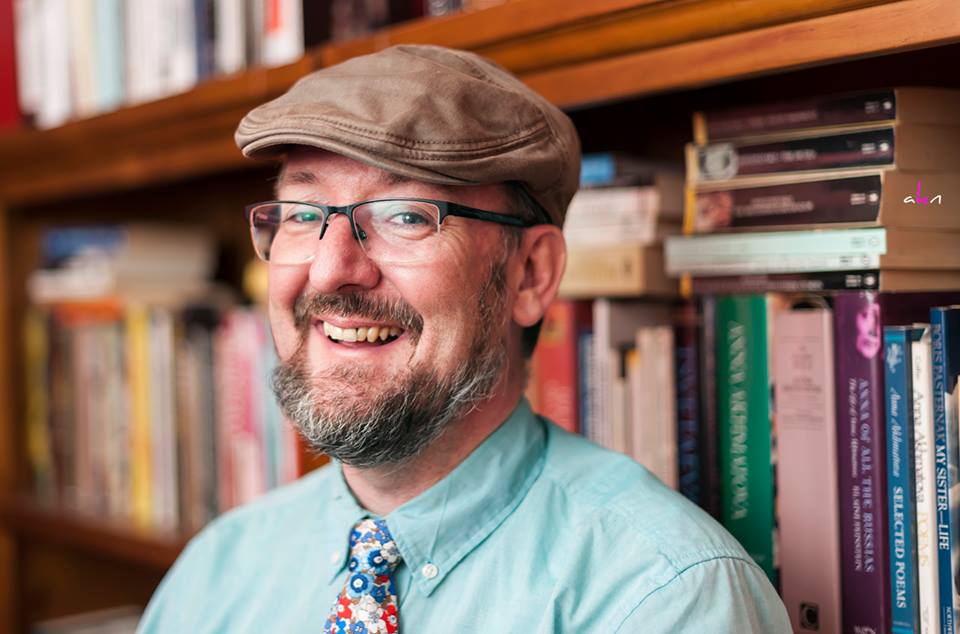
Derek Coyle’s Reading John Ashbery in Costa Coffee Carlow (2019) was shortlisted for the Shine Strong 2020 award for best first collection. Sipping Martinis under Mount Leinster (2024) is published in a dual language edition in Tranas, Sweden.
His poems have appeared in The Irish Times, Irish Pages, The Stinging Fly, Poetry Salzburg Review, The Texas Literary Review, The Honest Ulsterman, Orbis, Skylight 47, Assaracus, The High Window and The Stony Thursday Book.
Derek lectures in Carlow College/St Patrick’s, Ireland.
*****
The Unity of Great Poetry:
Wordsworth, Lowell, Mackay Brown Considered
Poems are constructed from many diverse elements apart from the fundamental multiplicity, the inescapable profusion that emerges with having to choose a range of words to build the poem from out of the rich word hoard of the English language itself. Then there are the exigencies of the poetic line, the demands of rhythm, and whatever sonic landscape is generated through vowels and consonants, the common strategies of alliteration, assonance, and consonance. And then there might be visual images conjured by the poet; alongside metaphors or similes, personification, synaesthesia, to name just a small sample of techniques an able poet might draw from that fall under the broad category of figurative language.
And this level of complexity, of unifying and focusing a range of diverse elements, must all serve the idea of the poem. That is, there must be some logic, a coherence in the theme considered or explored in the poem; the development of its insight, realization, or argument. Typically, each line must speak to, or depart, from the previous line in a meaningful way. So, fully realized poems are sophisticated artefacts where a range of diverse elements have to speak to each other in a complex tension. Some poems are better at this than others. That is, they reach a more complex realization of form than others. Remarkably, the best poems do achieve this nimble or complex realization of form, managing a consistency of connection across the elements that make up the poem, in a way that is as rare as it is admirable. Such unity is the concern of this essay, and we’ll begin with William Wordsworth’s complex and much admired sonnet, ‘The world is too much with us; late and soon.’
Here is the poem:
THE WORLD IS TOO MUCH WITH US; LATE AND SOON
The world is too much with us; late and soon,
Getting and spending, we lay waste our powers:
Little we see in nature that is ours;
We have given our hearts away, a sordid boon!
This Sea that bares her bosom to the moon;
The Winds that will be howling at all hours
And are up-gathered now like sleeping flowers;
For this, for every thing, we are out of tune;
It moves us not – Great God! I’d rather be
A Pagan suckled in a creed outworn;
So might I, standing on this pleasant lea,
Have glimpses that would make me less forlorn;
Have sight of Proteus coming from the sea;
Or hear old Triton blow his wreathèd horn.[1]
(William Wordsworth)
As I have mentioned, this poem is a sonnet. And this form brings its own demands. Relatively simple but still tight enough. Within its fourteen lines, we have the Petrarchan form, consisting of the octave and sestet. Here the octave is rhymed ABBA, and is made up of two quatrains. And then we have the sestet, rhymed cdcdcd. Wordsworth has opted for the more complex Petrarchan or Italian sonnet, writing a fourteen-line poem with just four rhyming words; a very difficult feat in English. We have the turn in line nine, slightly further into the line than might be typical. The mild swear ‘Great God’ is a fine alliterative and dramatic volta as we turn towards the resolution of the poem’s drama or argument.
As the form demands the initial quatrain proposes an argument: given the pursuit of the materialism of the Industrial Revolution, the British public have neglected more important values. And the second quatrain develops this idea, extending it and pushing it out further. We are out of touch with specific aspects of nature, the sea and the winds, ‘we are out of tune’, ‘it moves us not.’ And then we have the rather dramatic turn at line nine. Wordsworth makes the culturally daring admission that he’d almost wish he’d lived in pagan times than witness such loss. The Industrial Revolution, combined with the Enlightenment, has witnessed the disenchantment of the world; everything is now measured, known, and exploited. Mythic figures like Proteus and Triton have been banished from the seas. We see the persistence of the Classical even in the Romantic vernacular. We see the poet’s protest against the scientific world view, favouring classical myth. Even at this stage, at our moment in the late development of capitalism, we might see the value of Wordsworth’s protest, even if we have reservations about the value of myth.
So, this poem elaborates a logical and consistent argument within the tight frame and demands of the sonnet form: rhymed according to strict and fixed Petrarchan demands. Two quatrains, self-contained; the second developing the first, to make an octave. The drama of the argument bursts out of the second quatrain, claiming space in the sestet, before the outburst of the volta. All justifiable: the poet can hardly restrain his intense feeling for his theme. And then we have the resolution of the sestet. All in all, a tight formulation, the Romantic poet makes the old form of the sonnet new, as now it speaks to urgent social issues, and the sonnets is reshaped, made capable of being a vehicle for cultural and economic protest. So far, an impressive feat of unity, of form working with, and striving to channel and express, the theme.
But there is more than this again to this poem. The poet achieves other or further levels of unity that we might consider. Most significant is the series of doubles that Wordsworth establishes in the opening line and which he sustains to the very end. This series starts with his witty play on ‘late’ and ‘soon’; time has changed, we are always in a rush, driven by our ‘getting’ and ‘spending’, our new acquisitive personalities. And so, we have four related words set up in pairs of two in proximity. In gaining the world as such, understood in these new terms at least, ‘we have given our hearts away.’ We have been diminished as feeling and thinking beings, captured in the rather ironic oxymoron, ‘a sordid boon!’ Boon is a plus, an extra, a bonus; but here it is low and unpleasant, the implications of sordid.
Let’s consider the doubles of lines five and six. Both lines open with a natural element: ‘this sea’, ‘the winds’. And then we have the alliterative doubles: ‘bares her bosom’, ‘howling at all hours.’ And this argument or position is summarised succinctly in the next double: ‘for this, for everything.’ We are now on the cusp of the alliteratively double volta: ‘Great God!’ We transition neatly into the sestet where we meet our final doubles: ‘have glimpses’ and ‘have sight of’, Proteus and Triton. The final double echoes the double of the opening, in a shimmying movement that has been sustained remarkably across the poem. And so, the beginning has foreshadowed the ending, and the ending echoes the beginning. And so, a sonic and rhythmic and thematic density has been achieved across the poem; an aesthetic unity that adds to the certainty of tone and argument, the conviction of the speaking voice that it is delivering a truth to a nation that has lost its way and its moral compass.
And this sense of rightness, confidence, and certainty, is echoed in the trumpet blast of the poem’s finish. Old Triton has blown his horn, and we hear it in the ‘o’ sounds: ‘old Triton’, ‘blow’, ‘horn.’ A masterful conclusion as the sonic density of the line generates the very sound that is being described. A fine example too, of what we have called ‘estomimopeia’ in another essay; where the reality of the thing being discussed is somehow conveyed in the language and form of the poem.
And so, I hope it is clear, the rich, intelligent, and aesthetically sophisticated level of unity Wordsworth has achieved with this sonnet. Theme and sonnet form, poetic line, image and sound, all work towards expressing the vision of the poet. It is the complex network of these intertwining elements that raise this poem to the highest level of aesthetic achievement or regard.
In considering the value of meaningful integration in a great poem, it is helpful to consider a poem where there is a significant failure in this respect. Robert Lowell’s ‘Sailing Home From Rapallo (February 1954)’ comes to mind. Originally published in his 1959 collection Life Studies, here is the poem:
SAILING HOME FROM RAPALLO
(February 1954)
Your nurse could only speak Italian,
but after twenty minutes I could imagine your final week,
and tears ran down my cheeks….
When I embarked from Italy with my Mother’s body,
the whole shoreline of the Golfo di Genova
was breaking into fiery flower.
The crazy yellow and azure sea-sleds
blasting like jack-hammers across
the spumante-bubbling wake of our liner,
recalled the clashing colours of my Ford.
Mother travelled first-class in the hold;
her Risorgimento black and gold casket
was like Napoleon’s at the Invalides….
While the passengers were tanning
on the Mediterranean in deck-chairs,
our family cemetery in Dunbarton
lay under the White Mountains
in the sub-zero weather.
The graveyard’s soil was changing to stone—
so many of its deaths had been midwinter.
Dour and dark against the blinding snowdrifts,
its black brook and fir trunks were as smooth as masts.
A fence of iron spear-hafts
black-bordered its mostly Colonial grave-slates.
The only ‘unhistoric’ soul to come here
was Father, now buried beneath his recent
unweathered pink-veined slice of marble.
Even the Latin of his Lowell motto:
Occasionem cognosce,
seemed too businesslike and pushing here,
where the burning cold illuminated
the hewn inscriptions of Mother’s relatives:
twenty or thirty Winslows and Starks.
Frost had given their names a diamond edge….
In the grandiloquent lettering on Mother’s coffin,
Lowell had been misspelled LOVEL.
The corpse
was wrapped like panettone in Italian tinfoil.[2]
(Robert Lowell)
This poem appears to discover Lowell between two styles; the high formalism admired by the New Critical school of thought, and the more informal, casual, almost conversational style that would define the future, and of which he would prove a pioneer. The first thing to note about this poem is that it appears to have two openings; it starts twice, and not quite in the inspired way that James Joyce’s Ulysses (1922) begins twice. The poem opens with an intimate and personal address to the poet’s deceased mother; in an example of poetic apostrophe, he speaks to her as if she could hear him, as if she were still there. This technique is a common feature of elegies. The line trails off into the ellipsis as if the poet didn’t know how to continue from this starting point. The poem then starts again in a quite direct style: ‘when I embarked from Italy with my Mother’s body.’ And this second stanza continues in the high style admired by New Criticism: the pattern of violent verbs, ‘breaking’, ‘blasting’, ‘bubbling’, all alliterative, even the buried ‘b’ in ‘embarked’; the alliterative ‘fiery flower’, ‘clashing colours’; the wittily ironic tone, ‘Mother travelled first-class in the hold’; the music of ‘flower’ and ‘yellow’; even the symmetry of the compound words, ‘sea-sleds’, ‘spumante-bubbling’, ‘first-class’; right down to the foreign words that send you to the dictionary, ‘Golfo de Genova’, the ‘spumante-bubbling’, ‘Risorgimento’, and ‘Invalides’. There is much here to unpack, consult about, and discuss in the university seminar, whatever about the research paper. There is a denseness to the style here which is at odds with the intimate and emotional first opening, and with the more relaxed style of the stanza that follows:
Lowell begins the third stanza:
While the passengers were tanning
on the Mediterranean in deck-chairs,
our family cemetery in Dunbarton
lay under the White Mountains
in the sub-zero weather.
This more relaxed tone and style is established from the start through the use of the prosaic ‘while’. We have the two compound pairs, but that’s about it; the only continuity with the learned and formal complexity of the previous stanza. Further into the long stanza we find alliterative pairs ‘dour and dark’, ‘black brook’, ‘black-bordered’, one Latinate phrase, and the oxymoronic ‘burning cold’. There are half-rhymes: ‘snowdrifts’ and ‘mists’, ‘spear-hafts’ and ‘grave-slates’. However, the style is less dense here overall. Apart from the relaxed tone of the opening, the stanza’s tone is perhaps defined by the more emotional timbre of lines like ‘so many of its deaths had been midwinter’, or:
The only ‘unhistoric’ soul to come here
was Father, now buried beneath his recent
unweathered pink-veined slice of marble.
This is more of a narrative style, filling in significant elements of a story the writer feels we need to know. Gone are the vivid colours, the violent perceptions and associations of the second stanza. It is like the dial on the emotions has been turned down.
At our most generous we might say we are witnessing a poet in transition here. Lowell is discovering the narrative style and voice that will define a more integrated narrative-driven poem like ‘Memories of West Street and Lepke’. And an impressive formal unity in the new style can be seen in ‘Skunk Hour’, which concludes the volume. ‘Sailing Home From Rapallo’ lacks this tonal and formal integration, it is lacking the unity of great poetry which is the argument of this essay.
In contrast to this, and on the basis of its sophisticated levels of unity, I want to argue for the greatness of Scottish poet George Mackay Brown’s ‘Hamnavoe’, originally published in his 1959 collection Loaves and Fishes. Hamnavoe means ‘safe harbour’ in Old Norse, and is Mackay Brown’s preferred name for Stromness, a town in Orkney, an archipelago off the north coast of mainland Scotland. In this poem the poet develops his own consistent quatrain form, two longer lines followed by two shorter lines. The only break from this form is in the final quintain, which thereby provides a type of formal conclusion. A biographical fact gifts the poet his exquisite conceit. His father was the town postman, and on this day we follow him on his rounds and we are offered an almost encyclopaedic view of town life, where we encounter merchants, a tinker (the old word for ‘traveller’), a crofter, drinkers, fisher girls, boys fishing, and lovers. We visit tenement doorways, the sea, the harbour, the town fountain, the school house, ‘The Arctic Whaler’ bar, and the church. By these means, in a relatively short poem, we feel we have seen an entire world, and met its own eccentric array of characters, with most of them somewhat recognisable to us still.
Here is the poem:
HAMNAVOE
My father passed with his penny letters
Through closes opening and shutting like legends
xxxxxxWhen barbarous with gulls
xxxxxxHamnavoe’s morning broke
On the salt and tar steps. Herring boats,
Puffing red sails, the tillers
xxxxxxOf cold horizons, leaned
xxxxxxDown the gull-gaunt tide
And threw dark nets on sudden silver harvests.
A stallion at the sweet fountain
xxxxxxDredged water, and touched
xxxxxxFire from steel-kissed cobbles.
Hard on noon four bearded merchants
Past the pipe-spitting pier-head strolled,
xxxxxxHoly with greed, chanting
xxxxxxTheir slow grave jargon.
A tinker keened like a tartan gull
At cuithe-hung doors. A crofter lass
xxxxxxTrudged through the lavish dung
xxxxxxIn a dream of cornstalks and milk.
Blessings and soup plates circled. Euclidian light
Ruled the town in segments blue and gray.
xxxxxxThe school bell yawned and lisped
xxxxxxDown ignorant closes.
In ‘The Arctic Whaler’ three blue elbows fell,
Regular as waves, from beards spumy with porter,
xxxxxxTill the amber day ebbed out
xxxxxxTo its black dregs.
The boats drove furrows homeward, like ploughmen
In blizzards of gulls. Gaelic fisher girls
xxxxxxFlashed knife and dirge
xxxxxxOver drifts of herring,
And boys with penny wands lured gleams
From the tangled veins of the flood. Houses went blind
xxxxxxUp one steep close, for a
xxxxxxGrief by the shrouded nets.
The kirk, in a gale of psalms, went heaving through
A tumult of roofs, freighted for heaven. And lovers
xxxxxxUnblessed by steeples lay under
xxxxxxThe buttered bannock of the moon.
He quenched his lantern, leaving the last door.
Because of his gay poverty that kept
xxxxxxMy seapink innocence
xxxxxxFrom the worm and black wind;
And because, under equality’s sun,
All things wear now to a common soiling,
xxxxxxIn the fire of images
xxxxxxGladly I put my hand
xxxxxxTo save that day for him.[3]
(George Mackay Brown)
In a great Scottish poem we might expect to hear the sound of Scotland, and we do. Mackay Brown opts for standard syntax, with just enough of a sprinkling of distinctive Scottish diction that we feel we have visited a unique community. Across Scotland, tenement hallways are known as ‘closes’. On this island, depending on the season, you’ll find ‘cuithe-hung doors’. ‘Cuithe’ are very young coal-fish; and, in the world of this poem, being dried for preservation as was the old way. We find ‘crofter’, a Scottish term for someone who works a very small farm. And, finally, we have ‘kirk’ for church, and ‘bannock’ – a type of flat-bread particular to Scotland.
And so we encounter the first levels of unity in ‘Hamnavoe’; the consistency of its poetic form, regular quatrains, with a justifiable break for the final quintain, formally signifying the end. Then there is the unity of the landscape and characters explored: the world of Hamnavoe at this moment in time. And then there is the type of English spoken and understood here, and which might define you as an insider to this place and its human culture, the poem’s Scottish-inflected diction. But there are other specialisms understood by insiders, those who make a living and survive in the harsh North Sea environment of this island. We have ‘herring boats’, ‘red sails’, ‘tillers’, ‘blizzards of gulls’, ‘drifts of herring’, ‘penny wands’ (fishing rods), ‘the gull-gaunt tide’, a stallion, ‘steel-kissed cobbles’, ‘lavish dung’, and a ‘flashed knife’.
Apart from the found poetry of his or her own place, a great poet must bring their own distinctive take on the language to the poetry, their handling of syntax and phrasing. Mackay Brown brings an abundance of linguistic delights and distinctiveness to ‘Hamnavoe’. These components or features bring their own unifying element. Mackay Brown describes the close doors ‘opening and shutting like legends’, a unique take on the world of the poem, as the inhabitants of these houses have made their own contribution to the town’s folklore. By this means, Brown lends a distinctive depth to his tale from the start, just as he’ll make his own contribution to that folklore in return through his poem. The herring-boats are ‘tillers/of cold horizons’ – and here he establishes a trope he will develop across the poem; fishing boats are the ploughs of these fishing grounds; as farmers use ploughs on farmland to subsist, so these folk work their equivalent of fields. He returns to this in stanza eight, where boats drive ‘furrows homeward’, ‘like ploughmen/in blizzards of gulls.’ ‘Blizzards’ is so well-chosen, suggesting frenzy, density, a complete swamping of the territory. In stanza three we have ‘sudden silver harvests’, which captures how like the land this territory is, and yet different. We can see, and recognise, these ‘silver’ harvests. Returning again to Mackay Brown’s rich phrasing, the merchants are oxymoronically ‘holy with greed’, suggesting their complete devotion to money-making; money is what they worship. The tinker ‘keened like a tartan gull’, with keening being a type of funeral singing. We appreciate the repetition of the ‘t’ sound; and we can see the figure dressed in tartan colours, as human sounds, colours, and shapes, blend with the sea-bird life of the island; it would seem the traveller is just another aspect, an extension of the natural life of this island.
We can appreciate the dense layering of the phrases describing the ‘crofter lass’. She is described as ‘trudging’, which suggests hard work, being weighed down, a struggle; yet the dung she wades through is ‘lavish’. The oxymoronic ‘lavish dung’ suggests something rich and positive, vital and alive. And whilst moving in a spirit of hard work through the abundant dung, she moves ‘in a dream of cornstalks and milk’, as the poets shifts his focus from the outside world to a type of interior landscape that mirrors it or is informed by it. But where is this interior located? The ambiguous syntax does not locate the dream precisely; so, she could be having this dream, but she could also be inside this dream; her life, dung-laden surroundings and all, is a type of dream of abundance. This world, wherever it is, also contains ‘cornstalks’ and ‘milk’ which rhyme off each other in a type of sonic unity too. When you have ‘cornstalks’ and ‘milk’ you will also have dung; if the dung is ‘lavish’, so are the ‘cornstalks’ and ‘milk’. Both exist side by side; the beautiful with the ugly, the gorgeous and soft, the harsh and the rough. The same logic applies in the next, rather syntactically loose phrase: ‘blessings and soup plates circled.’ These are two very different things; they exist side by side in a type of undefined relationship it would seem. Rather like the sacred and the profane in the later stanza with the vivid description of ‘the kirk’; the church exists in ‘a gale of psalms’, ‘freighted for heaven’ – a lively and dynamic and rather quirky description: the church is like a train or boat being blown towards heaven with its choir driving the engines as it were through the effort of their lungs. Within the same stanza, just after this, we meet ‘lovers/unblessed by steeples’, who lie under ‘the buttered bannock of the moon’. Listen to the musicality of that phrase; the alliterative ‘b’, but also the unity of the double letter sounds: ‘tt’, ‘nn’, ‘oo’. And it would seem the blessed and the unblessed coexist happily side by side in this place. These are startling phrases and juxtapositions by Mackay Brown and a distinctive feature of his style. This is not to ignore the schoolroom described earlier, seen in a ‘Euclidean’ light, its segments of blue and grey, which is a rather brilliant image over a schoolroom where geometry is taught. And a striking type of comparison it is; how many poets have drawn on primary-school geometry for an image? We have the personification of the school bell, as it ‘yawned and lisped’; there is much to be done here by the town’s teachers, here where the tenement closes are ‘ignorant’. Hamnavoe is a place where the abstractions of education might struggle to take root. These ideas, this phrasing, the distinctive uses of the diction, all combine to generate a unique voice, a consistent and interesting and engaging poetic personality which is omnipresent across the poem.
The abstract phrasing comes to a head in the poem’s concluding stanzas. Here the poet expresses why he has written this poem. He speaks of his father’s ‘gay poverty’, another oxymoronic phrase, with the poet using the word ‘gay’ in its older sense of ‘happy’. His father, a personal representative of the citizens of the island, was happy if materially deprived. In imagery appropriate to the place, he speaks of how his father protected him, his ‘seapink innocence/from the worm and black wind.’ His final images are apocalyptic, perhaps informed by the Presbyterian imagination; the sun, a symbol of eternity and time, consumes all, even this day. The artist dares fire, pain, and suffering, to rescue something from this furnace. This is how this poem has been shaped and delivered, a suitably craft-like image to conclude this poem on.
There are further felicities in this poem that contribute to its unity. Look at the sonic resonance the poet achieves in stanza eight and which is representative of the poem as a whole. In ‘fisher’ and flashed’ the words ‘fish’ and ‘flash’ clash and resonate with each other. Then we have the music of ‘dirge’ and ‘drifts’. The double letters of ‘blizzards’ speak to the double letter sound in ‘herring’. Stanza seven might speak of the unity of the poem in miniature. It is a self-contained stanza but it resonates with the sounds, images, and ideas of the entire poem. Note the music first; the resonance of ‘spumy’ and ‘amber’. We are in the pub, ‘The Arctic Whaler’, named like a ship. Here three men drink in rhythm, like workmen might, ‘regular as waves’. The sea provides the simile. Their beards are ‘spumy with porter’. So their faces are like waves. The day goes out like the sea; the day has its tides; ‘to its black dregs’ – as the last remnants of stout in their glasses is compared to the darkness of night time. So, the tides of the sea and the day determine life very deeply in this place, they are the governing powers, the life-determining principles. Above all else, it is the sea that is the primal force that informs all aspects of life in this place, as the level of almost organic unity the poet achieves in this stanza is quite remarkable.
So, then, there is a complex layered unity achieved in ‘Hamnavoe’. The sounds resonate with the images, the ideas articulated work with the energy of the form. The way the syntax works with and against the demands of the quatrain, just as the poet surges into the poem like a crashing wave, as we witness his first sentence break out of the first stanza and into the first line of the second. The sea cannot really be held back or restrained too easily, like the poet’s syntax. The morning breaks on the town the way the sea breaks on its piers. So then, this poet is in total control of this poem from start to finish. There is the location, its life, the sense of a contained place and its people; their distinctive idiom; alongside the poet’s own striking, original, and deft use of adjectives and phrasing, as well as his dynamic use of the syntax and the quatrain form. George Mackay Brown’s ‘Hamnavoe’ is a remarkable achievement.
And so we have outlined one aspect of our criteria for judging a poem great: a type of artistic wholeness, a unity. Wordsworth and Mackay Brown have provided the exemplary instances, with a weaker poem from Robert Lowell indicating a lesser achievement, where a type of unity is not sustained. In Wordsworth’s poem, a doubling movement was set up in the opening line which is constant across the poem and culminates with his unexpected and memorable closing images of Proteus and Triton in an enchanted sea, the absence of which the poem laments in his critique of Enlightenment de-mystification, demonstrated in the Industrial Revolution’s pragmatism and exploitation. Intriguingly enough, in his vision of ‘Hamnavoe’ George Mackay Brown presents an enchanting world, a cast of magical characters in a strange and fascinating place. This vision is achieved through the poet’s very original handling of adjectives, the assonantal and consonantal music of his phrasing, his distinctive syntax, and his manoeuvring of his sentences in and around the solid lines and rooms of his stanzas in dynamic stops and starts and lengths. When they arrive, none of his end-stops could have been predicted – rather like the sea which is the primal dimension that informs life at every level, in Hamnavoe the place and ‘Hamnavoe’ the poem.
[1] William Wordsworth, The Major Works (Oxford: Oxford University Press, 2008), p. 270.
[2] Robert Lowell, Life Studies (London: Faber, 1991), pp. 91 – 92.
[3] George Mackay Brown, The Collected Poems of George Mackay Brown (London: John Murray, 2006), pp. 24 – 25.
 The High Window