*****
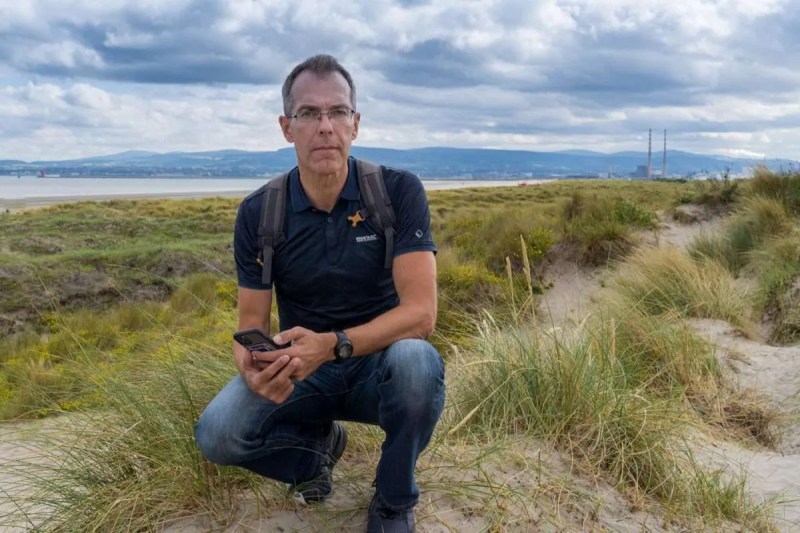
Pat Boran is an Irish poet and short film-maker, born in the Irish midlands and long since based in Dublin. He has published almost twenty books of poetry and prose, including The Invisible Prison, a prose memoir of his childhood in the 1970s, and Waveforms, a book of haiku and photograph, his first venture into poetry with other media elements. His books are widely translated, he is a member of Aosdána, Ireland’s affiliation of creative artists, and he is currently editor at the Dedalus Press. For more, see www.patboran.com.
NB: You can view two of Pat’s film poems by clicking on the titles:
*****
*****
Hedge School by Pat Boran. £10.00. Dedalus Press. ISBN: 9781915629302.
Reviewed by Belinda Cooke
A Pat Boran poem may feel like sharing a pint as he draws you in with his engaging tone: ‘Jamie / who I didn’t really know but always / stopped to talk, in passing’ (‘Neighbours Make a Neighbourhood’), but don’t be fooled, for he flips in a trice into Joycean epiphanies and meditations on the human condition, poems resonating off one another in a complex web of associations. Nearly setting fire to his parents’ house causes fear and relief which ‘in a flicker, turned to love again’ (‘The Mistake’); an American woman querying his interest in lost children triggers an existential question on the anonymous masses; a fatal road accident, leaves a man disabused of how well he prepared his pupils for the adult world – ‘It’s OK, take your time, you’re doing great.’ (‘Back to School’) Reading Hedge School is – to use one of Boran’s favourite images – like nest-building: the natural world remains a fascinating mystery, but we glean what we can from the endless contrasts in its flora and fauna – birth and death, creation and destruction, inclusion and exclusion, all ending in a single certainty: ‘Make no mistake: / the world is cruel and beautiful in equal part.’ (‘New Homes’)
Boran’s language is never less than the sum of its parts, so one might be wise to have the OED to hand. One could be excused, for example, for thinking Hedge School will largely be about Ireland under the Penal laws when Catholic education was forced underground into its hedges and barns. But the introductory title poem counters this. Once more, he gives a disarmingly, intimate opening: ‘What’s she at / out back / that little bag / of chirps…’, travels to a highly nuanced conclusion – the way birds just ‘get on with it’ symbolising life’s continuance in the face of contemporary conflict:
that just by being there
xxxxin those song-sung
bone-bare
xxxxbowed and broken branches
half her work
xxxxis done
(‘Hedge School’)
To reinforce this, he punctuates the collection with understated, joyful bird poems:
Start with birds,
Most days do –
the call, the cry,
the calligraphic
blessing from the sky
before they land
or simply are:
before words, often,
before things
begin to mean –
on twigs, on branches,
arrivals, settlings,
things of nothing,
reason enough to sing.
(‘A History of Pigeons (1)’)
His hedge motif is both a place of beginnings and a border, a demarcation of the marginalised. But his resonating, polysemous language doesn’t end here, for Boran’s world is one where: ‘The opposite of everything that’s true / is true.’ (‘the Opposite of Everything’). In ‘Penal Laws’, for example, exclusion, is also inclusion of the dispossessed. Here, he gives a small message of hope to the women of Afghanistan deprived of education. The poem’s concluding lines, richly convey the hidden benefits of this illicit outside learning in the hedge school: ‘surely all the sweeter // for being shared, close in, close up, / between lip and ear, all the harder to erase / for being written in breath, on air.’ This said, it’s hard to see where he finds this hope in the face of the horrors on our screens today – a subject that he, nevertheless, does not shy away from:
In Turkey, in Syria, people like us
are on their knees in the perishing cold,
hammering, digging, holding their breaths,
listening for signs of movement
in the rubble that used to be their lives.
I can scarcely watch.
(‘New Homes’
Even here, he looks to the birds for this: ‘life’s effervescence, / soon to build a whole new glorious city / from the debris of the old.’
Perhaps, it is Boran’s fascination with life’s first causes that allows him to keep the faith, as we see him wondering about the up or down beat of the single bee to pollinate his apple tree, (‘Pollination’). ‘Feather’, one of the collection’s most subtle and thought-provoking poems, makes a giant creative leap from the feather that appears overnight in his study’s skylight – whether trace of flight or entrapment – to the writer’s quill and the moment he does or doesn’t create. We see him similarly mystified at random events, as in the inexplicable destruction of a garden hedge, ‘Was it something we did, something we said?’ (‘Boundary’)
Along with his seemingly endlessly interweaving of strands, he can also really knock out an individual poem that says something. At the same time as creating a nest of associations, he is also constructing a honeycomb of really cracking stand-alone poems – where content, and form cohere. He doesn’t tend toward end-stopped lines with clear rhyme, but dynamic poems driven along via enjambement and internal cohesion – repetitions, alliteration, verb patternings, from present continuous to past, offering delightful cadences. Clear structures take us through to the poem’s final – sometimes enigmatic – conclusions. My three favourites in this regard are ‘Scythe’, ‘Sometimes’ and ‘Out of the Blue’. In ‘Scythe’ he manages, amazingly, to sustain seventeen lines as a single sentence, its opening here evidencing much of the above, as well concrete detail that allows us to almost see and feel it:
I saw the scythe, the grim reaper’s
question mark, that great, steel, glinting,
biting blade, that number seven, biblical
in its horror, edge through the long grass,
folding life into death, the seed heads collapsing,
the seeds released and broken and spread
in a cloud, in a fog, in a veiling of dust, …
‘Sometimes’ gets to the heart of much that Boran has attempted to capture of life’s Yin and Yang. It is a poem about gratitude for life’s ordinary joys: ‘When music is playing, when old fingers are held / to a young cheek’ but is also so accurate in capturing what unexpected loss feels like:
But then, in a moment, the time comes round,
and it is now, and death has not quite entered
but stands in the doorway of the room,
bold, uninvited, refusing to retreat,
He goes on to points to the tragedy that lurks at the back of every enjoyable moment. This forces the question about whether one should do something about it. Failing that, we can at least carry out small acts of kindness. Yet, even here, his ‘open hand’ is puzzling on whether it is there to give or to take:
and there is no one now on earth but you
to don the heavy cloak of responsibility,
to venture out beyond the soft warm glow
of the civilised world…
…with a steady pace and clenched fists
where, all your life until this very moment,
an open hand was your sole expression of love.
Much of the power of ‘Sometimes’ lies in his skilled direct statement, observations edging on aphorism – reflecting his skill at both telling and showing.
Finally, ‘Out of the Blue’ shows content and method completely in harmony, with migration to Ireland’s shores by sea perfectly captured in the poem’s rhythms. Note the placing of repetitions and also the way the long vowel sounds and soft consonants all give the poem its soporific musicality:
Out of the blue, out of a night
as blue and quiet as this,
some charge in the air, the sea and sky as one,
first the tips of their sails, their towering masts,
then the rippling progress of their dark and heavy oars
through shallow waters:
out of myth and into history…
The skilled structuring of an argument leads the reader through each stanza: ‘Often I pause here to imagine them…// And who knows for sure what brought them,… // But if we too were lost, uprooted, /maddened by failure of crops,… // …maybe, we’d step ashore here…’ and, cryptic to the end, he leaves the poem with a hint of the endlessness of migrations, so pertinent to the present day, these new migrants left listening to ‘the restless turning of oars.’
All the above, hardly touches the sides of the wealth of his associations which, with each reading, will set you off on a new path: the nature of, and entitlement to education, the choice to destroying or protecting the environment, the dynamics of power and colonisation…..to mention just a few. Add to this poems and sequences in the collection that are available on YouTube as poetry films and there really is some lovely stuff here.
Belinda Cooke’s translations and poems have been published widely in magazines. Most recently, she has published an edition of Kulager, an epic poem by the Kazakh poet Ilias Jansugurov (Kazakh N.T. A., 2018) and Forms of Exile: Selected Poems of Marina Tsvetaeva (The High Window Press, 2019). She also played a major role in co-ordinating and contributing translations to Contemporary Kazakh Poetry (C.U.P, 2019). Her own poetry includes Stem (The High Window Press, 2019) and Days of the Shorthanded Shovelists, whichis forthcoming (Salmon Poetry).
*****
Pat Boran: Five Poems from Hedge School

HEDGE SCHOOL
What’s she at
xxx out back
that little bag
xxx of chirps
small beak
xxx hole-poking
feather-stroking
xxx nitpicking
stick-amassing
xxx her tail flashing
stitching nothing
xxx to nothing more
than empty air
xxx taking chances
with those silly dances
xxx playing hide and seek
on her all-alone
xxx and unaware
that just by being there
xxx in those song-sung
bone-bare
xxx bowed and broken branches
half her work
xxx is done
AS FAR AS TURN BACK
After we’ve walked for long enough
the conversation peters out,
and grunts, sniffs and the occasional cough
are all that punctuate the quiet.
Now and then, there’s a heel-burst
slipstream of shingle; a see-saw
slate-flat rock taps and trembles
its morse code underfoot;
a crow caws, a sheep responds
from a clump of grass a field away.
But that’s about the size of it.
No path agreed in advance,
we’re just out walking on this lockdown day,
taking the air and, taken by it,
leaving the road for animal tracks,
heading, as my father’s phrase would have it,
‘as far as turn back’.
And who knew that not knowing
where that turn would turn out to be
would turn out to be
the thing we’d miss the most.
CHANGING OF THE GUARD
In Brixton, from the 6th floor balcony,
early mornings you could see them
slipping home in ones and twos
along the rooftops of the nearby houses,
the urban foxes, while on the streets below
the rising populace headed off to work,
entirely oblivious to their presence.
I’ve often thought about it since,
that shift-work changeover,
the sleepy morning crew with their then
still-novel Walkmans at full volume,
the crackle and static you’d hear
as they passed you, running for the Tube,
while, overhead, unseen by almost all of them,
the floating brushes of our fellow residents
painted the skyline a rusty red
then vanished, in the blink of an eye,
like so many who made that country what it is.
for Katriona and Veronica
BOUNDARY
Carnage of leaves and mangled branches,
every plant of that first hedge we planted
torn up overnight, destroyed
and scattered across the garden and the road.
Decades on, it bothers me yet.
Was it something we did, something we said?
Or some undirected youthful energy
that, like troubled weather, clears eventually?
Forewarned, for the next attempt
stronger plants were chosen, planted closer
and duly took. And soon the hedge
was thriving, the old wound grown over.
So, likely, I am the last one left
still dwelling on this, still trying to make sense
of a senseless act, the done-and-dusted story
neither history nor memoir, but the itch of poetry.
NEW HOMES
New homes are being built from scratch
in days or hours, in garden hedgerows,
in rotten fencing, under the eaves
or in a stack of oil-black bamboo rods
left out since last year in all weathers.
In Turkey, in Syria, people like us
are on their knees in the perishing cold,
hammering, digging, holding their breaths,
listening for the signs of movement
in the rubble that used to be their lives.
I can scarcely watch. And here,
mere feet from my garden bench,
a wave, a blur, a shoal of small dark forms
comes winging in, whirring, tumbling
through the air, life’s effervescence,
soon to build a whole new glorious city
from the debris of the old. Make no mistake:
the world is cruel and beautiful in equal part.
So what to do? I write and give up writing,
and write again and again give up —
while to each new horror, each growing threat,
the birds say no, not now, not like this, not yet.
 The High Window