*****
Nayler and Folly Wood: New and Selected Poems by Peter Bennet • Goddammed Selected Poems by Stanley Moss • The Asking by Jane Hirshfield • Child Ballad by David Wheatley • The Blue Cocktail by Audrey Molloy • Dining With The Dead by Fiona Sinclair • Learning to Jump by Sean McDowell
*****
*****
Nayler and Folly Wood: New and Selected Poems by Peter Bennet. Bloodaxe, £14.99. ISBN: 9781780376554. Goddammed Selected Poems, by Stanley Moss. Carcanet. £16.99. ISBN: 9781800174047. Reviewed by Ian Pople
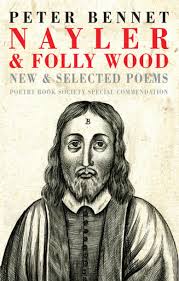

Neither Peter Bennet nor Stanley Moss is, particularly, a household name even within the household of poetry. Moss, however, has been an editor at a number of very senior American publishers and run his own American imprint, Sheep Meadow Press. Peter Bennet, in contrast, has led a, perhaps, more modest life of teaching in secondary and further education, the Workers Educational Association. In contrast, again, Moss offers a very North American view of the world. This view is often very internationalist; he has taught in Europe, the Far East and Mexico. That perspective is also profoundly cosmopolitan; he references the New York School painter, Jane Freilicher, his ‘friend, Mark Rothko,’ and poets such as Hans Magnus Enzensburger, James Wright and Lawrence Joseph, and singing, or attempting to sing, a duet with Auden. Goddamed Selected Poems also ranges over places that Moss has visited. Bennet’s poetry explores a much smaller geographical world, not simply the Northumbria where Bennet lives; but also the characters who have moved in such a place. These characters range from the ranter Abiezer Coppe, Henry Jigger, a nineteenth century schoolmaster, to the James Nayler of the title; many of these belonging to the Dissenting tradition, particularly the Quakers, of which Bennet is himself.
If those are the outwards contrasts between the cosmopolitan Moss and the very English Bennet, what links them is a very similar sense of poetics. This is not to say that they write in ways which are similar. Both writers have, however, ways of tipping and tilting the world they see, so that the reader’s perspective is always slightly surprised, slightly unsettled. Yet, this destabilising is never threatening as it comes with a warmth and empathy not simply for the things and particularly people that they view, but also for the reader admitted into that perspective. The reader feels as though they are looking over the shoulder at lovingly held worlds; worlds for which both writers have the greatest respect.
Moss’s Selected pushes a range of poems that run on over the pages. In part, this reflects Moss’s sheer output; his Almost Complete Poems, of 2017 runs to 496 pages. In part, the fact that each poem does not start on a new page does Moss a service; it forces the reader to appreciate both the range of Moss’s intellectual impulse but also the ways in which he, and his reader, can move seemingly effortlessly, from a short, punchy lyric to a longer, more expansive narrative. One such narrative is ‘Lenin, Gorky and I,’ This is a first person, persona poem which narrates a visit to Capri by the eponymous three men. Moss’s narrator depicts the place, ‘the funicular / up the cliffs of oleander and mimosa, / yet through the fumes of our cheap cigars / we observed how many travelers had come / to Capri with a beauty.’ And that sense of lust permeates the rest of the poem, Moss’s Lenin comments, ‘” In Moscow they’d kill on the streets for the girl / who showed me to my room.”’ Gorky goes on to ‘welcome the arrival of an old flame / from Cracow,’ However, Lenin won’t allow himself, ‘what he called “a little Italian marmalade.’ In the end, ‘It was I who became the ridiculous figure, / hung up in the piazza like a pot of geraniums, / not able to do without the touch, taste and smell / of women from those islands in the harbor of Naples.’ What Moss does so adeptly is to create a narrative flow through the poem and create the three men as sharply differentiated characters. This text might be flash fiction were it not for the fact that Moss eschews the enigmatic and epiphanic nature of so much flash fiction. What Moss gives is a small world in which the reader’s imagination is allowed to open out and live within the poem. In part, this is done in the contrasts of speech and story, but also in the finely calibrated detail, for instance, that marvellous, ‘hung up in the piazza like a pot of geraniums.’
‘Lenin, Gorky and I,’ is followed by ‘Following the Saints,’ an eleven line piece whose first line and its address could not be more different from the poem preceding it. ‘Following the Saints’ begins, ‘From the rock of my heart a horse rose, / that I should ride to follow them, the night they left by taxi / from the Damascus gate and flew toward Bombay.’ It is suggested that the apostle Thomas travelled to India after the death of Christ and created the first Christian community in Kerala. But Moss’s saints are in the plural. And some ways, just as much interest lies in the heart of which the horse is a kind of metaphor; as in the ‘heart threw me off’ and at the end of the poem, ‘My heart was gone, it looked back at me / from a distance, its reins bitten through.’ The heart/horse is contrasted in ‘Following the Saints,’ with the strange detritus left from the narrator’s encounter with the saints, ‘my robes were full of ashes and dust. / The rouge, lipstick and eyeshadows / you left on my flesh, I washed off before prayer.’ Again, it is the way that Moss contrasts the emotional and the physical; the horse is both metaphor and portrayed in a way that particularises and characterises it. And then there are the weird leavings of those with whom the narrator has had contact. All of this makes so much of his work so compelling.
After ‘Following the Saints,’ we find ‘The Public Gardens in Munich. And this poem again, begins in a completely different way to the others we’ve looked at, ‘The park benches, of course are ex-Nazis. / they supported the ass of the SS / without questioning; the old stamp Juden Verboten / has been painted out.’ And what strikes the reader again is that change in address. It’s not simply the move into the third person, it’s also that swift sleight of hand that personifies the benches. It is also that sense of the poem starting out with attitude, and attitude not only contained in that first line but continued with the word ‘ass.’ Here, it is not only the benches that draw the fire of the speaker of the poem, the flowers, too, are part of this stricken view, ‘But the flowers are the children of other flowers, / the hypocrite roses and the lying begonias,’ Moss is invoking Exodus and its generational curse, ‘the iniquities of the fathers are visited upon the sons and daughters — unto the third and fourth generation;’ a curse that Moss emphasises by contrasting the flowers in Munich with the ‘flowers on the hills of Judea, ‘ordinary / beautiful flowers with useful Hebrew and Arabic names.’
These contrasts are repeated through the rest of the poem with different coloured handkerchiefs representing the graves of different ethnicities, The poem finishes with the ‘I’ comparing his sleeping patterns, ‘learned in the U.S. Navy … four hours on, four hours off,’ with someone who ‘can sleep through anything, / a lesson he learned for life during the Allied bombings.’ And the last line is ‘We still sleep at war. Awake, we embrace.’ This is a poem that seems to rigorously apportion ‘right’ and ‘wrong.’ And it does that by contrasting in different contexts, what we might see as inanimate. That final verse, however, delivered in the voice of, almost certainly, Moss himself, washes back over the whole poem. Not only is there someone who has ‘suffered’ at the hands of the ‘Allies,’ but this someone has learned to overcome that suffering, in a way that Moss with his ‘four hours on, fours off,’ has not. And then there is the delicate ambiguity present in the word, ‘embrace.’ There is also a kind of genuflection to Lowell’s ‘To the Union Dead,’ with it reference to the memorial in Boston’s Public Gardens. Moss’s vast technical resource from the lyric, to the descriptive to the narrative, to the personal is, finally, deeply empathic. And his voice and style with its finely calibrated surrealism offers us a very modern kind of embrace.
It might seem, at first blush, that Peter Bennet’s compass is much smaller than Stanley Moss’s. However, Bennet’s writing contains references to such varied figures as Unity Mitford, Yevtushenko, Valery and M.R. James, as well as extensive reference to Greek myth and the Latin Language. And Bennet’s writing varies, too, from dramatic monologue, to piercing lyric, to first person reflection.
It is, however, the long, narrative sequences that form the backbone of this collection. These start with ‘The Long Pack’ narrated by a ‘haunter’ who, again according to Bennet’s notes wants ‘to be reborn and recognised,’ through to the eponymous ‘Nayler’ sequence. Much is made of the ‘relevance’ of such writing to the contemporary. And relevance works in a number of ways. On the one hand, there is the quite explicit melding of the events of the past with the events of the present. And Bennet’s notes comment that ‘The Long Pack’ contains ‘some episodes in the lives of two late-twentieth-century lovers who are troubled by this desperado’s restless and rather domineering spirit.’ On the other hand, any writing which ‘takes on’ events, situations and contexts from the past, will recast them in the consciousness and context of the present. Recently there has been a group of feminist recastings of the Pendle Witch Trials of the early seventeenth century by the novelists Livi Michael and Jeanette Winterson and most recently, the poet, Camille Ralphs. All three of these writers have made use of the language of the original period, particularly the dialect of that very isolated part of Lancashire. And they have shown how it was often the very misunderstood language of the participants, along with their gender, which lead to their condemnation. So ‘our’ writing will inevitably create a contemporary prism for the past. Yet, that very sense of ‘misunderstanding’ underlines the privileging of a contemporary point of view.
Peter Bennet’s forays into this kind of writing often have a ‘Christian’ point of view; and that not only applies to the title poem. ‘Bobby Bendick’s Ride’ interweaves thirteen line verse paragraphs with quatrains from the ballad ‘Bobby Bendick’s Ride’ which Bennet tells us he wrote himself. In the ballad, the priest Robert Bendick is chased and finally caught by the Devil, ‘Auld Nip.’ Robert Bendick was, evidently, the priest at the church of St Cuthbert at Corsenside, Northumberland during the curacy of the ‘sordid and scandalous’ John Graham. The National Churches Trust describe St Cuthbert’s as ‘isolated but intimate,’ an interesting combination of adjectives! Bennet’s poem traces Bendick from his time in the Pau region of France with its ‘damp aromas of the plat du jour / traditionnel, peculiar / to this vicinity,’ through to his time at ‘Cuddy’s kirk.’ In the midst of this there is much tussling with faith. And that tussle might be somewhat of a commonplace were it not for Bennet’s undoubted skill. In part, Bennet’s writing nods to that other great Northumbrian poet, Basil Bunting. Like Bunting, Bennet’s writing is concrete and physical, with a centripetal sense of pulling the reader towards its forces;
My Bible goes
with me most often and has gathered grass
between its leaves, and such a harvest
of hedgerow foliage withal
to mark those passages I have discovered
most like to veins of profitable ore
that it now has a rustick look
in colour earthen, a most precious clod.
The difference between Bennet’s Bendick and the writing of Bunting is not simply that, for the most part, Bunting eschews Bennet’s obvious archaisms. And it’s not the adoption of the persona of a Christian, either. It is, perhaps, that sense of the past being viewed through the lens of the present that I mentioned above. In the section, I’ve quoted above, Bennet’s purpose, as I see it, is to show that Bendick’s Christianity had become literally worldly; that ‘profitable ore’ that is ‘a most precious clod.’ And it is not to undermine Bennet’s skill to say that the contemporary perspective might be to recognise this double consciousness in ways which Bendick would not have done. And it is not to gainsay Bennet’s perspective either; his imagination is such that this perspective is imbued with hugely imaginative power.
It is that imaginative power and Bennet’s skill that makes this book such a huge pleasure. He has a way of sliding images through and against one another that is both surprising and deeply involving; this is from the poem ‘Folly Wood’ which forms the other part of his title, ‘The night is creeping up behind the day / and all our keys are searching for their locks. / To be misled about the greater good, / and botch the things we’re meant to do, / is blameless as the rot between your teeth.’ Here, it is not only that spritely, iambic pulse or that amazing simile at the end that pulls you into Bennet’s world. In part, it is the gentle confidence which Bennet brings to all his writing; a confidence which we the readers share. We know we’re in good hands with a Peter Bennet poem that will have a warm inevitability and completeness about it, that is never water-tight or airless, but which always allows the reader to live and breathe in its world.
Ian Pople‘s Spillway: New and Selected Poems is published by Carcanet.
*****
The Asking by Jane Hirshfield. £14.99. Bloodaxe Books. ISBN 978-1-78037-679-0. Reviewed by Kate Noakes

It is the fall of 2001 and I am going to one my first poetry readings in California. The poet, who I confess I don’t know of, is Jane Hirshfield. She is reading from her recently published book Given Sugar, Given Salt and she has me mesmerised by her calm and careful words. I buy the book and devour it.
It is 2009 and I am finishing my MPhil thesis, including writing on Hirshfield’s use of the Californian landscape. She has kindly and generously answered a few tentative enquiries from me, for which attention I am very grateful.
Nothing has changed in the intervening years in my appreciation of her, or her ability to stop me in my tracks. Hirshfield is a delight of the measured and meditative. So, it was with some relish that I picked up this volume of collected poems and thirty one new ones.
If you haven’t come across her before then, the collected is a very comprehensive selection of her work from 1971 to date. And I was pleased to see that it included one of my favourites, the ten lines that make up ‘Tree,’ where she advises it is ‘foolish/ to let a young redwood/ grow next to a house’ as you will have to choose it or your kitchen, concluding that ‘Softly, calmly, immensity taps at your life.’
Hirshfield is generally a free verse poet, but she does practice form, particularly what she calls pebbles, and assays. Pebbles are haiku-like tiny poems that capture the otherwise fleeting moment. There are five new ones here to contemplate. I particularly enjoyed ‘Vestment:’
for the pear, for the fig,
no difference
they ripen
even in ashfall
This small piece is an exemplar of one her stock in trade subjects, in this case, food, others are mountains – she lives at the foot of Mt. Tamalpais – trees, animals, everyday household items and the stuff of ordinary life. It also hints at one of her major concerns, the environmental crisis, here presumably the Californian wildfires.
Assays, of which she has written many, are poems that explore the possibilities of a word, weighing and measuring its meanings and associations. Newly here she takes on ‘Silence,’ which ‘cannot be taught and refuses all invitations,’ moving from the cupped hand of meditation to the antithesis of the dawn chorus, and on, concluding ‘It’s worth nothing, until you’d give anything for some.’ Assays are an enjoyable exploration of a topic, for rolling it around in the mind and Hirshfield is a current and past master of them.
Other new poems take on the climate crisis in various ways, such as ‘Counting, New Year’s Morning, What Powers Yet Remain to Me,’ where making things and cooking counter the ‘despair of the falling world;’ ‘Manifest’ which is a sophisticated list poem of the natural world made up of ‘choices,/ won’t sadden the heart to recall;’ and ‘Today , When I Could Do Nothing,’ being locked down at the beginning of the Covid pandemic, the poet does one tiny thing and saves an ant. These and other poems like them are subtle exemplars of writing on this topic that avoids tub thumping and that bear witness gently, as ‘I Would Like’ illustrates:
I would like
to add to my life,
while we are still living,
a little salt and butter,
one more slice of edible apple,
a teaspoon of jam
from a long-simmered fig.
Initially one savours the food options, but deeper to her meaning is the phrase ‘while we are still living,’ and the use of ‘edible’ in relation to the apple, in that there will come a time when we are not around and apples inedible. She ends this first section of new work with ‘I Open the Window,’ which is a persuasive rally cry to action:
But I wanted
not to be
the one sleeping soundly, on a soft pillow,
clean sheets untroubled,
dreaming there still might be time,
Hirshfield is a rewarding poet and one with which to take your time. She is as careful on these pages as she is when she reads. There are many recordings online to get the measure of her voice, and this is helpful, but mostly, hold her in your hands and enjoy.
Kate Noakes is the author of the pamphlet, Chalking the Pavement, (Broken Sleep Books, 2024), eight collections of poetry, the most recent of which is Goldhawk Road (Two Rivers Press, 2023), and a non-fiction title, Real Hay-on-Wye (Seren, 2022). She was recently awarded her PhD in Creative and Critical Writing from the University of Reading. She lives in London. Further information can be found at www.boomslangpoetry.blogspot.com
*****
Child Ballad by David Wheatley. £12.99. Carcanet Poetry 2023. ISBN:978-1-780017-355-2. Reviewed by Linda McKenna

It is fitting that David Wheatley’s Child Ballad, begins with a date, 1644, and ends with ‘A Curious Herbal’, as this dizzyingly detailed, encyclopaedic collection is rooted in the shared history of these islands, brings us on a journey replete with Covenanters, wounded warriors, waiting women, pilgrims and travellers, while all the time being mindful of the lineage of the landscape and its uses. Here is all the material needed for a balladeer to entrance and move his audience.
Wheatley in this, his sixth collection, displays all the gifts of the balladeer, beautiful and moving lyrical lines: ‘and the red over / grey of the feldspar / corries where saxifrage / the rock-breaker / lifts white flags / of resistance’; the recurring motif of the journey/pilgrimage whether it is the companions of Colmcille travelling through Northern Europe, the man who may be Marvell conspiring in Dutch coffee houses, or the poet moving house; the echoes of epic battles and the legacy of conflict, but the poems have none of the sentimental and fleeting nature of the traditional ballad. This is a substantial and scholarly collection, rooted in what appears to have been considerable research undertaken in archives and local history collections, but reading these poems it never feels that the scholarly is overwhelming the beautifully phrased verses. As well as the powerful lines, the always appropriate image, there are poems of wonderful tenderness such as ‘Stay’ (a recent Guardian ‘Poem of the Week’) and the two ‘Child Ballads’.
In ‘Souterrain’ the poet watches an archaeological dig through a telescope and there is something of the archaeological dig in this collection reminding me of those models of archaeological stratigraphy often seen in museums to help visitors locate themselves in the historical record, and to show the material culture relevant to each period. What we are encountering in Child Ballad is an invitation to locate ourselves in our overlapping layers of culture, including our poetic culture (poems move between the forms of ballad, sonnet, free verse with occasional prose poems). Again and again the poet turns to ‘bone and legend’, reminding us of how we live among the complex layers of history and are shaped by the landscape and its previous incarnations: ‘Eagle, dolphin and wolf / are written first on the stone of the skin, / are ranks made manifest, the comb and mirror / that other natural order matriarchy.’ However one of the most effective achievements of this collection is the recurring homage poems where our contemporary world, its landscape and townscapes in all their complexity, ambiguity and occasional dilapidation, takes on the majestic and epic. ‘Homage To Inverurie’ celebrates: ‘our carriage clock of a town / hall’ alongside the town’s war memorial, delicatessen, charity shops and family run businesses, and elsewhere St Adomnán preaches not to a congregation of monks but the oil-fields named for saints. This collection treasures the landscape scarred by industry and urbanisation as well as the that made manifest by the efforts of generations gone before.
Another keynote of this collection is: ‘When / we speak of lost histories it is real / bodies we mean,’ and the body is ever present here, not just in the ‘fossil record’, the warriors and saints in the archives but the present day actual body, resting in bus stations and market town cafes, leaving its imprint not just in the landscape of church yards and cairns, but in racks of second hand clothes in charity shops, or abandoned coats in playgrounds.
Variety of form, the ballad of course but dizzyingly accomplished sonnets, some prose poems, and homages to other poets, most notably John Clare, are all present here making this collection one that rewards close and repeated reading.
Child Ballad concludes with ‘A Curious Herbal’ where many of the concerns and reflections in the rest of the book are drawn together in a rich, inventive and playful synthesis. Here are the voices and imaginings of the poet’s children, philosophers and collectors, herbalists and wise women stepping into and out of the landscape, the imagined landscape of the past and the actual landscape all harebells, gorse and roots.
My only frustration with the collection, and no doubt space was a consideration, was with the exception of ‘A Lecture On The Newton Stone’, there was a lack of footnotes or endnotes to give me archival or historic references that would have satisfied my curiosity about much of the information and obvious thorough research that informed many of these poems.
Linda McKenna’s debut poetry collection, In the Museum of Misremembered Things, was published by Doire Press in 2020. The title poem won the An Post/Irish Book Awards Poem of the Year in 2020. Her second collection, Four Thousand Keys, will be published by Doire Press in 2024. She won the Seamus Heaney Award for Poetry in 2018. She has had poems published in a wide variety of journals. From North County Dublin, she lives in Downpatrick, County Down.
*****
The Blue Cocktail by Audrey Molloy. €12.95. The Gallery Press; ISBN: 978-1-91133-847-5. Reviewed by Rowena Sommerville
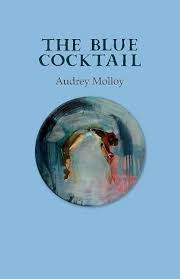
This powerful collection of poems explores a number of major changes in Molloy’s life – from woman to girl, from living in Ireland to settling in Australia, and on becoming a mother. There are two cocktails referenced in the book – the first reference is in the opening poem ‘Emergency Cocktail’, subtitled ‘in the event of being stranded inland’ (her love of the sea is evident throughout the book) and the second cocktail is in ‘At Bottle and Glass Point’, an appropriately named vantage point overlooking Vaucluse Bay, near Sydney.
She says:
You are my ocean –
xxblue cocktail of salt and sediment –
xxxbut you are not my leaf.
xxFeathered she-oaks – nothing
like the acorned trees I know,
xxcoastal rosemary doesn’t grow
xxxalong my memory banks
The plant and animal life of Australia, and how they differ from what she’s used to, is well described throughout, and resonated with this reviewer, as I have experienced that particular ‘shock of the new’ myself. The collection is dedicated to her father and in ‘The Sheen’ she describes a childhood incident when she and her sister were her father’s passengers and he stopped the car to allow them to pick up horse chestnuts (sometimes two in the shell, ‘cleaved like sisters’), to take home and harden off for playing conkers with. The poem ends in the present day, she is being driven with her own children (in Australia) and yells at the driver to stop so that they can collect similar seeming roadside trophies, but:
I carried a fortune of nuts in the bowl
xxxxxxxxof my sweater back to the hire car, their lustre
fading even before we reached the Sound.
In ‘Transplantations/ Blackberry’ she compares Irish and Australian attitudes towards the bramble:
Once, I was succour,
saviour, for the daughters of a famine-
stricken land. You fear my thorny daughters,
taking root in every blooming place my suckers find.
Report me at once.
Scrape-and-paint me.
Burn me. Try to rip me out.
It is plain to see the references to the travails of the immigrant settler in this. In ‘Whiteout (Three Sisters, Echo Point, Katoomba)’ she describes running on a cliff path in fog:
xxxxxxxxxxxxxxA tree fern takes shape like a martini
xxxxxxglass in a smoke-riddled bar
and I half expect fiddlehead ferns to strike
xxxup Stephane Grappelli. A pied currawong catcalls
xxxxxxxoff-key as though
heard from an ambulance.
The poem ends with her ‘running blindly, in fog, with a heart as stony/ as Meehni, Wimlah and Gunneddoo’ – who are (we are told in notes at the end of the book) three beautiful sisters turned to stone by a witch doctor, to prevent them from harm.
The harms that may be done to women and girls, and/or the risks they may choose to take, are often alluded to throughout the collection. In ‘Ten Thousand Hours’ she refers to the ‘10,000 hours’ theory of mastery of a skill:
xxxxI mean, you could
finish your apprentice-
xship in shite-talking
xxin pubs by the age
xxxof twenty-four, if
xxyou were tall for
xyour age and wore
a little light make-up.
Which made me laugh in recognition, although writing it out for this review also highlighted Molloy’s fondness for varied indentation and short/very short lines, which I couldn’t always feel was justified, prosodically – if that’s the right word (I’m imagining reading the poems aloud). In some instances, I felt that she over-complicated the poems’ presentations on the page and it occasionally felt more like a deliberate undertaking, rather than allowing the poem itself to dictate its own most effective delivery to the reader or performer – but this is a small fault in an engaging collection.
The collection’s final poem is ‘How to Love a Scribbly Gum’, suggesting the poet has either learned to love her new home in Australia, with its unfamiliar flora and fauna, or at least has a plan of approach:
curl
xxxxnaked in the hollow trunk;
listen to
the whisper of moth larvae:
reach
xxxxxFor the heartwood;
xxxxxxxxxxxxxxxxxxxxxxcradle it in your hands
xxxxxxxxxxxxxlike truth.
The Blue Cocktail has a lot to offer – skills, observation, insight and passion – and I’m grateful to have had the chance to read it and to pay it the attention that it surely deserves.
Rowena Sommerville has written poems and made things all her life, the last thirty years of which have been lived in lovely Robin Hood’s Bay. She has worked in a huge variety of community settings and arts organisations over the years, and continues to freelance, both as a creative and as a project producer. She sang with and wrote for the acappella band Henwen for a very long time and now sings in choirs and various different line-ups. Shewas The High Window‘s visual artist in residence for 2022.
*****
Dining With The Dead by Fiona Sinclair. £10.00. Erbacce Press. ISBN: 9781912455461. Reviewed by J.S. Watts
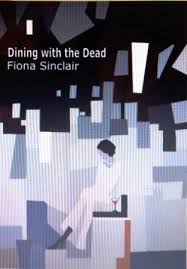
Dining With The Dead is a substantial collection of ninety-six pages. The poems packed within it are thronged with people, some of them dead, or likely to be, others very much alive, but often confronting or considering death in some way. One of the few exceptions to this appears to be the woman of the first poem, ‘Devil Dress’. Slipping on a: ‘black jersey dress’, ‘an augmented Eve skin,’ she seems full of life as: ‘she sets off into the night / with an apple in her hand…’ but she may, of course, be a memory, as dead as the: ‘strictly soap and water woman’ whose funeral is the subject of the next poem, ‘Stella’.
What links the variety of characters and situations in these poems is Sinclair’s matter of fact tones, plain conversational style, attention to observed detail and wry sense of humour. I enjoyed the description of Sittingbourne, in the poem ‘ Chorus’, as: ‘a town that slept with one eye open.’
Another link to the diversely peopled poems in the collection is the arrangement and flow-through of the poems themselves. There is often an insightful juxtaposition and linking of poems. So, at the opening of the book we start with a women bursting with life and allure, slipping on a dress: ‘winking with the promise of what lies beneath’, followed directly by the dead teacher in ‘Stella’ of whom the poet says: ‘I thought her a nun in all but habit’. Then there is a poem about the speaker’s love of books, beginning with her childhood and school days:
And as my convent school prepared to mothball,
I would slip into the library with my school bag,
stuff with Dickens, Bronte, Hardy swag, that still
wink at me from my shelves when I scan for a book.
Later the dainty Victorian antique walnut writing box described in the poem ‘Writing Slope’ gives way to a an apparently unrelated poem about the speaker’s health, which appears to have improved: ‘with changing fortunes since you came along.’ The next poem, ‘Best present ever’, describes the efforts, apparently of the person who came along in the previous poem, to source and restore the best present of the title:
… this walnut writing slope,
daintily designed for the dimensions of a Victorian lady,
the belonging I would save if the house went up.
Then the following poem, ‘Mental Hack’, returns to a parental legacy of poor health, accompanied by likely premature death, and the improvement of the speaker’s mental outlook as, presumably the one who previously came along: ‘handbrake / turn(s) my life and, giddy with fun, / I take my eye off the future’. By the very next poem, the speaker is undertaking a: ‘personal TT”, and: ‘doing a ton’ along the M2 with the performer of the hand brake turn of the previous poem.
The links between poems create a natural conversational flow that augments the conversational style of the poems themselves. It does feel like a very relaxed, dinner-table conversation with the poet and the dead (and not quite so dead) of the title. Moreover, for poems that take death as key theme, the poems in this collection are bursting with life and energy. It is a very enjoyable and lively dinner-table conversation.
J.S. Watts is a poet and novelist. Her poetry, short stories and non-fiction appear in diverse publications in Britain and abroad and have been broadcast on BBC and independent radio. Her published books include: Cats and Other Myths, Songs of Steelyard Sue, Years Ago You Coloured Me, The Submerged Sea, Underword (poetry) and A Darker Moon, Witchlight, Old Light and Elderlight (novels). For more information, see her website https://www.jswatts.co.uk/
*****
Learning to Jump by Sean McDowell. £9. Resource Publications. ISBN: 9781666784572. Reviewed by Tom Phillips

Although the combination of its title and the cover shot of a particularly formidable line of sea cliffs on the coast of Ireland might suggest that Sean McDowell’s collection chiefly concerns atmospheres of self-destruction, the poems it contains belie that. As it happens, the eponymous title poem concerns birth (of young deer that learn to jump before they can walk) and while the forbidding cliffs remain appropriately forbidding in the poem they appear in (‘Finding Dún Dúchathair’), there is a considered craft at work across the entire collection that invites us to appreciate what remains despite our various vicissitudes.
The last poem in the collection, ‘Shelf-Building’, might serve as McDowell’s signature poem – a celebration of the physicality of sheer effort, skill and the other, less physical art that the shelves will ultimately contain (said shelves are “sturdy enough/to hold all the books I cherish/and all the books I need to write.”) It’s a poem that almost inevitably brings to mind similarly well-wrought reflections on creative intent by the likes of Ted Hughes (‘The Thought-Fox’), Geoffrey Hill (‘Genesis’) and, above all, Seamus Heaney (‘Digging’). Given titles like ‘Basket’, ‘Mustard Jug’ and ‘Sap’, the recurrent Irish locations, the references to the legacy of parents and grandparents and a felicity with the heft of the language, comparisons with Heaney are almost inevitable.
In a way, it’s a shame that it’s almost impossible to read work with such a strong personal engagement with both Ireland itself and its diaspora (McDowell himself teaches at Seattle University in the States and the poems about his forebears such as ‘Egg Tempura’ are fine, if oblique, reflections on multiculturalism and how other traditions need to be valued) without summoning up Heaney’s shadow, but it seems unavoidable when the actual crunch of the words can’t help but echo Heaney at his best. Which is, of course, no bad thing – especially as McDowell’s turns of phrase have a freshness which at least some of Heaney’s later work lost in its search for unnecessary universal significance.
McDowell’s poem about the cliffs and the cashel – or hill fort – above them, for example, seems to establish him as a born-poet of the coast:
Around you, sheer cliffs bleed waterfalls.
Herring gulls and kittiwakes cry from nests
and perches on ivory stained ledges.
Some ride the air like untethered kites
above Atlantic as far as you can see.
There are poems too which engage with the processes of art, with the questions of what we might be up to as poets, sketchers or shelf-builders and how these things we make might relate to the actually existing world, perhaps most interestingly in poems like ‘Photogram’ (complete with accompanying photograms) and ‘My Aunt, Sketching’.
If Heaney is a touchstone, then so too is Charles Tomlinson (another poet who spanned the transatlantic gulf, as it were). Space and time are potentially conflated through the things that present themselves as occasions for the poet (there’s even an Orson Wellesian cuckoo clock) and the past seeps into the present with a modest insistence that provides multiple opportunities for both serious and ultimately humane reflection on what connects us.
Ultimately, however, what abides is the felicity with which McDowell deploys language, both as a tool to explore his own engagement with places and things that have their own histories and as a means of unearthing what might be valuable when, as in the opening poem, ‘Fiddler in the Church’, a dropped mobile phone clatteringly interrupts a funeral service. If a single question underwrites the whole collection, it would be ‘What might be saved?’ These poems simultaneously ask and – at least partially – answer that question in their articulate appreciation of the momentary, fleeting, the sawn wood.
Tom Phillips is a writer and translator now living in Sofia, Bulgaria. His poetry has been widely published in journals, anthologies, pamphlets and the collections Unknown Translations (Scalino, 2016), Recreation Ground (Two Rivers Press, 2012) and Burning Omaha (2003). He has translated many of Bulgaria’s leading contemporary poets and his translations of Bulgarian modernist Geo Milev are due to appear from Worple Press in 2023. He is editor of the book of essays Peter Robinson: A Portrait of his Work (Shearsman, 2021) and teaches creative writing and translation at Sofia University St Kliment Ohridski.
*****
 The High Window