
*****
I would like to thank Belinda Cooke for editing this supplement of Marina Tsvetaeva’s poetry written in 1922.
Belinda Cooke is a widely published poet and translator. Her most recent translations include Kulager, by the Kazakh poet Ilias Jansugurov (Kazakh N.T. A., 2018) and Forms of Exile: Selected Poems of Marina Tsvetaeva She also played a major role in co-ordinating and contributing translations to Contemporary Kazakh Poetry (C.U.P, 2019). Her own poetry includes Stem and Days of the Shorthanded Shovelists (forthcoming Salmon Poetry). Last year she published a memoir dedicated to her mother who passed away unexpectedly at the height of the Pandemic: From the Back of Beyond, a Mayo Woman’s Story. She has also just recently published a chapbook: Our Last Days Together and a full collection, With Our Own. The following is a sample from the first of a proposed three-volume collection of Tsvetaeva translations. They cover her years of Exile and final return (1922-1941) shortly before her suicide. This selection is from the first book which deals with her watershed year when she leaves Russia in 1922.
NB: You can read further work by Tsvetaeva in versions by Belinda Cooke if you click on ‘Snowdrifts’, in The Fornightly Review.
*****
*****
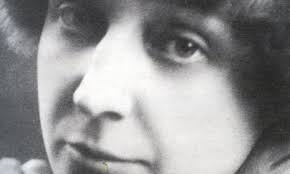
Marina Tsvetaeva in 1922:
The Poet’s ‘Pathless’ Path from Moscow to Berlin and Prague.
Marina Tsvetaeva (1892-1941) is now considered one of the greatest twentieth century Russian poets, and one of the most uncompromising. The poverty she endured after the Revolution and the subsequent loss of her family, final depression and suicide in Elabuga, points to her as one of the most tragic of the many writers who suffered under Stalin. Yet, in spite of this chaotic life, her poetic self is empowered by her exile, resulting in some of her strongest poetry. From 1922 onwards, we see an evolving poetics that sets the poet apart, one step removed from the material world – well caught in these words:
…all poets are pathless – they follow their own paths…a path is the only property of the ‘pathless’! It is their only possibility of property – and, more generally, it is the only instance of any kind of property being sacred: the solitary paths of creative work…I am also captivated by the fact … that there are many, many paths – just as there are many different people and many different passions![i]
1922 was to be a year of tremendous change for her, from immersion in the apocalyptic events of Russia’s Revolution, famine and Civil war, through to a relatively calm, if still impoverished, life abroad in Berlin and, subsequently, Prague. Apart from, her very last days in Russia where she describes poetry as done with, her writing had always sustained her.
Moscow 1917-1921: Revolution and Civil War
This period is the start of the hand-to-mouth existence that was to mark Tsvetaeva’s life. Revolution in 1917 enabled early withdrawal from World War One, but also triggered a three year long Civil War (1918-1921) with an estimated 10 million deaths. Yet we also see how real-life adversity is no hindrance to her poetry. Amidst these world-shattering events in Russia with its collapsed infrastructure, she was to have her most prolific year writing numerous plays along with her poetry.
Tsvetaeva’s morality was driven by respect for the individual, but it was her loyalty to Efron and feelings of pity towards the deposed Tsar that steered her to the Whites – the disparate groups opposed to the Lenin’s Revolution – in the Civil War. Efron took part in street battles to defend Moscow against the Bolsheviks in support of the Tsar. When the Whites lost, they regrouped, Efron with them, to have one last stand in the South on the Don. Subsequently he and Tsvetaeva were divided for the duration of the war. An inheritance that would have enabled her to survive more easily on her own in Moscow, was swept away overnight leaving her ill-equipped to survive alone with her two children. The war itself was brutal and included indiscriminate killing of civilians and captured fighters. Disease and starvation enveloped Russia, including Tsvetaeva’s younger daughter, Irina, who died in an orphanage in 1919. After the final defeat of the Whites, Tsvetaeva and Efron were left with no choice but exile since Efron could not return to the Soviet Union given his affiliations.
The poems in the first part of this selection take us through her feelings about what the future away from Russia will hold as well as her attitude to the defeated White Army. A key player in her life at this time was Ilya Ehrenberg. Although they were later to fall out, at this time he was clearly a real mover and shaker, tracking down her husband as still alive, as well as ensuring that her poetry was published in advance of her arriving abroad. His importance to her is evidenced in the sequence ‘Snowdrifts’ dedicated to him, a selection of which is included here. In her war poems, there is much evidence of how conflicted she is, a supporter of the Whites, but with an understanding of what drove the revolutionaries. We also see her concerns about how her reunion with Efron will go, as well as the yet to be discovered cultural differences between Moscow and the west. Throughout, there is a sense that the past is destroyed but she will defiantly face whatever lies ahead.
Arrival Abroad and First Impressions: Berlin: Weimar Republic.
Once Tsvetaeva learned from Ehrenberg that Sergei was alive, she determined to leave Russia to reunite with him. On arriving in Berlin her initial experience would have been that shared by many exiles – relief at escaping the bloodshed. Russians, predominantly, came here first, arriving by train to Europe’s Eastern Train Station.[ii] In keeping with her no holds barred personality, the short stay was one of one of intense, yet ultimately transient relationships – with the writer Ehrenberg and his wife as her hosts aiding her immersion in the thriving Russian literary scene. Russian Berlin at time was an exciting location for any newcomer. Its existence was short-lived, lasting from 1921-1924, only to disappear like some lost Atlantis due to shifting economics and political polarities. Here Russians had a fairly closed society with their own schools, clubs, and shops, producing an array of newspapers, journals, and magazines. It is hard to imagine how it functioned in coexistence with the doomed, yet vibrant Weimar Berlin of the twenties:
[It] had a whiff of fragility, of scandal, of doom about it…. an interval of tremulous government, between monarchy and dictatorship, between one catastrophic war and the approach of another; but most of all a period that was fast and febrile and fun, and…. became practically synonymous with the Jazz age of the Roaring Twenties.[iii]
There would have been some cross-fertilization with the arts, but the Russian literary scene had drama enough of its own with the endless, often heated, literary polemics between writers and critics with varying takes along the Tsarist-Soviet spectrum. Added to this, Lenin’s introduction of NEP[iv] allowed celebrity poets more freedom to travel in and out of Soviet Russia, such as Sergei Esenin and his then partner Isadora Duncan, as well as Vladmir Mayakovsky with his dramatic recitations of poems. Tsvetaeva wouldn’t have counted herself as among the wealthy Russians, but her reputation brought from abroad meant for the moment she had an audience for her poetry and found her place in the Russian Berlin Cafe life, notably The Prager Diele. With the revaluation of the German mark in 1924, the temporary Russian bubble burst, leading emigres to relocate en masse to either the academic or political capitals of Russian emigre life, Prague and Paris. Efron and Tsvetaeva were to live a number of years in Prague before finally relocating to Paris.
The poems she wrote during her brief stay in Berlin are the start of her collection After Russia (1928), a lyric diary covering the Berlin and Prague experience. It becomes increasingly obvious over time that Tsvetaeva needed to have affairs as a form of ‘poetic fuel’ and these Berlin poems reflect such involvement, even as she desperately waits for Efron’s arrival. Frequently we see her establishing the dichotomy of a nighttime liaison in contrast with the ‘packhorse’ daily grind of living one’s ordinary life. This divide between the real world of family versus the poet’s ‘pathless’ life is the ongoing pattern of her life from here on.
Prague
Once Tsvetaeva and her remaining daughter Alya had reunited with Efron, financial needs steered them to Prague. In August 1922 Prague was very welcoming of Russian exiles, providing grants so that young men who had fought on the side of the Whites could pick up their studies. This was a period of practical hardship but family stability, with Efron studying in the city during the week while Tsvetaeva and Alya remained nearby in the country. |After her passionate poems in Berlin, those she writes during this time, show a more reflective mood as she walks the Czech forests. Along with this, she writes on what she has seen of the huge contrasts between those with and without money. The reality of basic accommodation, Efron travelling in and out from Prague for his studies and, in general, the drudgery of of chopping wood and fetching water, was at its height for her, but so was the poetic paths she that journeyed. Her two sequences: ‘Trees’ and ‘Sibyl’ both took their inspiration from these forest walks, and ‘Sibyl’, in particular, sees her making highly unusual connections between nurture and decay, with the Sibyl’s disembodied voice associating both with Tsvetaeva’s belief in the transcendental poet as well as motifs of mortality, such as ash and greyness, not to mention her own pride in her hair becoming prematurely grey as she survived all the horrors she had been through.
Her sequence on God, is inseparable from her numerous poems on the poet also living outside of the corporeal world. All in all, the forest calm set beside the flames of Moscow does suggest the passage through 1922 was one of dramatic change and contrast. Not surprisingly, we see a range of shifting moods in her work. It sets out with nostalgia and pride in those who fought, on to the novelty and emotional entanglements of Berlin, before a melancholy by the end of the year at all that has happened to her, and all she has lost as she thinks back to Moscow: ‘It’s like someone killed my life, / breathing its last /in the orphan dark.
[i] Letter to Konstantin Belmont cited in Tsvetaeva, Victoria Schweitzer, p. 253.
[ii] This term comes from Karl Schlögel’s, survey of Russian migration to Berlin, Das Russische Berlin: Ostbanhof Europas, (Russian Berlin: Europe’s Eastern train-station), (München: Pantheon, 2007).
[iii] Michael Hoffman in the translator’s introduction in Joseph Roth, What I saw: Reports from Belin 1920-33, (London: Granta books, 2003). Other useful books on this period include Otto Friedrich, Before the Deluge: a Portrait of Berlin in the 1920s, (New York: Harper Perennial, 1995).
[iv] [iv]The New Economic Policy was Lenin’s return to a limited form of private enterprise in the early twenties to avoid Russia’s complete collapse. (1921-1928)
*****
Marina Tsvetaeva: Poems from Our Own Paths
MOSCOW
TO MOSCOW
1
From birth right to orphanhood,
I have no regrets.
Though your courage is great
I must go my own way.
I will no longer look askance
at my neighbours, or tramp
the same cobblestones –
I will shake the dust from my feet.
Just as in the seventeenth century
the righteous woman in white
stood smiling under fire.
Or, it could have been
the eighteenth – that she
sought her sons in vain
through the outposts until
her tracks turned to rust.
For him there with his bayonet
I will not stay calm.
All those with short memories
I must renounce
Dragomilovo, Rogozhskaya ,
and elsewhere…
such an endless
spreading liturgy,
and the row
on the main square,
with its tattered shreds
comforted by laurel…
Blizzard. Sawdust,
Pure snow.
Bow your head, to the graves
of the rebels.
Some were also righteous too,
though not seeking a hryvnia!
Their red wound and their
well-meaning, twisted views.
So good riddance to the past
and hello to the present.
New blood on the old –
the dance and dishes of food piled high.
And for all those who stand beside
these brothers, forgive me,
Mother of Iberia, I’ve no regrets,
I renounce them all.
January 12th
2
Emptier than a woman
at the assigned hour of meeting.
Decimated laurel.
xxxRed rags,
xxxxxxxbloodied
xxxand scarred
on the snow.
They lie together,
xxxxxclose ring of steel,
the Kremlin wall nailed to them,
as they sleep
in a row.
Laurel instead of stone,
xxxxxxthe Kremlin a fence.
No need for
xxxxxxthe banner of the Cross –
how can one
honour this?
Not dignified
xxxxxxwith the priest’s
last words,
not rested with the saints –
just laurel
and snow.
Like the guard over the body of Jesus,
I wring my hands,
for even here the snow rages –
‘Come through. Before your own.’
The hour strikes,
with life’s first criminal bond.
From the tower –
xxxxxxwhich one? –
I stand counting.
What land is this here?
One takes a step.
One gets in line.
I can’t tear myself away –
(Should I sever my hands?)
More than a woman
in the hour of separation,
the hour
strikes.
Beneath rebellious alien laurel
lies my secret passion,
my evident anger –
sleep,
my enemy.
13th January
FOR THE FIRST TIME …
For the first time.
I neither kissed
nor made promises.
For the first time:
gift and grace.
I pushed no one out,
I made no bow.
Who is that face at the window
where the ice thaws?
It wasn’t me
but another she …
Don’t spell it out for me.
I made no promise.
I may have built this house,
but if I did it’s ruined,
and this other new one
will not tell where I’m from.
Don’t call me –
I cannot speak for my actions.
January 14th
NEW YEAR’S EVE
For Sergei Efron
Brothers. In the last hour
of the year – for this, our Russian land,
that goes right through us,
twelve times exactly –
let’s clink our glasses.
Here’s to the honourable people,
for Taman, for Kuban,
to our Russian Don,
to the old faiths of Jordan
let’s smash our glasses.
Comrades.
Our mother,
our passion – our Rus –
still alive,
still intact
in our hearts.
Brothers. Look into the distance.
See Delvig and Pushkin,
the crystal of deeds and hearts,
a glorious clashing of
steel against steel.
Let’s raise a glass.
For the glorious rite of brotherhood
for this our brotherly city,
for Prague, let’s do it,
till we smash through
the Bohemian border –
let’s smash our glasses.
Comrades.
Still alive.
The foot becomes steel.
Still whole.
Steel in our hearts.
Brothers. The last moment.
On the edge of
the forest, the old man is gone…
Tight as locked teeth –
our glasses clink.
A voluntary tribute,
Hello, good old battle.
The Russian God is still alive.
God is still alive. He who believes, stand up –
and raise your glass!
January 15th
‘MY LOOKS HAVEN’T IMPROVED IN YEARS OF PARTING’
for Sergei Efron
My looks haven’t improved in the years of parting.
Will you be angry at the sight of my rough hands
struggling for bread and salt?
The labouring blisters of comradeship.
Love doesn’t dress up for a meeting.
Don’t be annoyed at my rough words.
Appreciate the fact that they offer
a record of language under fire.
Are you disappointed? Don’t be afraid to say.
This is the spirit uprooted from affection,
anchors and hopes thrown into turmoil.
Irreparable breach of The Epiphany
THE SQUARE
The Oka’s winged slope:
Should one wade across or
go along its banks?
I know and drink the shyness
down into my bones.
No grain for the pigeons.
No grass on the squares.
For the square was like
a sea turned to flint.
The shoreline
has become more wicked.
Do not believe in the towers: the masts.
Of wrecked ships – just flow…
flow, as your chest chokes on the stone…
SNOWDRIFTS
To Ilya Ehrenburg
1
Snowdrifts billowed across the sky –
an immense wave in the midnight gloom.
All seemed to drift from a single womb –
the sky, and the snow and the human heart.
Above the empty alley,
all along the stalactites of the caves
how loudly your name, Ehr, rang out –
Ehr… this name that means honour.
Bruce cannot interpret for you
what lies beneath the drowsy curtain,
what to make of these two women whose
path inclines towards the dream that is Rus.
Heaven’s thunder is stifling.
Honour – your name is the mouth of a leopard.
For these two women the path
to their dreamy passion is steep.
Honour ¬– unbreakable fortress.
Honour – pierce the womb – forward.
Honour – into dense blindness, into
the bowels of the earth, that glorious flight.
So, between heaven and the sky,
rejoice you of such little faith,
that through the dreaming snowdrifts
we should hear your name.
February 23rd
2
Not here where you’re tied
but there where you’re commanded.
Not here, where every Lazarus
wanders with his bed,
a hunchback beneath his pack
amid the rubble of days.
Here there is no hand
that connects me to you.
Not here where things are awry,
but there where they are fixed,
not here where all our wings
are clipped by knives,
while the brainless scream:
just finish them off!
Here there is no gift
from me to you.
Not here where it is asked
but there where it is answered.
Not here where crumbs lie
between the mess –
death is decay
and jealousy a snake.
There are no ancestral lands
to pass from me to you.
There’s no point looking back,
our lives are one just one continuous
frown, with no chance to meet,
just long-distance wires.
Everything’s too confused here,
straps tangled up in knots…
where there are no words
that say you are mine ….
Not a yard needing clean up,
but a paradise haven.
Not here where all is exacted,
but there where it is released.
Where the betrayal of days,
splashes out everywhere,
where there aren’t even words
that pass, from me to you…
February 25th
‘MY FRIEND, HOW LITTLE WE KNOW OF EACH OTHER’S LAND.
My friend, how little we know of each other’s land.
Whose wind do you curse?
I will not fall in love with you:
in your black suit.
Just for now, there is black smoke billowing,
a spark in the eye, and you of such beauty.
but all we have is your sudden whim
and my clear refusal.
No Turn and No Return…
No turn and no return.
Time and age.
This is a sister escorting her brother
Into the dark river
Without respite and without mercy.
***
BERLIN
BALCONY
O, from the open drop
to fall below – to become dust and jet-black.
How long is earthly love
just a small weight we salt with tears?
Balcony. Jet-black through
salt downpours having kissed evil.
A heavy sigh of inescapable
hatred breathed out into poetry.
Squeezing some small ball in the hand:
is it the heart or a squeezed-up rag?
Wash it down,
there is the name – The Jordan.
Yes, for this battle with love
wild and wild-hearted
to make granite eyebrows dart upwards –
to breathe out into death!
NIGHT-TIME WHISPERS: A HAND …
Night-time whispers: a hand
and the rustle of silk.
Night-time whispers: lips
and the smoothness of silk.
Paid back for petty jealousies
fired up with old scores,
jaws tightened and then
an argument –
it died down
in the rustling…
there’s a leaf
in the pane…
the whistles of the first bird.
How pure – then a sigh.
It’s not the one. The moment’s gone.
I went.
A shrug
of the shoulders.
Nothing.
Vanity.
The end.
As if it didn’t happen.
And in this vanity of vanities
comes a sword: the dawn.
THE TREE’S FIRST QUIVERING …
The tree’s first quivering…
Wasn’t this pride?
The pigeon’s first coo…
Wasn’t this faithfulness?
Stop these
piercing arrows of light.
In love’s secret writing
the sky is such at a blank!
If not for the dawn, leafy,
whistling and shattering,
if not for the vanity of vanities –
our lives would
come true…
not a ray, but a whip,
for the honeysuckle of
tender bodies, in this frantic gold-rush
the sky is such a limit!
Day. Hoof beats on packhorse roads.
Come on – get moving.
The bitter, silent shudder,
of the recalling shoulder….
He’s hiding something….
Morning flows
like whitewash from a bucket,
In the rib’s chronicle
the sky is such a blank!
GREETINGS NOT A SHAFT, NOT A STONE
Greetings. Not a shaft, not a stone,
but I, the most alive of women
am life entering your disrupted sleep,
arms outstretched.
Mine to give. (In a forked tongue:
take it – the forked tongue of the snake).
Take all of me with my
bare-headed happiness.
Mine to hold. Today on a schooner,
today on skis, your fair hair,
and today in a new skin:
painted gold for the seventh time.
All mine. Paradise of such rewards
when in my hands and my mouth
I hold life, a gaping happiness
to greet from the morning.
LIFE IS THE MASTER OF LIES …
Life is the master of lies,
the height of expectation the height of lies,
but from every sense in your body
you recognise it – that’s life.
Like when you lie in the rye – that ringing sound,
blueness, heat, waves muttering through the honeysuckle,
one hundred regrets – lying in your lie,
I am simply glad you called.
And don’t blame me, love, that
bodies and souls can trap us thus.
What else is there for us but sleep –
else why did you sing?
In the white book of your silences,
in the wild clay of your ‘yes’,
I softly bow my head, for
the touch of the palm – is life.
IT SHOULD BE EASY TO ESCAPE …
It should be easy to escape
these days of blind intimacy,
to free these hands, with a wave of the hand,
surely, we can stop this tenderness.
There is still time.
In the chinks of dawn,
it’s not too late –
there’s still no birdsong.
But be careful.
You’ve no lives left.
Tomorrow will
already be too late.
Deep, deep in yourself,
may you rest peacefully,
we’ve reached the age
we must prepare for death,
at least the dead sleep.
Only for me there is no sleep –
only a blow from a shovel,
will stop us remembering.
TO BERLIN
Rain lulls pain. I am sleeping
beneath a shower of banging shutters.
Hoofbeats on tarmac
are like applause.
The rain lived to the full then the water died down.
In such golden solitude
you, barracks were merciful to
this most miraculous of orphanhoods.
***
PRAGUE
SIBYL
1
Sibyl: burnt out, Sibyl: a trunk.
a god came in though all the birds perished.
Sibyl: drained dry, Sybil: a desert:
veins all withered from one man’s passion.
Sibyl: departed – devourer
of destiny and death. Tree among maidens.
Ruling tree in a bare wood –
First came the fire and then
concealed beneath eyelids – in flight, unawares,
a god rose up through the dried-up river basin.
Suddenly, unable to look from the outside
my heart and voice fell deep inside me.
Sibyl: prophet! Sibyl: vault!
Thus the Annunciation is fulfilled in that
ageless hour, fragile virginity and grey-haired
grasses, transformed into a cave
for the Miraculous Voice…
– thus into the starry whirlwind
is the Sibyl departed from the living.
TREES
To my Czechoslovakian friend,
Anna Antonovna Teskova
1
Having lost faith in the living,
let my shadow be cast in glory
over the heather of aging,
its silver-transforming dryness.
Let trumpets sound out
in praise of my shadow,
its heathers of loss,
its dry heather streams.
Ancient heather
struggling out from
the naked stone, witness
to our orphanhood.
The last decorative rags
removed and thrown aside,
we head to the heather ruins,
its dry heather streams.
Condemned by God to
a life of divided friendships
and crippling alienation,
release me up there,
where the rowan
is more beautiful
than King David into –
its grey hair heathers,
its dry heather seas.
2
When I’ve drunk myself
stupid with anger,
vowing yet again –
not to fight my demons –
(not those Godly ones,
flaming in a flood into the abyss,
but earth’s trivialities,
its human stagnations…),
then trees to you I walk.
With every wave, free me
from the howl of the market –
how my heart exhales,
straining at your roots:
God-battling oak.
My ivy-prophets.
My virgin-birches.
Elm – savage Absalom.
Tortured upright pine.
Psalm on my lips.
Rowan’s bitter taste….
Trees! Your leaves,
a deluge of life-splashing
mercury, all decaying,
gladly I watch them fall –
since for the first time
I can open my arms wide,
can fling away my manuscripts,
needing only this swarm
of green reflections
splashing into my hands,
hair…trembling,
FACTORY BUILDINGS
1
Sooty buildings
in the labouring dark.
Heavens unfurling
their hair
in sympathy.
One greasy cap wanders
into the tearoom’s destitute air,
as the last chimney
of this place
wails out righteousness.
Chimney. Chimney!
The final downcast brows.
Yet we are still here –
what kind of death sentence
sounds in this final lament?
What kind of
velvety fulfilment
lies in this pitiful howl,
what living death
for those chosen for slaughter?
And God? – we wait in vain.
Overcome with smoke,
he doesn’t make a stand,
nailing down with tacks
our hospitals, bunks and prisons.
Mutilation. Living meat.
That’s how it was –
and will be to the end.
This is where
we pile up all our songs
build a nest for our despair.
Factory! Factory!
For this black flight
is called a factory.
You listen in to
the chimney’s despair –
for a factory calls,
and no mediator
will come to your aid
any more than when
the last trumpets calls
over the last town.
GOD – NOT MORE SMOKE
God – not more smoke!
Even worse the damp.
It’s every time you move,
forced again to peer
beneath this feeble lamp,
of seamstresses, and students,
stuck in the outskirts, not even a tree,
or patch of green for children to play,
ransomed to some strict landlord –
emerging from the smoke, chains
dripping with coins, unbending as fate,
before the jingling of sparse pockets.
Then there’s the neighbours –
little hope it will be someone quiet and single,
knowing it won’t smell sweet,
living in this old wreck that reeks –
stale odour, that is just us jammed
like cotton in the ear forced to
muck in to put up with each other,
here in this chaos of a house.
It may be old, it may be rotting,
but it’s dear to us – a roof over our heads!
A mystery how we came into this world –
but no secret where we’ll die.
PRAISE TO THE RICH
Let me first make clear (having thought long
and hard) that between you and I there are miles.
I am one of the dispossessed
that my place in the world is honourable?
Under the wheels everything is surplus
the department of freaks, cripples and hunchbacks…
from this time on, along with church bells,
I proclaim I love the rich!
For their rotten unsteady root,
stretching early from the cradle,
for their confused habits
always dipping in their pockets.
From the most confused question from their lips
fulfilled like a shout,
and because they won’t get into heaven,
and because they don’t look you in the eyes.
For their secrets – always express delivery,
for their passions – always sent by messenger,
for those endless carousing nights,
(where you have to kiss and drink a lot!)
Because in the reckoning, in the boredom
the gilt, the yawning, the cotton wool,
they can’t buy me (and don’t buy my books!) ,
I stress, I love the rich.
And yet in spite of their smooth-skinned
Indulgence – their eating and drinking,
suddenly you catch that unexpected
questioning look, or dog-like glance —
Is this a pivot to nothing …
are the weights playing tricks?
And because between all outcasts
there is no greater orphanhood in the world.
There is the wretched fable
about the camel crawling through the eye of a needle –
their look at the point of death
pleading for pardon now they are sick –
like bankruptcy… ‘I would have loved to help…’
for the quiet word from their parched lips,
‘Yes, I helped…was like a brother to him’
I solemnly swear – I love the rich!’
GOD
1
Face without form.
Severe and fine.
Divided vestments
together in you.
Fallen leaf.
Crushed porous stone.
All who cry out
silent through you.
Victory over rust.
Over blood.
Over steel.
All who have lain down
risen in you.
2
Orphaned singing of
beggars and turtledoves.
Aren’t these your vestments
spread across these fleeing trees?
Over groves.
Over thickets.
Having given your books
and temples to the people,
you soar – pine forests race along
as if in secret protection.
We will keep them hid.
We won’t give them up.
Following flights of geese.
you christened the earth with a dream.
Even like the serpent you rushed on –
and forgave her
even for the son.
Beggars sang.
Dark. O the forest is dark.
Beggars sang.
The last cross is thrown –
God has risen from the churches.
3
We won’t tie him down
to our signs or weights –
this slim gymnast slipping
through the eye of a needle…
God is leaving us –
the drawbridge closes,
the flocks migrate,
in whole lines of telegraph poles.
We won’t persuade him
to accept our human life.
He is a grey ice drift in
the drabbest seasonal weather.
We’ll never catch him.
God will never thrive
as a hand-raised begonia,
safe on a windowsill.
Beneath this vaulted dome,
poets and pilots, all desperate,
we await our maker,
all long for the call.
He is endless flight,
the celestial book
of all words – itself just
a trace of his cloak!
DAWN ON THE RAILS
Before the day has risen
from struggling passions,
from dampness and sleepers
Russia lies in my mind’s eye.
Dampness – and greyness.
Dampness – and concrete.
Before the day has risen,
or the signal man interfered.
The mist still protects us,
dead to the world in its sack,
the drayhorse granite still sleeps,
checkered fields lie invisible.
Dampness and flocks of geese…
crow-black steel, chugging in a frenzy
with its slanderous news,
Moscow still lies beyond the sleepers.
Thus, beneath the stubborn
eyes of the dispossessed,
Russia floods out
in three waves.
Ever deeper my mind
unwinds… invisible rails
fire victims jammed
into cattle trucks –
disappeared, forever.
for God and the people!
(the sign: forty men
and seven horses).
There among the sleepers
where the distance grew
from dampness and sleepers
from dampness and orphanhood
‘IN THE ORPHAN AIR OF THE AFTERLIFE …’
In the orphan air of the afterlife –
a transfer flight,
the orphan wire shudders,
the rail turns.
It’s like my life was stolen
along the steel mile –
in the orphan confusion – two distances…
(Bow to Moscow).
It’s like someone killed my life,
breathing its last,
in the orphan confusion,
flowing out in two veins.
 The High Window