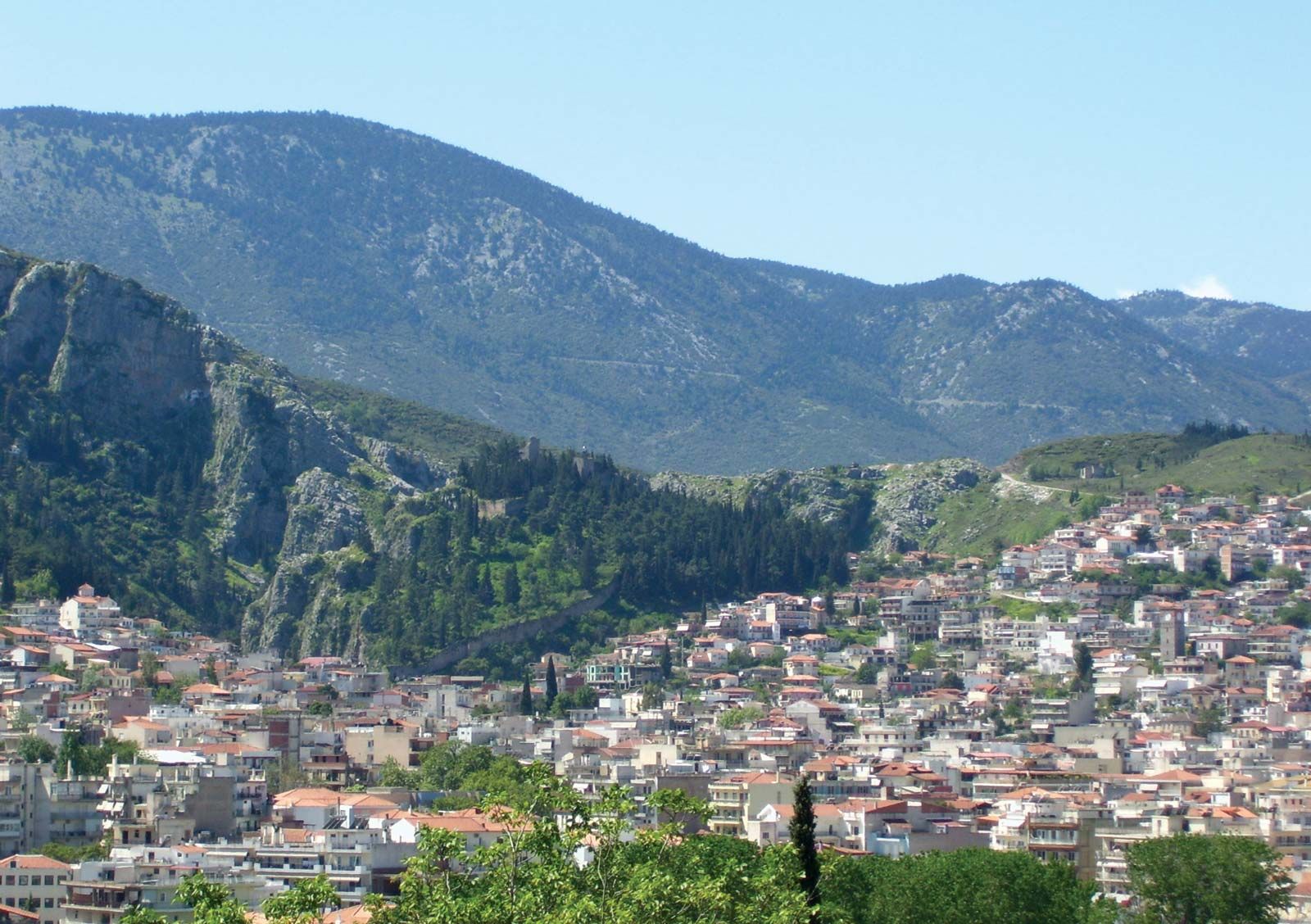
Mount Helicon, Boeotia, Greece
*****
Sakis Serefas • Liana Sakelliou • Niki Chalkiadaki • Elsa Korneti • Antonis Balasopoulos
*****
FIVE CONTEMPORARY GREEK POETS
Do a Google in English for “contemporary Greek poets” and you’re likely to get several links to the moderns. Cavafy of course, then Seferis, Elytis (both Nobel Prize winners) and Ritsos. And you’ll get the post-WWII poets, Fokas, Dimoula, Anghelaki-Rooke, and a few others, most of whom have passed on to the Elysian Fields. You’ll have to scroll down quite a ways before you come upon a link to anyone writing in Greek today. Nevertheless poetry in the land of Homer and Sappho is alive and well, thriving I’d say, albeit mostly unknown to anglophones. But thanks to journals like The High Window, English readers can catch a glimpse now and then of what’s happening in the realm of verse in this corner of the continent. Below you’ll find not one, but five such poets.
*****
TRANSLATOR
Born in Nevada and raised in California, Don Schofield is a graduate of the University of Montana (MFA, 1980). A resident of Greece for over forty years, he has taught literature and creative writing at American, British and Greek universities, and traveled extensively throughout Europe, the Middle East and farther afield. Fluent in Greek, a citizen of both his homeland and his adopted country, he is the editor of the anthology Kindled Terraces: American Poets in Greece (Truman State University Press, 2004), and has published six books of poetry in the US, the first of which, Approximately Paradise (University Press of Florida, 2002), was a finalist for the Walt Whitman Award, and a more recent collection, In Lands Imagination Favors (Dos Madres Press, 2014), reached the final round for the Rubery Book Award. His translations of contemporary Greek poets have been honored by the London Hellenic Society, shortlisted for the Greek National Translation Award and nominated for a Pushcart Prize. His latest book, A Different Heaven: New & Selected Poems is just out from Dos Madres Press. He currently lives in both Athens and Thessaloniki.
*****
Sakis Serefas: Three Poems
CALL ME THE WHALE WHO SAW
Darkness.
First light was created.
Much light, we say.
So much that it lit the darkness and so made night.
Then the accouterments found their place fully lit.
The sky, the waters, the dry land. Shrubs. Trees. Stars.
Sun and moon. And all was good.
Until we come to D-day, the day of landfall:
whales, reptiles, beasts, monsters, birds,
all set free on sea and dry land,
resulting in the passionate ones and the vegans,
who, after the sixth day, prevailed over the planet.
When it comes to such things, chance doesn’t apply. And all, Very Good.
First off the whales, the big ones, set out. They swam
the vast, immeasurable waters, with all to themselves.
They saw the dark ocean floor and,
surfacing, saw the glitzy landscape.
Like a bored toddler shut inside its house,
the mother finishing the evening ironing, then yawning
as she fills the bath with hot water, the child beside her
soon bursting with glee, splashing and screeching,
playing with its rubber duckies. It grabs one,
shoves it to the bottom only to let go
and with a thwop it shoots up out of the water, above the suds,
cupped in the hands of the toddler-master. Again and again
the creature dominates the splish-splash of its own happiness,
while the mother oversees the child’s power—just so
the whales were launched high over the water,
inaugurating the Earth with their gaze.
Now the stars glitter undisturbed throughout the night.
Here the moon. Here the sun—what a funpark of existence!
Here dry land: we’re open, we’re waiting, come rent,
the seas debonair before castaways began to bloom
in the depths of the abyss. Here the various glooms
of the deep wrapped in gel like gifts,
spanking new, all ready to be received,
creation a reception oblivious to the hordes about to come,
the refulgent sun lighting up the heavenly billboards.
Until the whales slice through the inaugural ribbon
and the miracle grinds to a halt.
Years and seasons roll past.
At the ocean bottom the whales assemble
to tell their stories, those ancient creatures,
old as time immemorial, new as light.
An elderly whale speaks first, the mother of them all,
mother of their mothers, she without a mother,
born not from a womb, but of the Word.
Without nipple. Born with time itself.
* * *
It is I who saw. If I didn’t exist,
what would the Cosmos be? What could possibly
be nourished from the little you would narrate?
Without me, this gathering would end
here and now. You’d be worth
no more than a bullhead,
a common porgy.
MARIA AND COSTANDINOS
—Even I didn’t understand how such a terrible thing could happen.
My heel broke, I slipped and fell into the water.
I didn’t know how to swim, in an instant was sucked under.
Okay, I know, each of us owes one death,
But I didn’t need to become the local Ophelia.
Death by broken heel—it’s downright ridiculous.
—I was walking a ways behind with her friend.
She was talking to me and I was looking at her lips.
Everything happened so fast. “Cousin!” I cried
And dove in to save her. As I plunged toward the bottom,
“Dino” I heard the one alive on dry land howl,
She to whom a minute before I had said, “I want you.”
(Maria, 16 years old, Constantinos, 23,
New Beach, near the Allatini cold cut factory, 1978.)
ARISTÍDIS, ANASTASÍA, KYRIAKOÚLA
He found them frying fish.
First he shot his wife,
Then his mother-in-law,
Later burned himself out. Later still
They found the head of that no-count,
Jealous, womanizing husband in a frying pan.
He’d gather the children outside his bakery with a tray of rusks—
“Come, let me tell you a story,” and they’d run to him, bellies empty.
“You see that guy over there?” pointing to the grocer across the way,
“One of these days I’m going to kill him, then the other two, then myself.”
Free food and stories of blood—gleefully they listened to him.
True to his word, he started with the grocer.
Fired two bullets into him. Claimed he’d stolen his wife.
The man survived, but that’s not the point.
Let’s go back to that morning.
A neighbor lady enters to buy a loaf of bread.
He insists on giving her three. She wonders why.
“Take it,” he tells her, “Tomorrow there won’t be any at all, trust me, Ma’am.”
She took them and left. On the road she broke off a piece and chewed it.
Before she reached the corner, the bakery went up in flames.
For three days, silently, she fed the murderer’s bread to her children.
(Anastasía, mother-in-law, 60; Kyriakoúla, wife, 35;
Aristídis, husband, 50; Upper City, 1930.)
Sakis Serefas is a native of Thessaloniki, Greece’s second-city, and a champion of its literary heritage. He has published more than seventy books, which include award-winning works in poetry and prose, as well as translations, anthologies and works of drama that have been performed at, among other venues, the National Theatre of Greece and the Athens-Epidaurus Festival. The opening piece above is the first section of his latest endeavor, a book-length poem titled Whales (Patakis, 2021). The other two poems are from an earlier collection, Yiannis, Maria, Henrix (Ikaros, 2013), which recounts various murders and accidental deaths in Thessaloniki during the last century as reported in the local press.
*****
Liana Sakelliou: Four Poems
SPRINGS
In Hebrew we knew it as âyîn,
a pit for gathering water; as mägộr,
the source of life; its gushing water
as mabbû-â; as Ain Sara in ancient Hebron,
a spreading out; and in the city of Sychar
as a well where myriads
came to drink
and still they died.
We have also found it
in the desert of Baer-Sheva,
where the mother of Ishmael
met the Angel of the Lord—
the first Annunciation.
Hagar, poor soul, her story extraordinary,
was expelled with her infant.
She wandered the desert, thirsty
and dying, sobbing mournfully,
until the Angel showed her the spring, bid her drink
and give water to her child.
Life returned to them.
Later we meet her as Aphrodite Pudica
wringing water from her hair with both hands.
Zephyros and Aura
shoved her up onto the shore
and she became Venus Marina.
Crouched there, covered in salt,
her long hair flowing down,
Anadyomene Aphrodite
slowly rises from the waves.
Then Euploea, Pontia, Pelagia and immediately
hulls and fountains with spigots,
the giant tridacna—
all become wombs.
From deadly Baer-Sheva
until her full-bodied birth
in foam off Cyprus,
how did her soul hide in that shell,
and how did all this come to be
in that briny water?
Fishermen found her
as a rusted icon
in the crevice of a rock,
removed the barnacles of time
and the mastic wax she was encased in.
Mass hysteria followed,
new excavations
to find more icons,
an epidemic of dreams and lunacy—
is this image possessed?
Half gown, half sea;
half body, half cloud—
the dripping creature
has been captured!
Tides and lingering fog
can smell the precious icon.
The ripples of her veil waft fresh and damp.
Her cloak slowly opens
and contracts….
xxxxxxxxxxxxxxxxxMoon,
grace her with fertility.
Osiris, give her the scepter.
Nereids, Water Nymphs, Goddess of Cyprus—
may you become One in this creature,
the Virgin Mother of all Springs.
PORTRAITS WITH BUTTERFLIES
xxxxxxxxxxxxxxxxxxxxxxxxxxIf only you’d get TB
xxxxxxxxxxxxxxxxxxxxxxxxxxand never die.
xxxxxxxxxxxxxxxxxxxxxxxxxxThen I could pass each morning
xxxxxxxxxxxxxxxxxxxxxxxxxxasking how you are.
xxxxxxxxxxxxxxxxxxxxxxxxxx—Dirge from Asia Minor
I got consumption
and died at nineteen—
they buried me in the monastery.
*
Take me away from here, save me!
Can’t you see I’ve been thrown
off a cliff—
the Black Death.
*
Captured by the Greeks in the Balkan War,
stricken with typhus,
I was forced to help build the Turkish Road,
buried under it.
*
Not on the list
to become a naval officer,
I committed hara-kiri. They threw my body
off the Cape.
*
During the Turkish Occupation,
I was executed on the islet of Daskalio.
I was a teacher, they said.
*
Gentlemen, evacuate your houses.
Fire is approaching.
*
Water quick! To put out
the fires from Hell
blackening the leaves
of our lemon trees.
Eleni was right
to plant palms.
*
Black butterflies,
big as a child’s hands.
She fondled them,
adorned them.
In the days of August
they evoked for her
something of the Far East.
*
Among the cypresses at the monastery,
the butterflies look like Lilliputians
dressed in black
on their way to the red house
set among the palms. The monks
sense something primal
invading the island.
*
From Hydra,
neither wise nor handsome,
wearing a gold earring,
anxious,
I prefer to hide.
I’m Miltos, the black cat
who walks on waves.
At the White Cat taverna,
where the sandy cove is sinking,
I write postcards to friends.
Cheers!
*
Butterflies, don’t go away,
don’t leave me
surrounded by blackness. Butterflies,
don’t forget me
inside my cousin’s black boat.
Or is it Charon’s?
Butterflies,
if only you’d devour me.
LOVE HARBOR
It’s true. My grandmother told me.
John Lennon himself showed up
at her front door one night in November,
not long before he was killed
across from Central Park. He was scared
and came to Love Harbor
so she could throw the Tarot for him.
“I’m Stella, Mina. Stella,
and I have with me my great good friend.”
She put the axe aside, opened the door
and offered them both hot tea.
“I feel nightmares closing in on me,”
he told her, “something very evil.”
She laid the cards out on the table,
a second time, a third,
and felt her soul darken more and more.
He listened pensively.
They left in the middle of the night,
yet another night like now.
They couldn’t stay any longer.
How strange, another night like this one—
early winter, before the bullet
enters the realm of fulfillment.
MATINA AND THE STORY OF EXTERMINATION
Matina Kouneli knew German,
so they took her to their headquarters
as an interpreter. When she learned
that someone was about to be arrested,
she’d tell him to leave immediately,
“You’re in danger.”
The father of one of the men she had saved
denounced her. The Germans arrested her,
kept her with the prisoners waiting to be executed.
Nearby there were other prisoners
about to go to the camps. She heard them
and managed to sneak into their cell,
like a small, cowardly rabbit.
Later, she’d recount the endless journey by train.
Eighteen months at Auschwitz.
Mengele using her as a lab animal,
filling her body with hormones.
How, when the camps were liberated,
they all descended the Death Stairs, free.
My father was an agent at the Fifth Customs House
in Piraeus. In memory of Matina,
he let the survivors pass without inspecting them.
One day he told us:
“In the customs house, looking at those returning,
my soul wallowing in grief from what I was seeing,
I felt someone fall on me, hugging me hard
and shouting, “Uncle, Uncle!” Then I saw her—
two huge eyes and enormous breasts
on a skeleton.”
From Matina’s camp, only three Greek women survived.
In 1981 the German government
sent them compensation.
The women returned it with a note:
“Use the money to console
those who feel guilty.”
Matina loved Leonardo.
Every morning they put on flippers and masks
and went spearfishing for octopus.
They’d pass by us looking like large fish
flapping gracefully on the surface of the water.
She’d dance a lot and sing at Sotiris’ taverna
in the evening. Her right hand was paralyzed
by radiation; she couldn’t play the accordion
like she used to, so played with just one hand.
When she died, Leonardo,
who had a heart condition,
stopped taking his medication.
One summer two German women came asking for her.
Oh, dear child,
let us be your joy
now and for all eternity.
Su se su su su sclhaf mein Kindelein.
Liana Sakelliou has published more than 25 books of poetry and criticism, as well as translations of Ralph Waldo Emerson, Sylvia Plath, Emily Dickinson, H. D., Denise Levertov and Gary Snyder. Her own poems have been translated into eleven languages and have appeared in a number of anthologies and international journals. She teaches American literature, contemporary poetry and creative writing at the University of Athens. The recipient of grants from, among others, the Fulbright Foundation, Princeton University and the British Council, she served in 2017 as president of the European Committee of judges for the European Union Prize for Literature. The poems featured above are drawn from Wherever the Sweet Breeze Blows (Gutenberg, 2017), a collection focusing on Poros—the island of her family’s forbears—its residents, landscape, history, myths and legends. A finalist for the Greek National Poetry Award, the book was inspired, she says, by “The sea in which I learned to swim, the neighbors that held me so that I wouldn’t sink (I was two years old), and the breeze that made them laugh and be tender.”
*****
Niki Chalkiadaki: Six Poems
STUFFING
You won’t lack for anything mom always said
as we rubbed our snouts against her feet
We were four-legged in those days, you could see our tails
day and night she’d knit and we’d watch her dizzily
She knitted balls, throw-pillows, friends, dads
the dads—just between you and me—never came out so well
as soon as she finished she’d cut the thread with her teeth
each time she bit the thread I hurt deep in my tummy
a heaving like something twisting my insides would come over me
everything had buttons, buttons for eyes, nose, mouth
decorative buttons, buttons for buttons
for innards they had just fiberglass
flammable polyester, extremely hazardous
I learned that one day when I gutted my sister
not the knitted one
the other
MEDITATION, DEEP OR SUPERFICIAL
I’ve been carrying a man in my hands
for hours now
from sitting room to fridge and back
He’s not dead, I think he’s eatable but haven’t tried him yet
How could he have gotten in
from the drain, the balcony door
from the chimney if we had one but we don’t
I should hide him before the girls wake up
Later I’ll spray all the chinks, eyes nose mouth
The ants could have carried him in, the waves of heat
the distance between my tongue and his palate
Do me a favor so we can keep him
the others will whisper in my ear one-by-one
even though together we swore to get rid of him quick as possible
EXAMPLE
I walk on water
one of my dead taught me
it’s not so funny walking on water
I wanted them to teach me to walk through walls
Mom feeds me rocks to make me sink
she’s afraid the teacher might see me
might spread my palms pound a nail here, a nail there
might hang me over the chalkboard in every classroom
and shame us all
EXPERIENTIAL EDUCATION
This is my body. What is the this you ask me
I’d say the this, ma’am, belongs to onomatopoeia
something Christ would’ve said before they ate him
and good for him that he said take eat to those so hungry
certainly currentwise we don’t say such things when we hurt
we make other, more beastly sounds
The teacher said she couldn’t stomach me
maybe she meant it metaphorically, thinking I didn’t do my homework
but I believe some mammals if you don’t boil them for hours
have really tough meat. I bet I’m one of those
To finish up she told me to write that is is a conjunctive verb
and later told me my guardians must come to school
All that was left was to identify my body syntactically
without severing body from my
so as a whole you’ll see
my body is the predicate
the most predicate of all
INSECT INJURY
In the beginning everything was so beautiful
in the song the butterfly wandered about the meadow
When they sang it falls down and dies
I crashed into the light fixture again and again
the kids who were vultures and birds kept laughing
scraping their bills and their crooked talons
the moment it was falling and dying
that time I was dying mom
with jackdaws condors crows surrounding me
I had spasms, foamed at the mouth
I swallowed my tongue and bit the teacher
she had no idea about kissing tongue-to-tongue
They made me sign some papers saying I wasn’t poisonous
they stuffed my baby blue wings in a small box
and buried them deep inside my brain
next to the lullabies
Since then, I no longer sleep like a tiny bird
PARTY
Tell me about the tree, the cloud, the salty water
and later tell me about the kiss, the sperm, the horse
don’t give me the finger, the tongue, the phallus
tell me how to disentangle myself, to go find my friends
who have their hands crossed at the breast
and instead of eyes they have two weeping willows
With family roots from the island of Crete, Niki Chalkiadaki was born in Trikala. She studied Greek literature and linguistics at Aristotle University in Thessaloniki and later completed a Master’s in creative writing at the University of Western Macedonia in Florina. In 2013, on my back with fever (Mandragoras, 2012) won the best first book award at the National Symposium of Patra, and was short-listed for the Greek National Award for Poetry. The poems above are from her third collection, little she-cannibals (Mandragoras, 2022), about which she says in a recent interview in Greek News Agenda, “The poetic subject is a child […] who accepts and describes a dystopian family condition – and not only – as the norm and because of this traumatic misunderstanding a distorted worldview is created. […] In order to escape, save and somehow fix herself, [she] provides ravaging and unexpected solutions, more traumatic than the original trauma.” For Chalkiadaki, little she-cannibals is ‘[a] dive into a tender, terrifying, animalistic and dry space where the boundaries between the real and the imaginary are blurred.”
*****
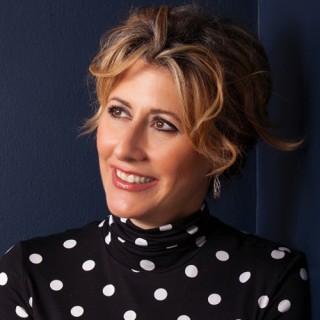
Elsa Korneti: Five Poems
(Dear Sympathizers—)
Dear Sympathizers—
My name is Pinocchio
I’m afflicted with wood for a body
I exist in its rigidity
in a world of pliant dreams
I tolerate my unbending back
by training my supple spirit
to disregard my backbone
its sharp-edged curves
I imagine my body malleable
as I dance
& do calisthenics
I stretch & shrink & bounce
& sometimes fling myself
high into the air
become bow string & arrow
Proud of my arced flexibility
I hit the bullseye
of a softwood target
there in the sky I nail it
right between the eyes
***
(In the red belly of the whale)
In the red belly of the whale
beneath its bony spine
the dark velvet of its tongue warms me
A whale is my cave
my safest hideaway
No one will ever find me here
alone
paying for the mistakes of others
***
(I envy clowns)
I envy clowns
They’re lucky
because in the circus
disguised
they gambol about
Their sadness slithers in silence
beneath their white masks
& sometimes is refreshed
by beads of sweat
& those painted tears
briefly illuminated
That round red nose
flashing
at every turn
absolves
their lies
***
(Nose—)
Nose—
In the game of memory
you go in & out
A deaf serpent
slithers to your secret pulse
You smell the flavor of life
The lie detector
vibrates
& truth
breathes
***
(Three verbs determine my space)
Three verbs determine my space
I run
I play
I dance
One verb determines time
I remember
All I need to remember
is the child
To remember to memorize myself
before I ossify
Like a poem
Elsa Korneti was born in Munich. After receiving a B.A in finance, she worked as a journalist for several years. She has published fifteen books, including poetry, short stories, essays and translations. Two of her poetry collections have been shortlisted for the Greek National Poetry Award. Recent publications include The Hero Is Falling (Filon Publications, 2021) and Rooms with Teeth and Other Sharp Stories (Melani, 2023). The selection of poems above are from Wooden Nose Lathed: A Story of Maladjusted Truth (Shakespearikon, 2021). She says of her book of poems in the voice of Pinocchio, “The lie is everywhere. The lie encircles us. Life itself is a lie and human beings pass their lives constructing themselves out of that which they want to believe. The world today is overwhelmed by innumerable lies, so many that our noses are constantly lengthening. […] As a wooden construction Pinocchio is himself a ‘poem.’”
*****
Antonis Balasopoulos: Five Poems
PHANTOM LIMB
Perhaps you lost it
in some primordial war
that memory can never recall.
A loyal companion,
bluish, almost translucent,
always a hand beside your hands
that grows until it takes up
the whole room. Nestling
in this phantom limb, you say
Thank you my God, thank you
for making me crazy but not alone
in this world where presence is futile.
THE RABBIT
xxxxxxxx xxxxx(for my son)
Two fingers crossed your skin
as the rabbit went on its way.
You turned even more golden
when the light coming from within
embraced the light without, your knotted navel
a blossom rising. Still blond, still unripe,
you waited for the crossing toward the well
of your throat. My fingers went along
on tip-toe—both of us Nicosians
now—traversing your body,
counting my blessings
bone by bone. And I
needed no other prayer.
You were, after all,
a temple, a new one,
and prayer itself.
SIGNING
Where there are
fingers
there is no silence.
No sound.
No flutter heard
on the shore where you stand.
Why did you let me
open my mouth in vain?
I could’ve taught my fingers
to strum the air, could’ve conspired
with you in sign language,
you without hearing, me with no voice.
So be it. I write, you hear!
I have no other way
to cross the distance,
searching for a language
foreign to this foreign language,
and so, familiar. Mother.
BRAILLE
xxxxxxxx White Walls Tower, Lefkosia
The first poet,
they say,
couldn’t see.
With his hands he read
the world,
teaching his fingertips
to remember
the hills and valleys
of existence.
I think of him
in Lefkosia
facing that famous tower,
blinded by the sun.
Blindness too can see
because words
are glyphs chiseled
out of the appearance of things.
And when a flash of white
stuns the mind
here in Lefkosia,
this city an entire
school for the blind,
you read like a thief
the clumps of vegetation
up and down this tower’s
shifting surfaces,
fingers groping to grasp
how meaning moves.
AMERICAN STUDIES (BEN SHAN’S HANDS)
One night on Navarino Square
in the early ‘90s, in sidewalk garbage,
I saw Ben Shahn’s hands
on a postcard, saw expression
raised to the fifth power,
twenty-seven times fractured, the void
for an exponent. Hands that fell
from the face, that erased
the face with their sponges
in the Warsaw Ghetto.
Hands that held
banners of flame in Chicago, that forged
copper into song, that grew
fingers and lit the menorah
with their nails. Bitter hands
of stone, of hard times. I saw
blossoms of ink in a broken garden.
That was the American continent
beckoning me from the other shore: Come,
I have mysteries for you,
secrets hidden in my depths.
*****
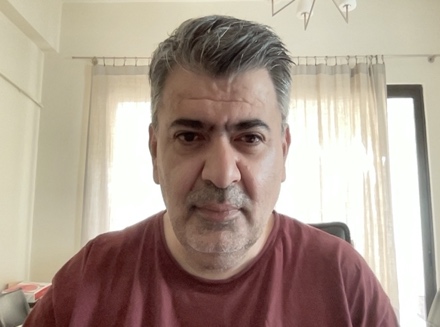
Born in Thessaloniki, Antonis Balasopoulos studied English and comparative literature at Aristotle University and the University of Minnesota, and currently teaches comparative literature at the University of Cyprus. He has published four poetry collections, a volume of short stories, two books of aphorisms and short essays, and a translation anthology of poetry by Emily Dickinson, Robert Frost and Wallace Stevens. He received the Cyprus state award for The Cube and Other Stories (24 Grammata, 2021), while The Book of Creatures (Shakespearikon, 2021) was also shortlisted for the state award in poetry. The Book of Hands (Thraka, 2023), Balasopoulos’ latest work, is a collection that addresses the interface between the human hand as a subject of poetic discourse and as its physical medium—the vehicle of writing itself. Unlike our eyes, our hands do not take in the world (the natural and constructed worlds, as well as the world of others) from a distance. This makes hands our fundamental means for acting in the world, creatively as well as destructively. The poems selected here engage with the place of hands in showing parental affection (“The Rabbit”), in the attempt to communicate across the boundaries imposed by disability (“Signing” and “Braille”), in the experience of love (“Phantom Limb”) and in artistic expression (“American Studies”).
*****
 The High Window