
*****
Brian Swann: Imago • Paul Eric Howlett: Onebody and other poems
*****
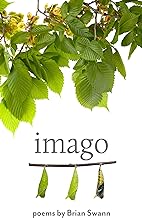
Imago by Brian Swann. £18. Johns Hopkins University Press. £18. ISBN: 9781421445670. Reviewed by Ian Pople.
In a note to his recent, and very fine, Sunday Out of Nowhere: New and Selected Poems (Sheep Meadow Press, 2018), Brian Swann comments that he did not put poems in that book from his first three books. On the one hand, Swann suggests that they were ‘apprentice work.’ He writes that those books were mostly translations. However, Swann tells us that one of those early books was ‘a Basil Bunting inspired long poem using my native Northumbrian.’ Swann also has degrees from Cambridge and a PhD from Princeton.
Swann’s detailing of the provenance of his writing suggests that, on the one hand, he put himself through quite a long period of apprenticeship, firstly through translation, and secondly via the model of Bunting. On the other hand, these comments tell us that, from the start, perhaps, Swann has had a complicated relationship with the ‘englishness’ of his writing. The model that Bunting offers is, itself, ambivalent about its roots. Bunting’s use of dialect was a means of clearly writing against the language of the ‘main stream.’ His allegiance to the post-modernism of Pound also placed him outside the literary mainstream. Eliot called Bunting, ‘one of Pound’s wilder disciples.’ That Brian Swann chose Bunting as an exemplar and also worked in translation, moving from one language into English, albeit that one of those books was translation from Anglo-Saxon, shows Swann as someone for whom, perhaps, the writing of poetry in English cannot be taken for granted. It suggests that for Swann, English is a coat into which one should not automatically slip.
In the poem ‘Nationalism’, from Imago, that ambivalence comes to the fore. ‘Nationalism’ begins ‘At first, I wanted to be English. I didn’t have much choice.’ What is important is the way this is couched in the past tense, the wanting and the having of the choice are moments from the past, from ‘at first.’ The poem also charts Swann’s past wanting to be: Welsh, Irish, Scots, Jewish and then Palestinian. The poem finishes, ‘which made me think / I should be Arab, or, later, Italian or Mexican, or just plain nothing. / Which was how on January 9, 1980, I swore allegiance to / the United States, becoming No. 108466898 and A13 834 018.’ At the end of all of these various cleavings to a nation, Swann becomes part of a place in which he is ‘just’ a number.
Swann has also edited anthologies of Native American writing. Again, Swann notes that these anthologies were themselves ‘versions’ of translations. So, when we approach Swann’s own poetry, it seems to be the poetry of one who is tiptoeing around the language. Sometimes, too, there is also the sense of Swann tiptoeing around the self. In an early poem from Swann’s New and Selected, Swann writes, ‘I can only exist in writing, / when for a while I do not know //I “exist.” I exist only when I / don’t exist.’ Of course, the writer can parade their existential angst as a card in one of their suits. Such questioning of the self is a kind of place holder in the technique of the poem. So, it’s also interesting that a number of the poems towards the end of the earlier book are persona poems, often of people that Swann has clearly met on his travels. Here, the mutable self of the authorising consciousness of the poem seeks to inhabit the Other.
Out of this maelstrom of influences, the voice that emerges actually feels quite transatlantic; the wide bandwidth of much contemporary American writing is very present in Swann’s poetry. The Swann of the earlier book and this new book, Imago, is a writer of large sympathies and particular empathies. That empathy is shown is shown throughout the book, perhaps most particularly in the second section entitled, ‘Elegiac.’ This section begins with Swann contemplating his own decline, ‘I who once moved like breath am now / connoisseur of pratfalls.’ ’The Screen Door.’ The poem then describes an exact and drily funny account of a visit to the doctor who is actually the vet, who tells him, ‘there’s nothing wrong that // a change of litter and diet won’t cure.’ ‘Making Sense’
Swann’s very precise sense of the other is present in the poems about the death of his father. Or, rather, the poems about the deaths of other family members, as in the crisply ironic ‘Jokes’ : his father, ‘died after trying to live forever / with congealed beef fat thick on bread; teetotalling Uncle Ted ‘who, / they claimed, fell drunk from his oil rig and / was never found, or his wife who hanged herself in / a heat wave.’ ‘Jokes’ The reader might feel some of the quiet, uninflected nature of Swann’s mature style. Swann is never interested in prettying things up. And it should be noted that Swann is not afraid to insert himself and his own destiny into the poems. At the start of ‘Jokes,’ Swann quotes Blake’s comment that ‘he could not / consider death “anything but a removal from / one room to another” which Swann contemplates with ‘if so, or even not, I’m / wondering which one I’m in as I gaze out at nothing.’ Although that last phrase occurs on the fourth line of a 22-line poem, its resonance runs through the ‘jokes’ about death that Swann catalogues. Swanns ‘Jokes’ are absolutely not about nothing.
If Swann has an understandable, late-life concern with mortality, that never gets in the way of his equal concern to see the world clearly in all its facets. Elsewhere in Imago, there are lovely, and a little more lyrical, poems about the natural world. The beautiful ‘Three Mallards’ begins with a sweeping description of the Northumbrian coast of Swann’s childhood; ‘The gods enter as dust from a moth’s wings, clatter / of pebbles in a mountain stream, from whisper of maidenhair fern // in fissures to rustle of Pleiades’ plumage, as morning light’s / silk thread on a loom, see, they return even under // bleared sky here on the bluff with its wind-turned, bent-/ over hawthorn, as dunes moving when I move,’ This passage certainly has its echoes of Bunting; that slight personification of the pebbles and the fern; the turn of the gaze from the gods to the Pleiades, from the metaphysical to the slightly beyond.
‘The Wind’s’ explores via a range of beautifully spaced phrases the nature of the aftermath of its subject, ‘leftovers bygones tuning fork fits / everything everywhere no diversions fills the incomplete / expands the excessive incomplete as desire’ This is not Ted Hughes’ ‘Wind’ with its house that has ‘been far out to sea all night’ and in which a couple sit apart in their disturbed silence. Swann’s wind is both more abstract but, perhaps, more searching in its effects.
The title poem, ‘Imago,’ describes, as we might imagine, the young Swann finding butterflies eggs on a leaf and putting them in a jar, to watch them hatch. The poem finishes with ‘to release what was always there, which now / gathers and flies off, lightened images in air.’ Swann is not clunky enough to have this as the last line of the book. But it is a kind of manifesto for the poetic act. Swann’s Imago is a very satisfying book, with range and depth. There is clear ambition, too, as we have seen in poems which deal with ageing and death, to the births of the butterflies. All those years of apprenticeship show in this very good, very convincing writing.
Ian Pople‘s most recent collection, Spillway, New and Selected Poems, is published by Carcanet.
*****
Paul Eric Howlett’s Onebody and other poems. £12. Waterloo Press. ISBN: 978-1-915241-13-9. Reviewed by David Hackbridge Johnson.

Hot on the heels of his first book for Waterloo Press, The Bedfordshire Boy, comes Paul Eric Howlett’s second, Onebody and other poems. A chance meeting with Waterloo’s editor-in-chief, Simon Jenner at a recent Ted Hughes symposium, allowed me to make the most basic of enquiries about a poet seemingly sprung fully-formed from nowhere into the thick of the poetic firmament. I can confirm that the poet lives, is writing, and that both volumes of his work are selections from manuscript works hitherto not published. No further biographical or bibliographical facts. The poet’s portrait adorns the back flap – a face serious, magnificently bearded, prophetic.
As in The Bedfordshire Boy, Howlett excels in poems that act like verbal signposts to geographical locations – ‘Selig’[i] gives us a procession of Suffolk names: Lavenham, Long Melford, the River Deben with its ‘giant S’, the River Alde with its ‘swung dash’ – and by doing so can dip into history with its ‘icons of time’ and allow real and imagined journeys. But if the title refers to the homelessness charity SeligSuffolk, it may be that Howlett is not merely pinning the tail to the psychogeographical donkey but is tapping into the need for places of haven – SeligSuffolk runs a scheme whereby churches become available spaces for those sleeping rough.[ii]
In allowing for a surreal and experimental admixture in some poems, Howlett has let himself in for some violent yokings – these from ‘Numerals’[iii] : ‘Shame sucking Cambridge without a Darwin / Instinct or reason rags for the nude few’. The conjugations are wild enough to justify the virtuosity and things are being said in the background about the nation and its evolving view of itself: ‘Rolling with millions of rounded grains / The British-kingdom and all its rulers.’ He makes more direct attacks in ‘Pack my Bag’[iv] where the specifics of a Craig Raine-like acidity scald: ‘Television’s nodding-dogs and autocue readers / Incestuous celebrity and game-show feeders’. This poem is one of several that exploit rhyme to achieve a sharp-edged satire – take these deliciously witty lines from ‘A Brief Life of Edith Sitwell’ that seem to both guy and praise a poet whose resurgence might alarm the po-faced: ‘Political customs, the adult zoo / An albatross of love and Tchelitchew’ – or on a more serious note: ‘Blind codicils of Adam and the Lord / Leave Atomic ash and Cain is abroad’ – this a reference to Sitwell’s 1947 poem ‘The Shadow of Cain’.
The fondness for experiment and a complex voice in some ways derived from Geoffrey Hill (even on occasion the curmudgeonly late Hill) are combined in ‘Brooding Slide’[v] where we are at once called to attention by an insistent yet intimate voice that wishes to present state of the nation musings in dense unrhymed octets with something of Milton’s ‘grand style’ about them: ‘Begin. Quiet now with frosty vespers / And no police, the pavement lies.’ An attempted explication of this long poem would explode the bounds of a short review but suffice to say that the voice that muses is on a considered journey through a history and a present that are combined, or rather kaleidoscoped in a dizzying array of hints, totems, taboos, givens, shibboleths – as if rational thought is adrift in an unstable post-modern interpretation of, say, nostalgia, order, corruption, social planning, the media, and colonialism. The poet pins his flag to the mast – one that those that challenge his view might gleefully topple: ‘All candidates for a new Reich shape shift / Parts in our history, and apply to / The School of White Guilt Studies. The daily / Paranoia of offence; uncivil / War is everywhere.’ The poet searches for countervailing forces and finds them, or finds them debased in old supposed certainties such as ‘Our complex erections: Class, Cross and Crown’, or in appeals to the quieter world of the sleepy shires, the mediaeval streets (now a car park), ‘the slow / And green pastimes of farmers’. I don’t think the poem presents a world as an appeal to entirely conservative modes of being – there is more a bewilderment at the multiplicity of messages coming from among others ‘The Daily sly press’. This confusion of utterance with its polarised discourse seems best summed up by ‘Coming sky shrugs off Pentecost (and wounds / In their diversity)’. The poet, in a pessimistic send off in the form of ironic hope, leaves resolution outside the poem – ‘False world, good night, / Tomorrow to fresh moods and raptures new.’ – but in laying out such elaborate concern the poem invites a considered response rather than the easy riposte of cancellation.
In quieter moments of the book, Howlett invites the reader into the intimacy of love poems – ‘Stations of Love’[vi] charts through a series of beautiful and hazy images a passionate attachment: ‘Brown eyes stroked with love / Beyond the known muse // Like twins we divide / From one gentleness // A shut midnight / And late room secret //A strip, tease of light / Locked in a dream cleft’. As a kind of pendant to this poem, ‘Domestic Scene’[vii] presents a fast forward to what feels like the glowing embers of love: ‘we take to the return / along the canal boats tied / to a swan’s neck of the woods / past conversations of late / life and widow duty / to streets that move across / and a choice of stores’.
In a small group of pattern poems, Howlett shows a playful technique harnessed to the shapes of crosses made from words that act like a riddle or as a knot of talismanic figures from history. In ‘Concrete Poem Number Two’[viii], Wordsworth, King Arthur, King Redwald of East Anglia and The Great Wen are the north, west, east and south of a cruciform shape – the main trunk spells out vertically down and up, ‘common Dunstable road epistles / the narrow road to the deep north’. It takes a while to work out that a map of England is attempted here with its heart somewhat anatomically adrift in Dunstable Road, Bedfordshire – not far from the town after which the composer Dunstable took his name. I think the reader can obtain much pleasure travelling around this poem and mulling over its implications. The 4th of the group, ‘For a Stone Abbey’ presents three stark crosses which give locations for Christ as the patibulums whilst the stipes spell out ‘Alban roman saint’, ‘skull crossbones’ and ‘trove of treasure’ respectively. These crosses, like Ruthwell Cross in triplicate, resonate as Anglo-Saxon survivals in verbal form – very much Geoffrey Hill territory. Howlett lets them speak from within their own structure – as stony reminders of faith, long dead saints and as a memento mori of chiselled bones.
Paul Eric Howlett has maintained the high standard set by his first volume – here are poems taking risks with unfashionable stances, mining the past and trying to fix an elusive present, and remaining open to the experiments with words his visions suggest.
[i] Onebody and other poems, Waterloo Press, 2023, p. 2.
[ii] https://selig.org.uk/ (last accesses 12.x.2023.
[iii] Ibid. p. 14.
[iv] Ibid. p. 18.
[v] Ibid. p. 31.
[vi] Ibid. p. 42.
[vii] Ibid. p. 59.
[viii] Ibid. p. 63.
David Hackbridge Johnson began composing at the age of 11 and has written works in all genres. His works have been widely performed. and include 15 symphonies, 4 of which have been recorded on Toccata Classics. He is also a poet.
 The High Window