*****
Lee Harwood: New Collected Poems • Dónall Dempsey: The Fox, the Whale and the Wardrobe • Merryn Williams: After Hastings • Laura McKee: Take care of your hooves darling
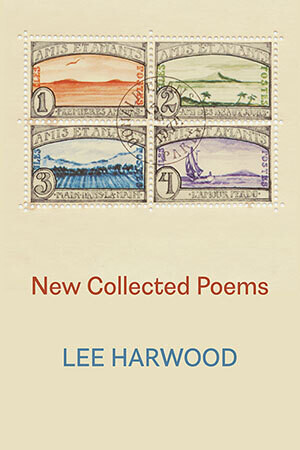
New Collected Poems by Lee Harwood. £27.50. Shearsman. ISBN: 9781848-855-8. Reviewed by Ian Pople.
In a quotation on the blurb for Lee Harwood’s New Collected Poems, John Ashbery comments on Harwood’s style. Ashbery suggests that ‘like American English [Harwood’s style] lacks a strong sense of possession’ although it has ‘a pearly, soft-focus quality one rarely sees in American poetry.’ Ashbery’s ‘strong sense of possession’ is, perhaps, a little hard to interpret. Does he mean that American poetry lacks ego, or that the ego in American poetry is so self-centred that it simply skates over the objects it ‘discusses.’ There is in that a sense, perhaps, of the authorising consciousness of the poems being at a slight angle to where the poems might be going. There is a sense in Harwood’s writing that he is more than willing for the motifs of the poems to push the poet. And that willingness is present from the start of his career to its end.
In part, that willingness occurs in Harwood’s explicit tentativeness. ‘New Year’, from relatively early in Harwood’s five-decade career shows this well, ‘a dark forest somewhere / with a chain of lakes / scattered between the mountains // no one for miles (literally) / except you a white movement / among the trees a ‘blur’ // but more precise than that // maybe a long way off a railway / but I think not / nor a moored seaplane on / one of the lakes’ It is not simply the deliberate use of imprecision –‘somewhere,’’(literally),’ ‘a”blur”,’’maybe,’ or the subversive phrases, ‘maybe a long way off,’ ’but I think not.’ It is the sense that these evasions, if you like, constitute part of the poetic. That Harwood is intent on both the evocation of place but also its deconstruction.
The use of ‘deconstruction’ seems important here because Harwood is not an obvious L=A=N=G=U=A=G=E poet. Things are clearly vital to Harwood, as are people and those things and people are viewed with real empathy. What comes across in so many of these very fine poems is the sheer compassion with which Harwood views the world. And it is this finely skilled triangulation between content, style and compassion which makes this volume so compelling. The ‘you’ maybe a white movement and a ‘blur’ but that blur is in quotation marks, so the ‘you’ is both a blur and something more precise, always ‘you’. Thus, it is that Harwood is not a L=A=N=G=U=A=G=E poet per se. Harwood is not interested in solely making the reader aware that the poem text is an artifice by drawing the reader’s attention to the language itself. As the editors, Kelvin Corcoran and Robert Sheppard’s introduction notes, Harwood ‘was a leading poet of the British Poetry Revival, a term that is sometimes used to encompass a range of alternative, non-mainstream poetries that emerged in Britain during the 1960s’. Corcoran and Sheppard are also hedging their own language with a ‘sometimes’ and ‘a range of alternative, non-mainstream poetries.’ Here is not the place to get into an analysis of the British Poetry Revival. But what is clear from Harwood’s New Collected is that he was not content simply to work with his abundant empathies. The poems are clearly inspired by those empathies. But Harwood also needs the reader to know that language is a plastic and often tricksy medium.
In part, that plasticity is indicated in Harwood’s slightly Olson-esque use of open form. A lovely lyric such as the poem ‘Hollingbury’ describes the scene around an earth fort. A skylark, sea mists and ‘the line of hills // in the distance’ all feature. The poem is broken into short phrases disposed over a half page in this book. But the phrases are sequential, the syntax relatively regular. The airy quality of the scene is mimicked in the airy quality of the layout, although the ‘disturbance’ to the line only goes so far; , even where the poem does not finish with a full stop, as is often the case in Harwood’s poetry. The reader is engaged with this lovely scene, and Harwood is a wonderful landscapist.
Elsewhere, Harwood can be a poet of moving introspections as in ‘Brecon Cathedral.’ Harwood the painter of place evokes the early Sunday morning with deft touches, ‘heavy frost whitening the ground / ice crusted grass / an eggshell blue sky with stripes of pink low down’. But later, the iconography of the place clearly gets to him, ‘But it nags // talking to myself, I know, but // with or without the love. // A book is held open to us / studded with words / the fingers held in blessing / A clear calm smile on His face / No nonsense / It’s clear enough // clear as the mountains / clear as the light shafting through the windows’. It might be ‘clear enough’ to Harwood that prayer might really be talking to oneself, but it is that ‘it’ that nags. That ‘it’, the context of faith and belief, that poses the questions, ‘snags’, if you like. At the end, of course, it is the natural world which provides clarity and light, but, in the writing of the piece itself, Harwood concedes that something is pulling.
Overall, this is a very worthwhile volume. Corcoran and Sheppard have not only provided a very useful introduction but have, they state, included other fugitive work to complement the 2004 edition of his Collected Poems that Harwood himself supervised. Harwood is a poet who is unfailingly satisfying with a profound talent for both lyric and narrative and a real emotional and intellectual reach.
Ian Pople‘s Spillway: New and Selected Poems is published by Carcanet.
*****
The Fox, the Whale and the Wardrobe by Dónall Dempsey. £10.99. Vole Books. ISBN: 978-1-913329-80-3. Reviewed by Sue Kindon

Now, there’s a title that’s asking to be noticed. Immediately, the CS Lewis children’s book springs to mind (and I can just reach my tattered copy from where I’m writing), the Lion and Witch transformed to Fox and Whale. Already I find myself in the parallel land of childhood and fairytales, open to fantastic (in the true sense of the word) possibilities.
I make straight for the title poem, on page 21 (of 119). It’s a poem of darkness, and there is no magic way out of this wardrobe, where a boy is hiding, in the company of his aunt’s fox stole, its ‘beady eyes alive with death’, together with her whale bone corset: ‘its white bones escaping / poking me in the ribs’. The fox stole whispers in his ear, and the poet tries to comfort the child he was.’I gather the darkness /about us’, the poem concludes.
There is a reference to ‘deepest darkest Cork’: if the poet’s name was not clue enough to his origins, this is the confirmation, and immediately his words take on a soft Irish lilt.
a magician
making words do
whatever he told them to
making words do< whatever he told them to. There are endearing poems about Dempsey’s young daughter, who shows a delightfully original take on the world, several about his father, and mention of another uncle, Uncle Seanie. Other characters include James Joyce and family, and Jane Butler, a strange gangster/femme fatale, almost a figure from a graphic novel, or, perhaps, ‘film noir’. The connection between photographs and memory also comes into play. I am always nostalgic for the future as if it were only the past happening again and again for the first time ever …and this enables him to drift seamlessly in and out of childhood at will. He returns to a now-ruined house in the beautifully described dream poem ‘A Further Future’: the house looked aghast at my return – a poem with a surprising ending, and explanatory footnote. Some of the notes at the bottom of the pages are like the introductions at a performance (and these pieces are eminently suited to live readings) , while others are little enigmatic poems in themselves, or, sometimes, jokes. Indeed, the speaker of these poems can be dazzlingly light-hearted, successfully putting across the sheer fun of childhood, as in ‘Be De Holy Dublin’, another poem about Uncle Mikey. He (the poet) conveys moments that have been of huge significance in forming his own mythology. ‘The Tree Walks Home with Me’, for example, becomes part of the poet’s dreamscape of trees, smiles, darkness and moonlight. His take on religion is pantheistic:
no God just
the sweet rain blesses me
with its own good self
and his attitude to Christianity is not without humour. In: ‘Fallen Angel on the Graveyard Shift’ a stone angel gets her revenge during a snowstorm.
Dempsey’s style veers towards the minimalist, with only a few words to a line, and, usually, no more than three lines to a stanza. This compact structure is carried by its own pulse, with hardly a need for punctuation. The wide margins of white space enhance the columns of well-chosen words, tall story upon story, colourful character after character. Incidentally, this is the first time I’ve reviewed from a pdf, and I found that scrolling down suited the shape of the poems very well.
The style is very much Dempsey’s own, but the mood reminds me of Billy Collins, Lewis Carroll, and, occasionally, Spike Milligan! There are new fables in the making; ‘The Tales Told by Birds’ is a powerful take on the consequences of our destruction of the Planet:
the civilisation of the birds
will prevail
and they will tell their eggs
stories about how
the humans
nearly destroyed the earth
and how now they only survive
in the stories that birds tell
to frighten their little hatchlings
and: ‘Beware the Dónall Dempsey My Son’ turns convention on its head..
There are nods to, among others, T S Eliot, Charles Dickens, Shakespeare, and Dylan Thomas.
The titles work pleasingly hard – for example, ‘The Bell Goes for the End of History’, and ‘Moving House’ – and can be downright funny: ‘My Molecules are Revolting’, or intriguing, as in ‘Ball goes AWOL’. Dempsey loves to personify inanimate objects, and in this poem, both ball and wall speak, in a memorable fun moment.
Sometimes he personifies abstract nouns: we experienc ‘TIME running / in fear of its life’, while being chased by a grandfather clock, and the poet even gives concepts voices. The Past speaks to us! This is amusing in its absurdity, and the direct address is bizarrely captivating. There is a real sense of whatever next?
Taken as a whole, the collection is a celebration of memory, family, and moments of intense emotion, happy or fearful, that will stay with me; all this recounted succinctly, by a masterful storyteller, in a series of enchanting vignettes. To give the poet the last word:
Only I
& the moment
keep happening
in the attic of my head.
Sue Kindon lives and writes in the French Pyrenees, and is a member of Treignac Poets. She was Runner Up in the 2021 Ginkgo Prize (for Eco-poetry); her latest pamphlet is Outside, the Box (4Word Press, 2019). She sometimes writes in French, and currently has a poem shortlisted in a French competition.
*****
After Hastings by Merryn Williams. £7.50. Shoestring Press. ISBN: 978-1915553249. Reviewed by Lucy Newlyn

Merryn Williams has consistently championed ‘plain style’ in poetry, whether in her own writing or in work she has selected, edited or appraised. Her voice is distinctive for its clarity and succinctness, avoiding figurative flights of fancy. Her affinities are with what John Powell Ward has called ‘poetry of the un-poetic’ — an English line of verse stretching from Wordsworth through Hardy and Edward Thomas to Larkin, then onward into Heaney. She has strong political views but never shouts them at her readers, choosing instead a reflective register. Her poetry is a pleasure to read and re-read. The more attention one pays to it, the more one appreciates its un-showy mastery of craft.
Her new collection, After Hastings, is mostly personal in subject-matter, its title and several poems referring to familiar childhood haunts. There are poems of memory here, and of loss, of encounter, of epiphany – each particularised and distinct. But the autobiographical slant is never self-indulgent, as in the confessional poetry fashionable these days (from which Williams strikingly diverges). There is something matter-of-fact, almost impersonal, in her tone of voice: ‘Some of Hastings has toppled in the sea’; ‘it might reach my old home, but I’ll be dead’ (‘After Hastings’). Unpalatable truths about the planet’s future are confronted and stated: ‘the sun itself will one day cease to be’ (‘Eclipse’). There’s a lapidary approach to emotion in these poems that reminds me of Hardy: no drumrolls, no fuss – in this way their impact is increased. Even the bleakest of personal disclosures, in ‘Bottle Alley’, is made without a hint of self-pity, the lovely lyrical lilt lending an ironic overlay of composure:
I am broken into little pieces.
2020 rolls towards its end,
one appalling year in which I suffered
smashed hopes, and the deaths of more than one friend.
The poems in After Hastings develop an art of implication, inviting the reader to interpret and fill in gaps. There are poems which tantalise us by deliberately withholding information. What are the speaker’s circumstances in ‘That Autumn’, a poem that captures a grievous loss without revealing who lies in ‘a certain intensive unit’, its doors now closed? Is it the poet’s mother who is remembered in ‘Discarded’, her thin platinum wedding ring bluntly dismissed as ‘a token which I do not want to keep’? Who is the subject of ‘I saw my rival’, with whom the speaker (almost mischievously) enjoys sharing a ‘dark disputed history’? Whose is the ‘tobacco thickened voice’ calling so poignantly from beyond the grave in ‘Hallucinations’? Can we be sure we have correctly guessed the name of the public figure whose ambiguous death the speaker remembers in ‘The Child’s Testimony’? Identities could have been revealed, either in titles or in notes, but they are not: this is a poetry of reticence; much of its power depends on distancing.
Williams is a skilful writer of dramatic monologues, which further enable her to escape the trammels of a circumscribed ego. In ‘Wilfred Owen reflects’ she speaks in the imagined voice of Owen as he might have been, had he escaped into Spain and avoided ‘shouldering the burden of [his] generation’ through death. In ‘On Tuesday evenings’ she plays the part of an official (the Home Secretary?) responsible for the grim unpalatable duty of signing death warrants in times of capital punishment. In ‘Hermione’ she goes behind Shakespeare’s portrait of a wronged wife to explore the vengeful resentment of a woman unable to forgive. These are subtle poems which depend on knowledge of context for a full enjoyment of nuance; and yet — as with the best examples of the genre – they break free of their literary and historical moorings.
Williams’s handling of form gives deep pleasure. Metrically she has perfect pitch, and her work reveals a love of rhyme which is unusual in contemporary poetry. She uses it to great effect, especially when she couples it with understatement and irony. In the anthologisable poem ‘Triplets’ she records her encounter, in North Herefordshire Museum, with three tiny skeletons behind glass, relics of the Iron Age. One baby had been stuck in the mother’s womb, one in her birth canal, one between her thighs. In bare, minimalist language the moment of each death is briefly re-constructed under the viewer’s unflinching gaze. The poem concludes with an instruction to the reader, aptly recalling the conventions of eighteenth-century inscription:
Stranger, sigh and turn again,
Count the bones, don’t feel the pain.
Go your way, and flip the page
On Britannia’s Iron Age.
Only a master of rhyme could pull off so stringent a conclusion. We hear Yeats’ ‘Horseman, pass by’ in the background. Williams draws on poetry’s echoic resources to deepen the sardonic nonchalance of this intensely moving elegy.
Lucy Newlyn is Emeritus Fellow in English at St Edmund Hall Oxford, where she taught for thirty-two years. She has published widely on English Romanticism, including four books with Oxford University Press; and is the author of six collections of poetry as well as a memoir. Her most recent books are The Craft of Poetry: A Primer in Verse (Yale University Press, 2021) and Quicksilver (Lapwing, 2022). Since retirement, she has lived in Cornwall.
*****
Take care of your hooves darling by Laura McKee. £7.50. Against the Grain Press. https://againstthegrainpoetrypress.wordpress.com/ Reviewed by Carole Bromley

I have been a fan of Laura McKee’s poems for some time now and was delighted to read her debut collection. Laura specialises in short, spare, unpunctuated, lower-case poems and this book proves what a powerful style that can be.
Her poems often defy analysis but have their own strange logic. She does the surreal with aplomb! Andrew McMillan commented that these poems ‘recall the always surprising imagery of Selima Hill.’ I agree. Selima Hill is one of my all-time favourite poets which perhaps partly explains the appeal of McKee’s work. Both work through brilliant imagery, both employ humour and both are unafraid to speak the truth.
In the opening poem, ‘the hard animal of her body’
‘the woman next to me
shows me her bones
she delves into her bag
and pulls them out’
and immediately there is a sense of unease in the reader who assumes, but can’t be certain, that we are in a hospital waiting room. I loved the skilful use of direct speech in this one. It makes the narrative convincing. We are then flung into a world of tin cows where ‘one particular tin cow/ opens her grass heart’ and by this point we have decided to give in and just follow this unique voice wherever it decides to lead us. As it happens it leads us into an art gallery where ‘nude on carpet’ fascinates the speaker
‘her knees are real
and I see her toes
nudge each other’
Ekphrasis will turn out to be a strength, as will the erotic as in the sparse seven lines of ‘woods’ in which a woman ‘lies belly down/in the river’s lap//lets cool water/run through all the gaps’
I loved ‘My son as a portrait of a man’. In it the speaker and her son share a moment of larking around with dressing up clothes/ gender identity/the transformative power of clothing
‘I grew up on a farm
so I’m used to all the mud
flirting with each last word
McKee is also queen of the killer ending. Take this from ‘good morning’ in which she plans to climb into a sewer where
‘…no-one/will have to pretend
to listen to me except
starfish and where are their
ears’
There is something going on there about the poet not being heard, or fearing not being heard, or being hurt by being misheard which resonates with me.
Back in the art gallery in ‘A Wheatfield, with Cypresses, 1889, Vincent van Gogh’ a different kind of artist paints with deep colours to express strong feeling and the writer feels an affinity which enables her to produce a fine poem which is both highly visual and full of power
‘it came from his knife edge
from a hole in his chest’
Communication between people is another theme in the collection. ‘Walls’ is very effective with its exploration of misunderstanding between people who are close (possibly the poet’s mother?) We share the speaker’s pain and her conclusion ‘loneliness is harder than walls’ is oddly touching.
There is deep affection in many of the poems. ‘in secondary modern you had perfect skin’ is rather wonderful for its undercurrent of eroticism and its kindness and insight into how we see one another
‘you said you would like to
join the dots
and we might find constellations
as if I were splattered with chocolate milk
as if I were made of stars’
Another favourite of mine is ’79 portraits and 2 still lifes, with its gloriously erotic game between lovers in a gallery.
‘your hand is between my thighs
at the British Museum
through the back slit
of my long black cashmere coat
tell me what you like about this’
In ‘she wishes she could sing’
‘she wants only to feel
the pinch of his beak
on her breast’
takes us to ‘Leda and the Swan’ and in it, rather like Yeats, the poet is exploring the urge of the poet to ‘sing’ while a tame crow brings her shiny things she does not need, her song already ‘released/with each emergent dull ache’.
Carole Bromley lives in York and writes for both adults and children. Recent and forthcoming publications include poems in Poetry Review, Alchemy Spoon, Finished Creatures, Strix, Under the Radar, York Literary Review and Northern Gravy. Carole was a winner in this year’s Liverpool Competition and will have children’s poems in MacMillan’s Gods and Monsters, in Paperbound and in Little Thoughts Press. She was the winner of the 2022 Caterpillar Prize. www.carolebromleypoetry.co.uk
*****
 The High Window