Now available: David Cooke’s Collected Poems, published by Littoral Press.
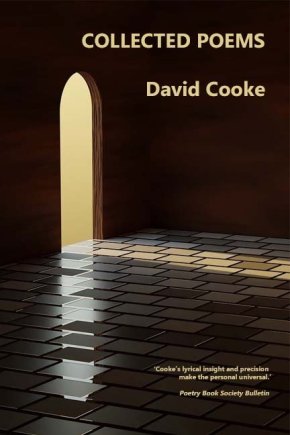
Last year, Littoral Press published my Collected Poems to coincide with my 70th birthday. Containing poems written over fifty years, it brings together in one convenient volume, work published previously in nine widely reviewed and well received earlier collections.
Reviews • or go straight to the Poems
*****
‘Cooke has an innate poetic ability to stud the everyday, the unpretentious, with telling little details, perfectly nuanced turns of phrase, that vouchsafe the collection’s ability to linger in the reader’s mind.’ Neil Fulwood, London Grip
‘There is a fine sensuousness in the language.’ Catriona O’Reilly, Poetry Salzburg Review
‘Cooke is canny at keeping his language smart and direct, and the pacing of the poems fluid and unfaltering.’ Neil Young, The Interpreter’s House.
‘… laced through with heart and humanity …’ Wendy Klein, The North
‘David Cooke is a fine poet. Out of diverse cultures and histories he draws his civilized pattern.’ William Bedford, The London Magazine
‘There is a magisterial and stately dignity to Cooke’s poetry.’ Ken Evans, The Manchester Review
‘David Cooke’s poetry consistently delivers. It wears its knowledge lightly.’ Greg Freeman, Write Out Loud
‘… a welcome lack of showiness.’ John Greening, Times Literary Supplement
‘Cooke’s lyrical insight and precision make the personal universal.’ Poetry Book Society Bulletin
‘David Cooke’s Collected Poems is a book every lover of poetry should have on their bookshelves.’ Sam Milne, Agenda
*
Within the United Kingdom, copies are available directly from The High Window.
 The United Kingdom
@ specially discounted price of £16 inc. p & p.
Otherwise copies are available via amazon.co.uk and amazon.com. NB: In the EU payment can be made via the paypal button and I will direct a copy to you.
******
Spring 2026: Four Poems from A Murmuration
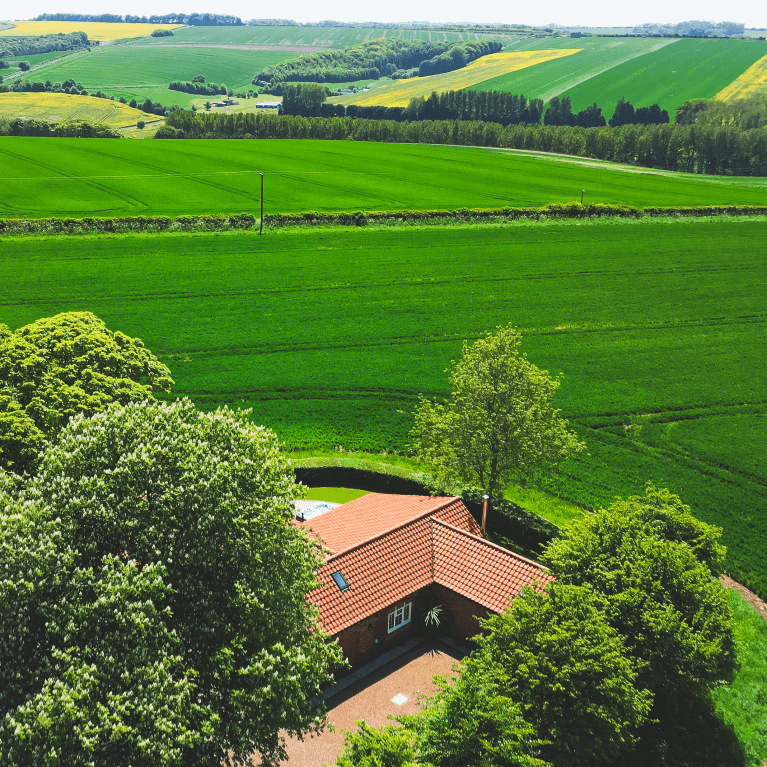
AT WOODY’S TOP
for Rob Etty
Trying to see it, I look across a landscape
on the raised edge of Lincolnshire,
whose flat productive acres have wrinkled
into the rise and dip
of the Wolds, as if geology
had assumed a rhythm like verse.
And though it’s all a question
of pressure and upheavals,
and the slow relentless stroke of weather,
my gaze settles on a view
that has the fixity
and composure of a final draft.
Beyond the mizzling bluster
of a late October morning
the distances are sealed in silence,
where gulls flicker above the copse
like random thoughts
that may, or may not, amount to something.
*****
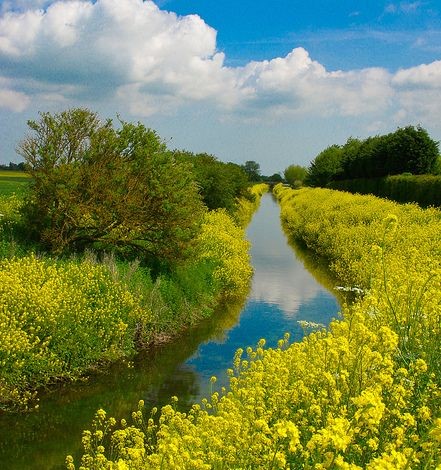
CANAL
i.m. Ken Head
From the dead end of a side street
in a shuffling market town
I follow the abandoned canal,
enticed by the promise
of glimpses into secretive lives –
the otters, voles, and occasional
migrants whose images feature
on the information panel.
With an earlier start and clearer sky
I might have reached the sea
across twelve open miles
where the Wolds have levelled
but dither, first, at the edge
of the water with barely feral
coots and ducks. Risking the rain,
I move on beneath darkened trees
past the sandbagged thresholds
of a new-build estate and then,
beyond it, the cluttered outpost
of the reclamation yard.
A first-generation townie,
with an afternoon to kill, I keep pace
with sluggish water, its channel
constricted by banks of growth
whose headstrong pinks
and yellows tumble down
to silted shallows, where trailing
branches dowse their leaves.
Determined, later, to look up
its history, I find it hard
to imagine its heyday, or guess
how long it served a purpose
in these quiet fields, where
a slow-moving herd pays me
no mind and keeps no memory
of softly-spoken culchies
who muttered wryly
into drink and flopped down,
exhausted, in a kip on Irish Hill,
a street the locals named for them.
*****
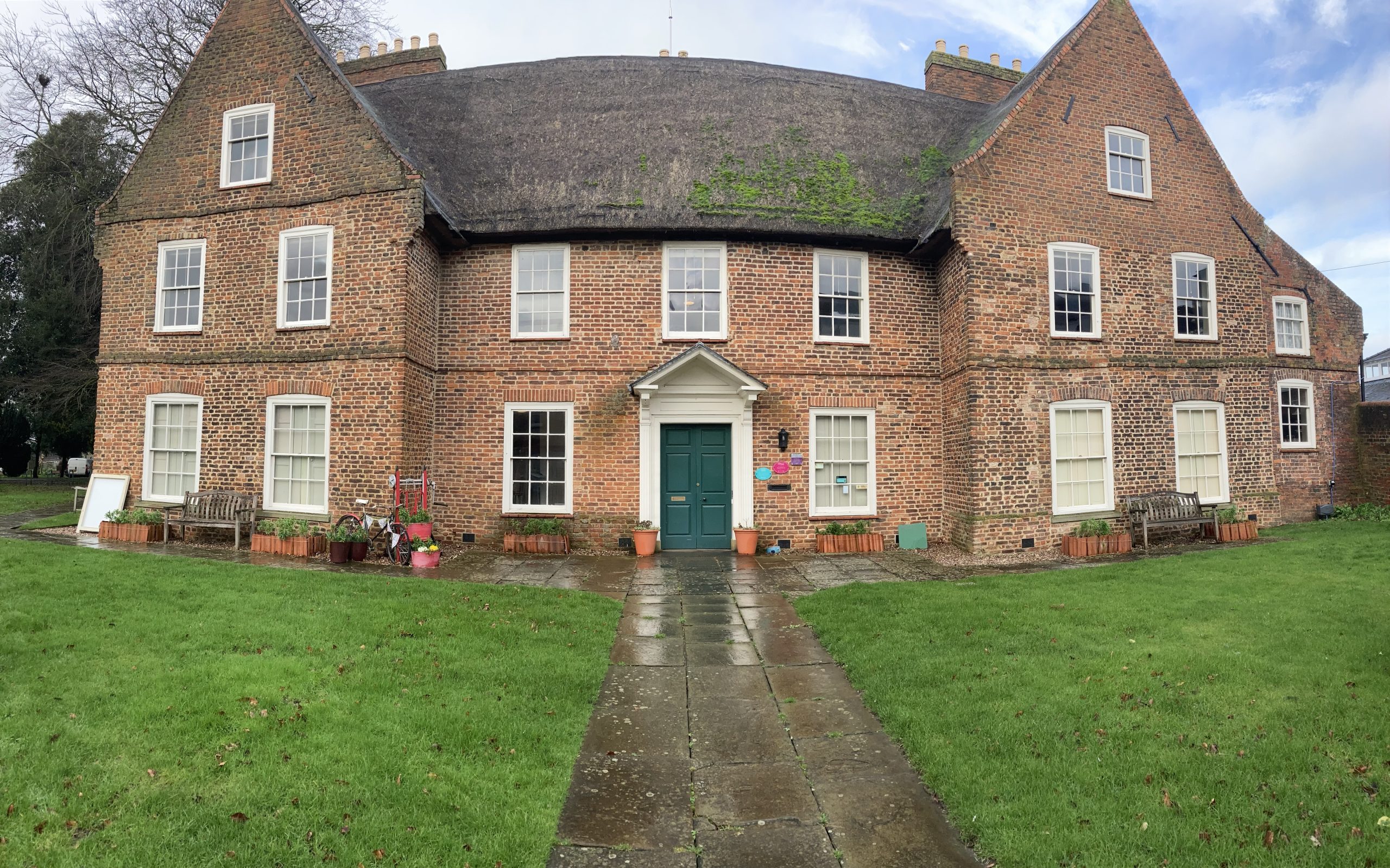
THE MANOR HOUSE AT ALFORD
Finding his feet on the right side of history,
some notable, a name, acquired this house,
when he laid new money down for impeccable
brickwork and the chamfered beams
upholding its fireplace, the ceilings,
a world; and blithely assuming
what may have seemed the burdens
of stewardship, his life was well appointed.
From dawn till dusk, and by degree,
days creaked on cogs and wheels, like the lift
in which his wife ascended. Hutched in the attic,
his servants’ lives were entangled in bells.
While their descendants, freer now
and more uncertain, can pay to view
the relics of each sanitized era,
glimpsing here through perspex
the insides of walls whose handsomeness
was all a fascia, a blind, across
an arcane structure whose ties could not hold.
Slowly the house disassembled itself,
becoming a sump for wealth
in deferential twilight, as lost trades
and the skills of mechanicals
were reinvented to claim back a premium.
And if we’re now unsure who really owns it,
trustees are tasked to make it pay its way –
its garden reduced to raggedy box,
a few late windfalls, pecked at, abandoned.
*****
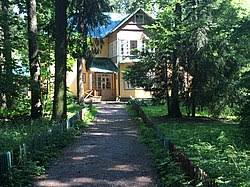
A WRITER’S RETREAT
for Paul Sutherland
To the tree-framed haven
of Woody’s Top in Lincolnshire
we have come
by separate ways
to find ourselves
in language:
devotees of syntax
and syllable
who map out the confines
of our writers’ hideaway,
reinventing a space
for contemplation
and brisk walks,
each of us a citizen
of an imagined
Peredelkino –
free to interpret
shifts in the weather
and the auguries of birds
whose flights with luck
we’ll fledge
anew in words.
Winter 2025: Four Poems from The Metal Exchange

GOLD
Its lack of reaction has made it unique,
that and the way it can magnetize fools:
forty-niners, Midas, the futures mob –
so gung-ho, yet always dazzled by it,
like urchins dreaming of gilded pavements.
Locked in a vault, it validates paper.
It’s what the rich cling to when the bubble
bursts, smiling at the rest of us, our mouths
agape, who wonder why what’s left
is fool’s gold, when the real stuff vanishes.
Acquaint yourself with history, the endless
grubby tomes we’ve filled. From the Age
of Gold to the Age of Iron, the avalanche
of grief it’s caused would make you think
we had gathered mountains of it
when, if we had managed to find enough,
we could divvy up into shares for all.
So trudge across the moonlit ploughland
with a metal detector, unearthing
hoards of coins so hastily abandoned.
Crack open the mausoleums of men
who died like gods and crawl on hands
and knees and belly into the furthest chambers
of open-sesame caves. Circumvent the man-traps,
wyverns, the wall-eyed Cyclops.
And when you’ve relocated every X
that marks the spot, cart the whole lot back
to a public space: each ingot, trinket,
medal, plate, with every other ounce and scruple.
You will be amazed how little there is.
Reduced to a cube of twenty metres,
you can slip it beneath the Eiffel Tower
or set it up as a glitzy Kaaba.
The pilgrims will pay to circle round it.
They will never ask where the bodies are.
*****
SILVERADO
a brief enquiry
Where does value stem from
and who decides the worth
of cowrie shells deposited
on unfrequented coasts
where they’ll crunch beneath
your boots like china crocks?
Tougher, sharper, brighter
than soot or a piece of coal,
a diamond has its uses.
Sacrifice, discomfort –
they have their part
to play, when the gems
extracted sparkle
for the common weal.
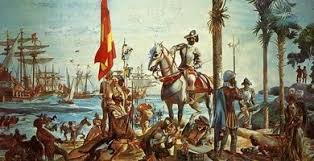
Poisoning the air, Pizarro
smelted more silver ore
than Atahualpa dreamed of.
Ingot by ingot and death
by death, precious metals
lose their lustre
when the price
of bread’s increased.
*****
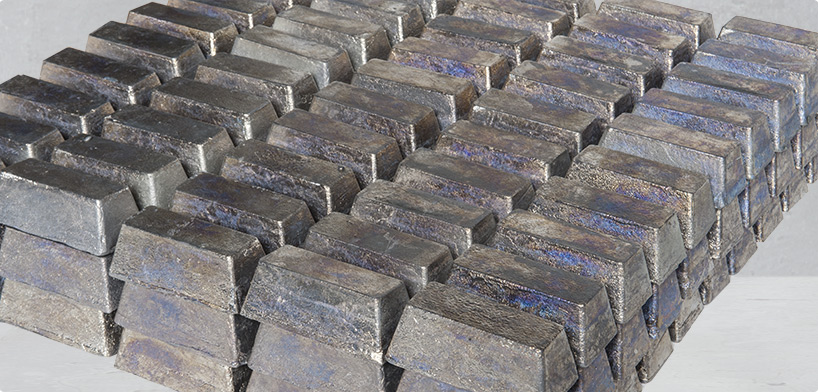
LEAD
A dead weight or a lump
in a line of verse. In a length of pipe
or bullets it lays to rest old scores.
Any way you try to sound it
you’ll never hear it sing
or get a burnish on it –
for once it breathes the air
it loses its pale blue lustre.
In the afterlife of oxides
innocence corrupts,
its poison leaching slowly
down conduits and veins.
Unremarked, it taints
the brain’s frail capillaries.
A base metal, yet think
and you will note
its virtues: gravitas, stability,
contempt for all that’s flash.
Balanced on the brink
where half-lives accelerate,
lethargy sustains it.
Melted down and poured
into a crucible, its apathy
rejects, for their own good,
common cause with alchemists,
the simple-minded lure
of wealth, the wrecks it leads to.
Pounded and pressed
into shape, it hunkers
glumly: dependable and grey.
*****
PLATINUM
Reassuring a rock star’s
ego that record sales
are through the roof
– when gold, silver or bronze
fall far short of his iconic,
no, his legendary status –
hyperbole serves its turn,
if the horse that’s backed
is super-talented,
super-busy and, super-rich,
is now the standard
against which
success is gauged.
In his pampered world
of PAs and minders
he is like the weights
and measures preserved
in labs at Sèvres,
where they lie in state,
undisturbed by movement,
heat or dust. Abstract
and gleaming,
they are almost, if not quite,
Platonic Forms in which,
yes, absolutely, we
have placed our trust.
*****
Autumn 2025: Four Mayo Poems
Having recently returned from a long overdue visit to the West of Ireland, I thought it appropriate to post some of my earliest poems, which were inspired by childhood holidays on my grandparents’ farm.
*****
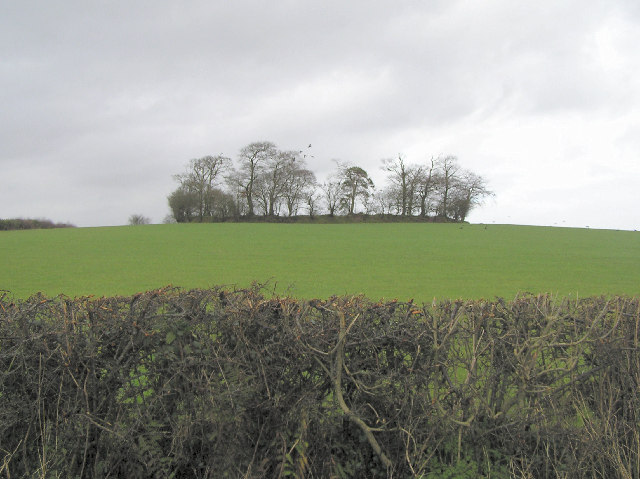
HILL-FORT
Evening, and small fields
are assigned to shadows,
the hills smudged dully
against residual sky.
The desolate call of a curlew,
distant, is finally
no more than the sky’s soft
pulse. Night draws in
and the mind is a function
of its failing light;
it makes out smoke
from a further camp,
the sense of it borne
upon a stirring of breeze.
I imagine dogs
and people, their utensils
ranged around fire;
the land burdened
with lumber of settlement;
blood-heat of habitation.
HOLIDAYS
A treeless terrain,
it was neatly parcelled
by drystone walls
and ditches, mapped out
in identical townlands:
Carrickandy, Bohola –
names bright with
a garbled music;
and there I learned
I had senses –
the sombre reek
of turf stacked high
in a shed, or grass
laid down by a scythe.
Forbidden again
each summer,
I would climb up
to my grandfather’s
hay, succumb
in its net of fragrance.
THE MORRIS MINOR
A lustreless black,
it slept all night
in a shed with the relics
of a different era:
a crumbling harness,
broken tools, a horseshoe
nailed to the wall –
then gargled to life
on busy mornings
when we drove
into town or to Mass.
Down the lane
the old man nudged it
as it lurched on
wrecked suspension,
its bodywork
strafed by brambles,
until at last
he coaxed it out
onto the open road;
and all those trips
we made in convoy
across that rambling landscape:
Enniscrone, Pontoon and back.
So many kids
and so much lumber –
the whole bloody tackle!
JOHNSFORTH
There is no way back
to that landscape
or the child
that you once were
The well is boarded up
The Iron Age fort
bulldozed flat
They have cleared
the table
The fire is banked
While you were busy
elsewhere
they switched off
the light
*
Níl aon bhealach siar
go’n tír sin
ná go’n óige
a chaith tú tráth
Tá béal an tobair
dúnta; leagadh
an sean-ráth
Glanta acu
atá an bord
múchta an tine
Agus tú cúramach
áit éigin eile
chas siad
an solas as
NB: The Irish version was translated anonymously and you can listen here to both versions.
*****
Summer 2025: Four Grimsby Poems
I lived and taught in Grimsby for many years, a town which has been on hard times since the collapse of the fishing industry in the 1970s. The British fishing industry has been much in the news recently, so I thought these poems might have some contemporary relevance.
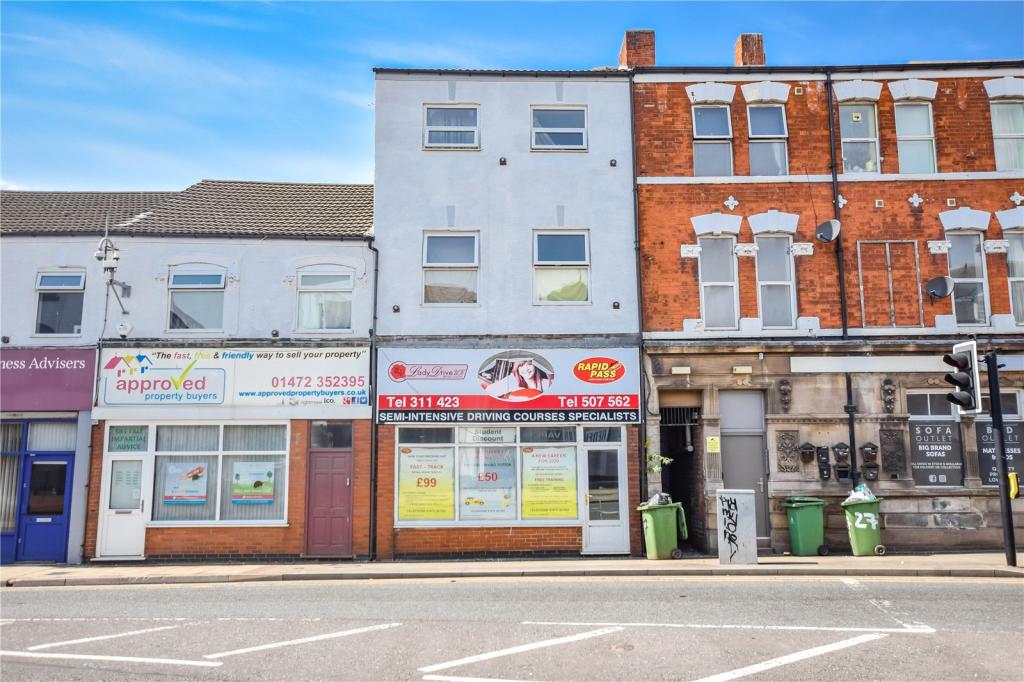
FREEMAN STREET, GRIMSBY
Location! Location! Location! It’s a mantra
the upwardly mobile intone,
who have set up shop elsewhere –
catchpenny merchants with tricks up sleeves,
purveyors of pleasures and deals.
On a street where ripples of boom
and bust have long since subsided
beneath the tide of failure
the footfall of ‘three day millionaires’
kept all the rest in business.
Awaiting turns to land their catches,
trawlers rode at anchor, backed up
beyond the docks. Their crews staggering
ashore to re-establish land legs
lost them again in pubs
where men now washed up at forty
nurse disconsolate pints;
while workless youths hang out,
honing their skills with cues
in a room above the Scope shop.
Marks and Sparks pulled out, leaving
a space filled by Mad Harry’s
discount store that held its own for a while,
until it went the way
of Tony’s Textiles, the Polski Sklep.
Along this windy channel
nothing much survives beyond its lower
reaches, where Asda thrives like a final
outpost. There’s a place that fixes hoovers;
an Alpha course that fixes souls.
From time to time – like a twinge
of conscience – there’s talk
of schemes, regeneration: but who throws
good money after bad? Everything Must Go!
the sign says, when it’s already gone.
*****
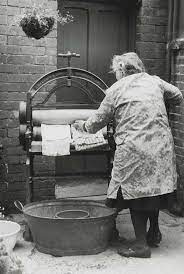
WASHING
Home again each month like a stranger,
he has three days’ turnaround
between trips for you to wash
his gear – which leaves you
barely two when, on his final day,
you’d rinse off his luck.
So let him mooch with mates,
while you heat the copper and soak
his long johns, socks and ganseys
in that soup of frothing water,
teasing fibres matted
with blood, scales, spatter.
And when you’ve sluiced
and sluiced the greasy suds away,
lift the dripping weight of wool
that you will wring to dankness
and then force down
a mangle’s tight-lipped throat.
If weather’s bad, God help us!
as once again you pray for days
of providential breezes –
for though he never says,
you know he’ll love that freshness:
its pliant warmth, its laundered smell.
*****
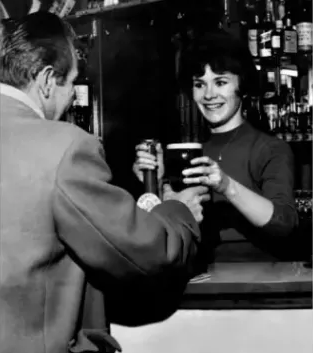
DRINK
He has a way with a pint that hints
at who he is. It starts as the ale is drawn,
his eyes moving from the barmaid’s chest
to her grip on the polished wood
of the pump. Along the tilted side
of the glass, the liquid rises
as if spelling danger, or re-establishing
an equilibrium, while the over-lively froth
gushes forth like loose talk
before it drains into the slops;
and when the measure’s attained,
with a small headspace left,
she sets it up on the counter
for him to assay. He pauses briefly,
holds it up, then gives it a quarter turn,
staring into it like a talisman,
or the dark mirror that shows him
what he needs to see.
*****
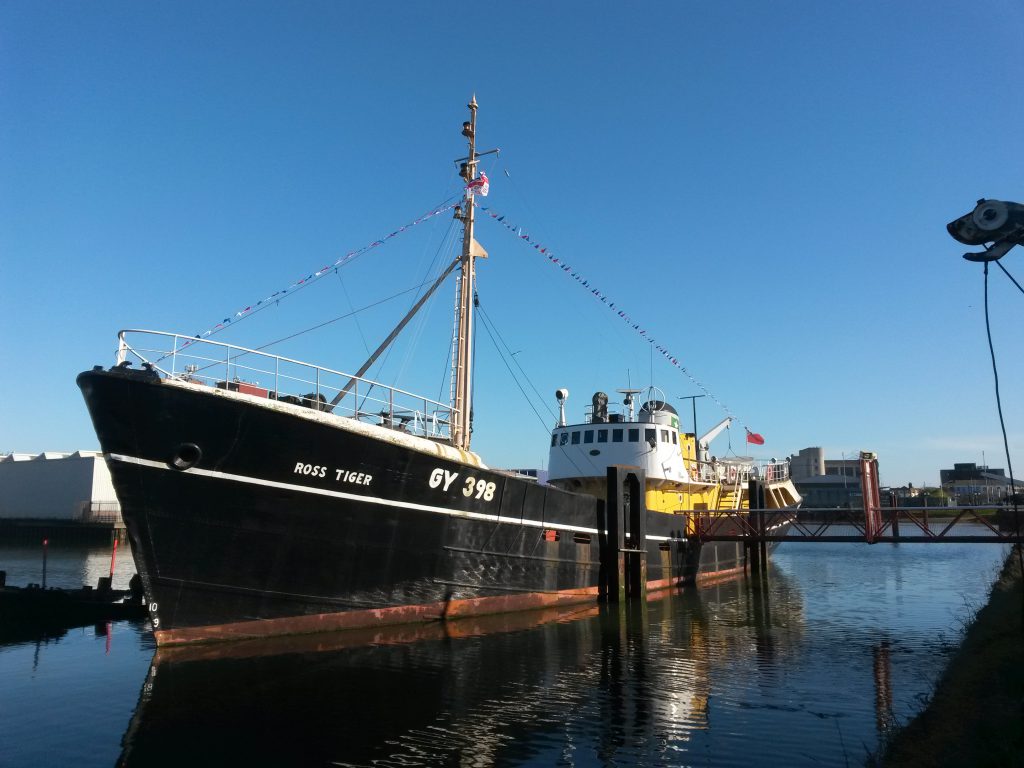
TRAWLERS
Gale-battered survivors
of distant water, they trawled
a featureless nowhere
to make ends meet.
Enduring iron cold
and routine extremes
of oceanic storm,
they hove past torpedoes,
mines, gunboats.
Sweeping channels
to keep them clear
for North Atlantic convoys,
they netted scrap
for years, ending up as pawns
in Cold War, Cod War,
and scuppering deals.
Holding their own
against the worst
that arctic skies
and deep swells muster,
they came to grief
on a creeping tide –
twelve miles, fifty
and then two hundred…
While here’s one
that’s found its anchorage
beyond breakers’ yards,
where unindentured
boys with rods
fish for tiddlers
and the Sainsbury’s trolley,
sunk for a lark, may still one day
be salvaged.
*****
Spring 2025: Five poems i.m. Willi Ronis (1910 – 2019)
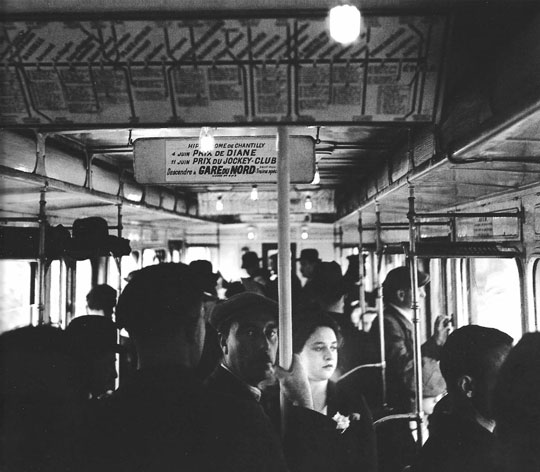
PHOTOGRAPHER
That was the day your shutter
stopped time and when, unaware
of how you do it, you pulled it off again.
And ‘That was the day …’
was all you’d say, drawing us in
to stories that mean nothing to us
or the girl on the overhead train
beyond the fact
of light’s alchemy
and the way it makes her face
a mirror because she is looking
towards us
while others are turned away,
their shoulders bearing the weight
of mundane shadows.
***
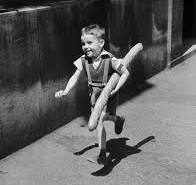
LE PETIT PARISIEN, 1952
A small boy running, but not for his life,
as all can see in his fearless smile
and the sense of freedom
that lights his eyes. This is the day
he will always remember,
important only because of an errand
and the small coin he didn’t drop,
holding it up on tiptoes
across the counter of a baker’s shop,
disregarding for once
the glass-fronted shelves of pastries
laid out on a lower level.
The still warm, unwieldy baguette
stowed beneath his arm,
he races homewards.
At his feet his shadow,
foreshortened, inscrutable,
can only just keep up, one step behind.
Shape-shifting, a demon,
it seems momentarily a cat –
its back hunched, its dark pelt bristling.
***
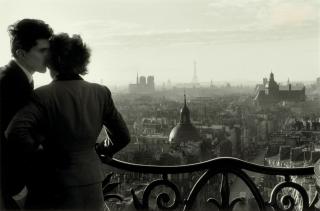
THE LOVERS AT THE BASTILLE
By the time they have reached
their vantage point they know
for certain that this is the day,
fixed in their memory
as their image is fixed in mine.
Across the city’s foundering
skyline, its chaos of roofs,
they see how in wintry light
Notre Dame is holding out
like an island under siege.
For a few moments longer
they’ll stay, as one by one
beneath them shutters close
and the day’s work ceases
in shops and ateliers.
Groomed for the afternoon
he has spent with her, he leans
over and whispers something
he has maybe said before –
some foolishness or a vow.
All we see of her is her back
in a tailored suit, her stance
and its hint of purpose. Knowing
the world for what it is
she will seek her place in it.
***
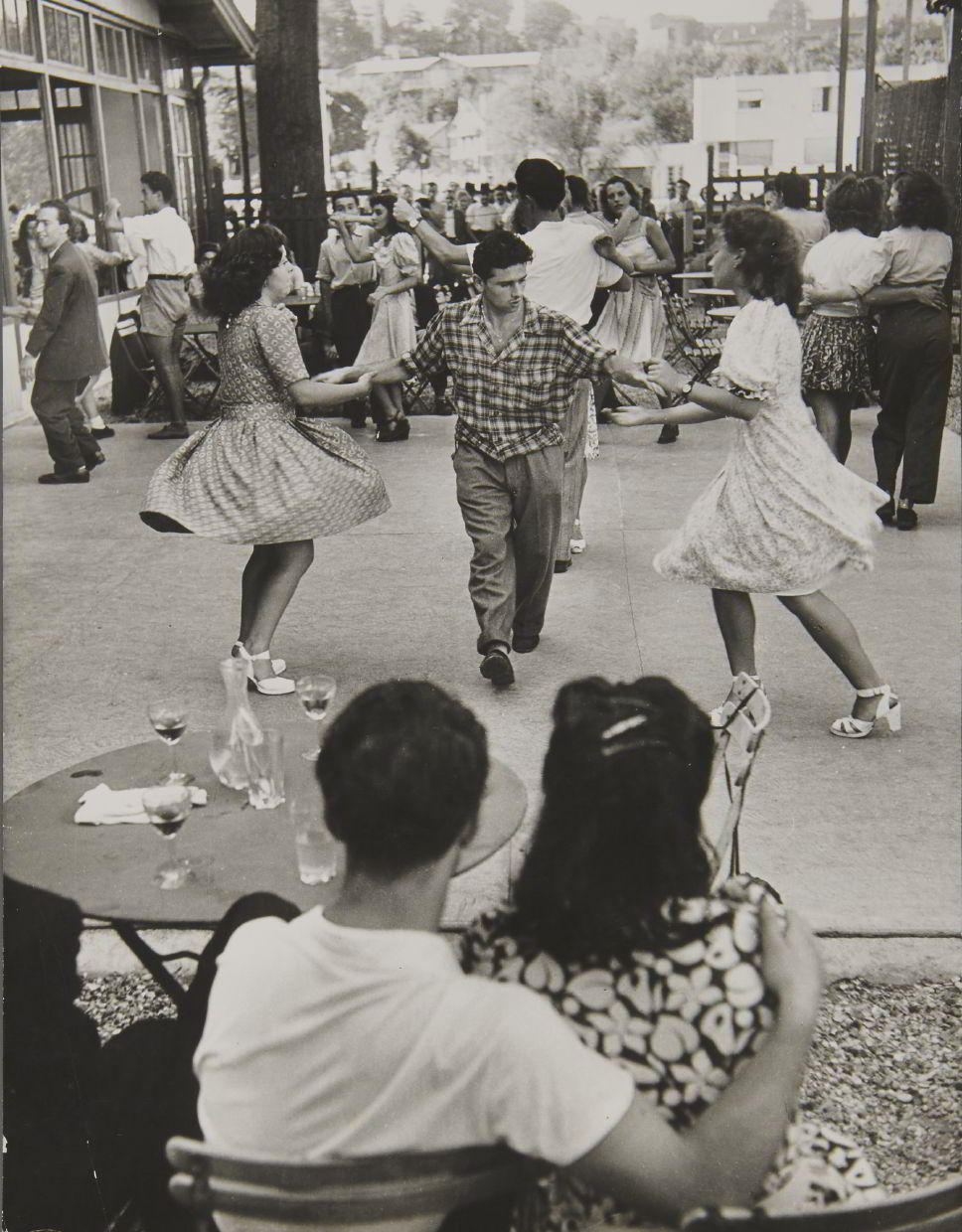
CHEZ MAXE, JOINVILLE, 1947
With no finesse or finish, but still
a ladies’ man, his steps are those
of a country dance or a dance
implying country matters.
No rise and fall, no pull through,
his frame dissolves in swagger
as he takes in hand his two girls
who, less impressed than he imagines,
are riding the waves of riffs and wails,
the imported sounds of freedom,
in a public space where they embrace
la vie en rose and where so recently
their sisters were stripped,
cropped, and smeared.
***
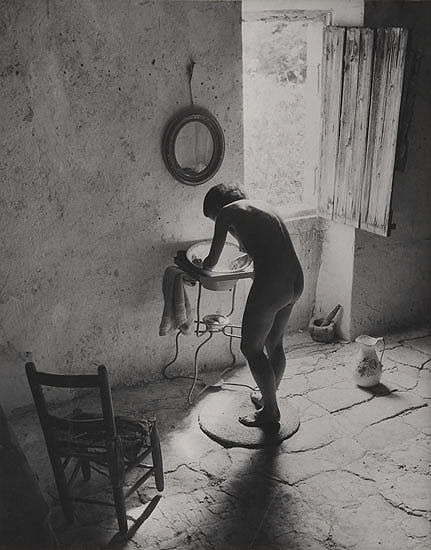
LE NU PROVENÇAL
She is like Eve in exile,
awakening each morning
when the sun has risen,
then rising herself,
shackled to the day’s routine.
She opens a shutter,
and the light sweeps in
across the uneven stone floor –
her summons to the tasks
that lie before her.
But first a strip-wash,
the astringent purity
of her ablutions. Leaning over
a basin, the chill water
unseals her eyes.
Still only half awake,
she takes in the tarnished
mirror, a chair; and sees how little
is needed to live
on the far side of paradise.
*****
Winter 2024: Once A Catholic …
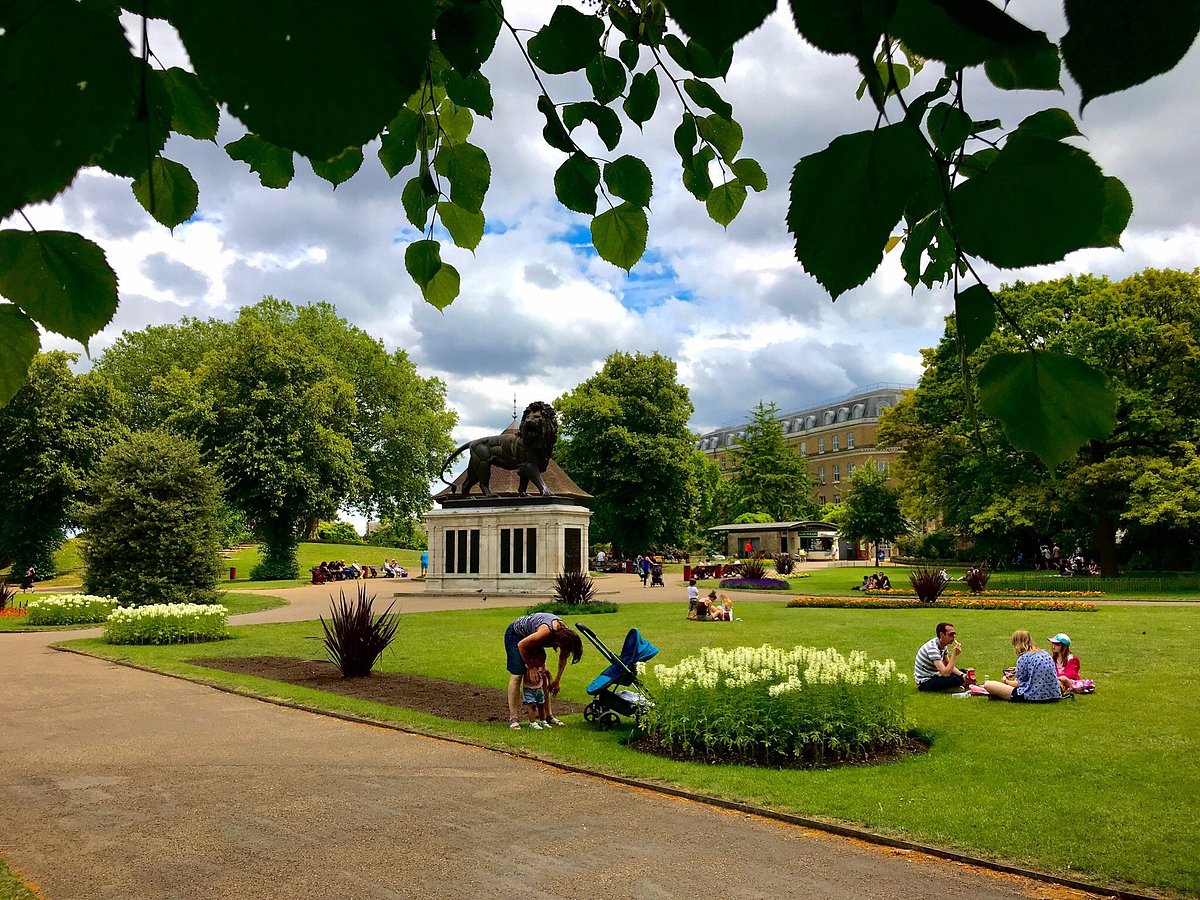
THE FORBURY GARDENS, READING
Through a side gate whose unassuming frame
is draped in swags of pale wisteria
like hairstyles worn by Victorian girls,
I return to a half-forgotten space,
its neat enclosure more clearly defined
by flint walls than the past will ever be;
and where parched lawns, diminished and threadbare
in the unseasonable heat, mark out
a territory that can’t now be repossessed –
the tiny fortress of Forbury Hill,
the bandstand’s lookout, and the benched refuge
we reinvented as a secret cave.
Today even the Lion towering above
his plinth seems at a loss to justify
those fallen in Afghan wars, staring,
muscle-bound, into a sky where cranes loll,
ponderingly, raising disposable
futures from a debris of junked decades.
Like vague impulsive ghosts, those earlier selves
who rampaged in drab, unfashionable
clothes, our echoes trapped as a sibilance
in the tunnel that brought us, crash-landing,
onto holy ground: a ruined abbey’s
lost domain of ritual and trauma.
Hagiography and a dead language
bound us to our past, the tedium also
of a Corpus Christi parade winding
slowly through these gardens, the air heavy
with hymns and incense, my tired head mesmerised
by a thurible clattering against its chains.
ST JAMES PRIMARY, READING
I’m working back to the dreamtime
of St James Primary in sixty-three,
the occluded and innocent days
before the gadgets and money took over –
like trying to retrieve the original colours
of bright, ridged slabs of plasticine
from muddied clumps we used
for project work in the afternoons –
my finest effort the model I made
with Terence O’Neill of the martyrdom
of Hugh Cook Faringdon
that earned us two gold stars.
In our tiny enclave we were swamped
by history: a Victorian church,
where we crocodiled to Mass
on Wednesdays, praying hard for Russians;
and the airy, abandoned ruins
of an abbey that kept the secret
of a good king’s bones, its wrecked
high windows hoarding space.
Boys and girls, we never discovered
the mysteries of the others’ playground,
but chanted tables daily –
our paean to the god of rote learning.
A WET BREAK
Outside in the street, where skies have opened,
a dingy curtain flaps across the day,
as rain beats down with blank persistence
on shining roofs of cars, dissolves
my windowpanes, bringing back to mind
for no apparent purpose a wet break
at primary school: how, in partitioned rooms
with raggedy copies of Beano or Dandy,
we were fractious Bash Street Kids
with time enough to spare; and if an hour
seemed stuck forever in a non-event
of walls and rain, years have since
spun free, cruising blurred distances,
adjusted to the focus of each idle glance.
MISCHIEF
I was prelapsarian and just curious.
I couldn’t tell you the price of anything,
my jackdaw eyes twitching
at a glint of silver between the floorboards.
And later on there were camps and dens,
private worlds, like one I built
with a clean sheet and a clothes horse
lugged across the grass
and filled up with treasure –
the lodger’s flashy cuff links,
of which one, suddenly pointless,
survived and sent my mother
on a hopeless quest. At the back
of the yard was a lock-up
raised on piles. It offered a space
that seemed appropriate
for my discovery of fire.
The flames were impish blues and yellows
that rose up triumphantly before me.
To this day my mother can laugh.
She calls me her Antichrist.
God knows how I ever survived.
*****
Autumn 2024: Chambery 1975
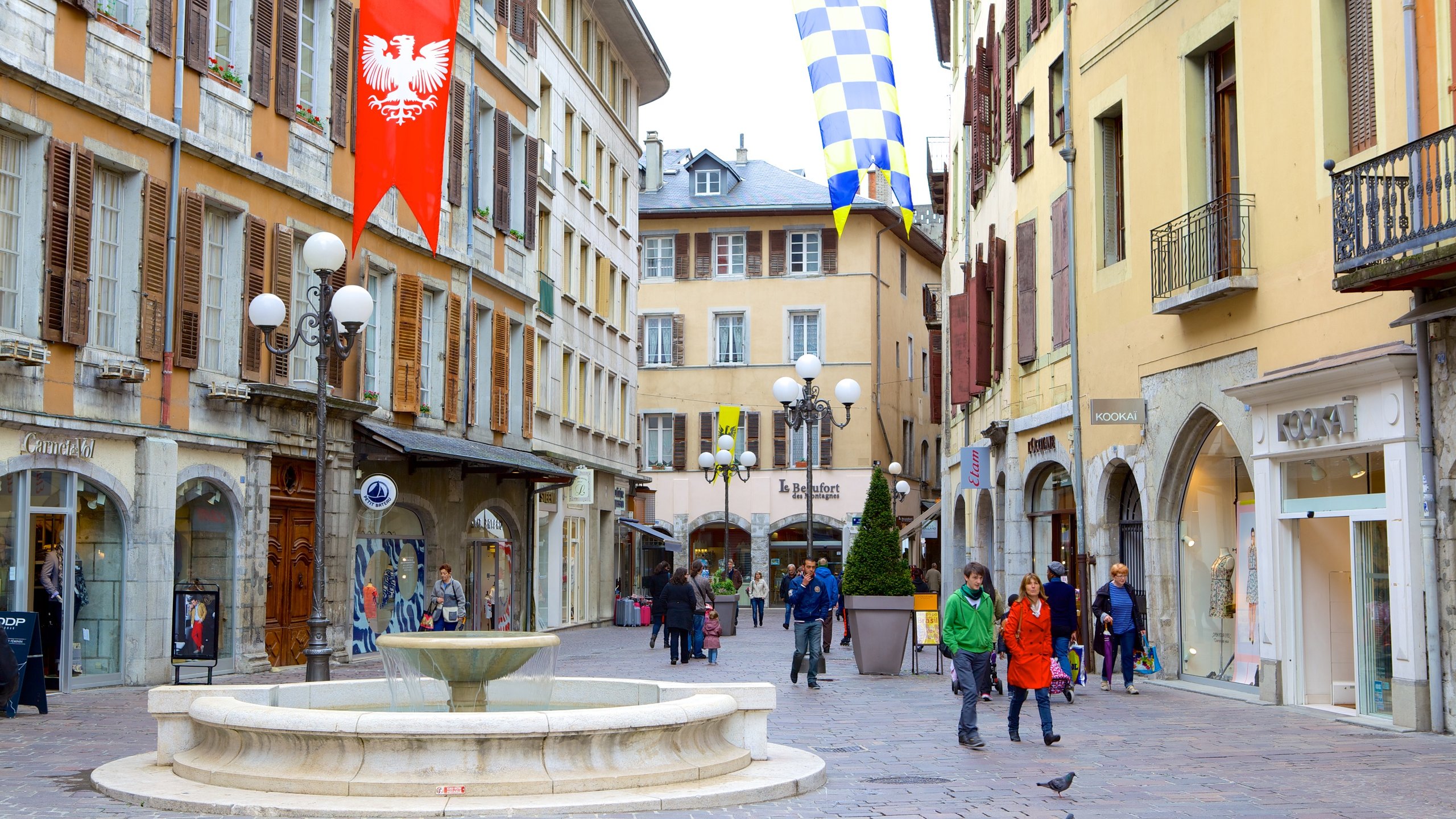
Chambéry, Haute Savoie
******
David Cooke: Five Poems
AN ANNIVERSARY

Famous only for Rousseau’s dreamy sojourn,
Chambéry lay huddled at the foot
of its calendar landscape, and there it was
we met, as if compelled
by a pattern in the lines on a map
to inhabit that region of mountains.
I wonder now do you still recall
our romantic isolation; how we grew familiar
with narrow streets so reticent and formal,
kept tidy as their own concerns;
cramped shops replete with goods
for a bustling clientele.
All that legendary summer we spent
our afternoons on the slopes
of St. Michel, making love
in a shimmering absence –
with only the insects adrift in silence,
and the gliders above at a decent height.
BISTRO

Crossing the road for a bar, we dance
through the headlights of cars.
I open the door and the cold ignites,
your face aglow as laughing
we break a silence.
In the yellow light inside,
the shiftless gather to decipher
life on a screen. Sitting down,
we order hot wine and a grog.
The patronne turns,
too sour to spare us a word.
When our drinks arrive
we sip at warmth from spoons.
Across a glaze of desert light
your face is a flood of smiles.
ROUTE NATIONALE

The heat that summer oppressed us
as day after day we travelled along
a flat unbending road; and bleak utilities
hemmed it in all that dragging section.
Past petrol pumps and hangars
that were candy-striped, ablaze,
and compounds packed with tractors,
it urged us on to town.
The road was a scar on clean
terrain. Further off, beyond
slopes of pampered vines,
the mountains, white-capped,
soothing, were coolness glimpsed
through the gauze of distance.
JACOB-BELLECOMBETTE

Up here at a height, where
you see surrounding mountains,
I’ll forget my illness and the arcaded
streets below. Beyond the level
of roofs, the cross on Nivolet
is pinning rock and air, while fresh light
this morning, here before its season,
scours each jutting face to a rarer
tint of white. Refining the mass
of outcrop, it shrinks bulk
to an image; and leaves chill air
with all distinctions neat.
THE 2CV

The first car we owned was a 2CV
with no certifiable history.
The year we got together
we drove it to the end of its days.
With its tinny dinted roof
it had an air of slumped defeat
we rose above quite easily.
When summer broke all records
the windows that didn’t quite close
were an unexpected bonus.
Its mind-boggling gear stick
seemed set to leave its socket;
the functional dashboard
as neat as an early Avro’s.
Our one encounter with the law
–a strapped and booted gendarme –
required a shameless display
of fawning franglais.
A set of bulbs and a red triangle
raised its status to legal.
On days off our alpine ascents
were a puttering epic;
each free-falling return
a foot-to-the-floor held note
of whinging metal.
It was sheer foolhardiness
I hear you say to make such journeys
in a such a bagnole and I of course
can see you are right –
as always, I can only agree.
*****
Summer 2024: Four Poems from Collected Poems
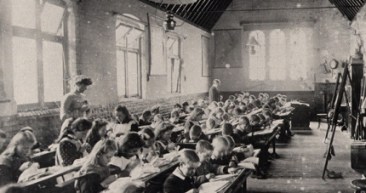
SCHOLARS
‘The world breaks down into facts.’
Ludwig Wittgenstein, Tractatus Logico-Philosophicus
In the high-ceilinged rooms
of ragged schools you hear
the clack of chalk on slates.
Heads down, still breathing,
they are figuring out,
applying the rules
they hope will get it straight.
The first day they dip
their pens into tiny china wells
the mistress smiles
and tells them
to call this their ‘copy work’.
It is letters and words,
then sentences,
the bare bones of wisdom.
When the time has come
they will learn to think.
Meanwhile the neat
inherit the earth –
for if they smudge it
the page is spoiled.
Beyond high windows
the world exists.
It is made up of the facts
they are gathering one by one.
All day long they raise their hands,
owning up to their futures.
*****
MY GRANDSON WRITES HIS NAME
for Ziyad
The first letter he has known for months
in zig-zag lines getting nowhere.
Turned on its side and crayoned blue
he can stretch it out like a river;
or, if he changes colour, can make
a mountain, some grass, a fire.
Cut back to its simplest form
and laid out in rows like ghosts,
he follows the dots over and over
before he does it on his own.
When he learns its sound is a buzz
he likes, he hears it and sees it again
in the stripes of zebra,
in the bars of a place called zoo.
He has five shapes to master.
They stand above or hang below
a line that’s always there –
even if you think it’s vanished.
But when it all comes together
in a final downward stroke
– staunch and straight as he will be –
it tells him who he is,
this name he has always heard
ever since he’s been here.
***

LE PETIT PARISIEN, 1952
after Willi Ronis
A small boy running, but not for his life,
as all can see in his fearless smile
and the sense of freedom
that lights his eyes. This is the day
he will always remember,
important only because of an errand
and the small coin he didn’t drop,
holding it up on tiptoes
across the counter of a baker’s shop,
disregarding for once
the glass-fronted shelves of pastries
laid out on a lower level.
The still warm, unwieldy baguette
stowed beneath his arm,
he races homewards.
At his feet his shadow,
foreshortened, inscrutable,
can only just keep up, one step behind.
Shape-shifting, a demon,
it seems momentarily a cat –
its back hunched, its dark pelt bristling.
***
FLYING A KITE IN PEOPLE’S PARK
The man and the boy are struggling
– as they will in the years ahead –
to set free their tangled bird.
With air and sky enough
to lift it, all they need is luck
and the right approach
to see it soar, to keep it anchored.
*****
Spring 2024: Four Poems from Collected Poems
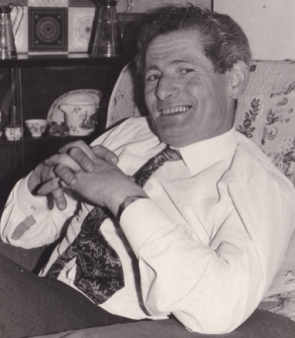
YOUR CHAIR
After half a lifetime of early starts,
and a few fly years that made you money,
you finally softened round the edges
and eased back, prosperous, into your chair.
It’s there in our mother’s place: a threadbare
seat of judgment, battered in the mayhem
of a clattery open house, its wrecked guts
sagging, its two arm rests coming adrift.
And fixed immovably in that still centre
you watched the racing on TV, shushed out
our conversations, as Michael O’Hehir’s
gabble of names stampeded to its climax.
Another windfall? Or a better prize –
to know you were flush enough for losers
not to matter, in a different country
to have attained a gruff serenity.
That chair has hoarded the words you uttered
and releasing them at times, as we make
our late decisions, can fill up a room
with some cagey, warm, and toil-inflected phrase.
Your chair is true north on a map of memory,
and points out paths, the sanctioned ways still worth
your approbation, the cuteness implied
in ‘Whatever would your father have thought?’
***
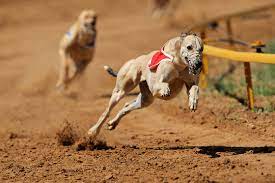
GAMBLER
‘Il faut parier’ Blaise Pascal
Bound over for playing pitch and toss
or, more portentously, ‘having gambled
on Her Majesty’s Highway’
my father was always an expert
at weighing up the odds,
made light of his brush with the law.
His gambling a science and pastime,
he never lost much, but knew
in the end that the world is flawed.
At best you could only break even.
He had taken us all to Ascot races,
and once took me to the Dogs,
where speakers bounced
their fractured echoes,
the track suffused with lights
and where, having placed
my own small bet,
it all depended on the hare’s
mechanical, panicked blur.
Unschooled, he’d never read Pascal,
but knew what he needed to know
about risk, so went to Mass on Sundays.
The odds on heaven were evens.
***
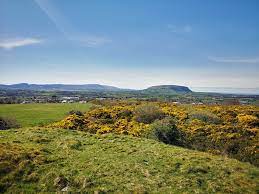
CONNACHT
So here I am again, homing in
on a landscape that’s abstract
and generous, a photographic
collage whose cut edges merge
into the myth of perfect
childhood, a gloss of kinship;
till all our visits to country
cousins, whose lyric speech
made changelings of our tongues,
are now subsumed into one
floating summer, still
luminous above those hills.
An English nowhere could make
no claim on loyalty, when we left
behind each year its grid
of neat, pragmatic streets,
its ordinary day a dullness
that had shrugged off history.
How we hammed an identity
and hugged it close like homespun
before each death and marriage
unstitched its flimsy threads –
knowing now that Eden
is only a fierce nostalgia.
***
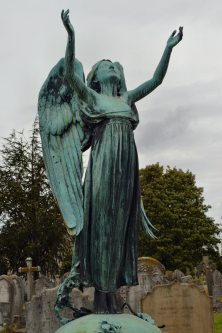
CHURCHYARD
With its bald wings
hunched on shoulders
bearing the weight
of years of rain,
a Victorian angel,
its arms outstretched,
stares past my gaze
in silence where,
stone upon stone,
its weathered squads
lie aslant in growth,
as names and dates
incised, legends
that made each slab
unique, are slowly
effaced to barely
discernible scars.
No bird calls here
can stir the dead,
no rote we intone
can reach them:
their voices dust
in quiet places,
their gestures dispersed
with broken stars.
*****
Winter 2023: David Cooke: Four Poems
AN OPEN DRAWER
I have opened a drawer in memory
revealing odds and ends, a treasure trove
of objects they may have thought
were useful, but mostly never were;
and laid among them the airmail letters
– light-blue and flimsy.
Slicing them open with a kitchen knife
along striped edges, they eased out
the creases to read the news
from Sydney, Detroit, Toronto …
and learned how children prosper,
that work is work and how,
wherever you travel,
you will find a face from home –
All the details of ordinary lives
translated by distances
to a gauche formality –
Hoping, as ever, this finds you in health,
each aspiration couched in pieties –
One day, God willing, we will see you again.
And buried in that drawer
with bits of twine, ribbon, forgotten keys …
the mass card for a son who died
and never made it anywhere
beyond their glistening fields,
their moist low-lying hills.
xxxxxxxxxxxxxxfrom After Hours, Cultured Lllama, 2017
THE POTATO EATERS
after Van Gogh
There’s a room elsewhere that’s brighter
where food appears as if from nowhere
on plates so fine you can shine a light
through them: a feast for the eyes
before the palate succumbs to slick
lubricious juices. While here
they’ll have no truck with a dish
that’s pimped and primped.
For as long as the earth provides
they know they will always survive
on what is dug from claggy acres.
For as long as the fire endures
and the pot hangs on a hook
they will gather quietly around
their table. They peel back the skins.
The soft white flesh blossoms.
xxxxxxxxxxxxxxfrom Reel to Reel, Dempsey & Windle, 2019
AN ANNIVERSARY
Famous only for Rousseau’s dreamy sojourn,
Chambéry lay huddled at the foot
of its calendar landscape, and there it was
we met, as if compelled
by a pattern in the lines on a map
to inhabit that region of mountains.
I wonder now do you still recall
our romantic isolation; how we grew familiar
with narrow streets so reticent and formal,
kept tidy as their own concerns;
cramped shops replete with goods
for a bustling clientele.
All that legendary summer we spent
our afternoons on the slopes
of St. Michel, making love
in a shimmering absence –
with only the insects adrift in silence,
and the gliders above at a decent height.
xxxxxxxxxxxxxxfrom A Murmuration, Two Rivers Press, 2015
ICE
The starched white tablecloths
laid out in the banqueting room
were as fresh as newly settled
snow. The array of knives,
forks and spoons, buffed
and aligned to perfection,
were, for the chosen, a promise
of good things to come.
Fetched from afar and packed
in ice, the makings of the feast
were plated up and tweaked
with a deft hand.
xxxxxxxxxxxxxx xxxAt the centre
of it all a swan presided
that wasn’t glass but carved
in ice. With a mute
eloquence its elegant neck
curved against its body.
Absorbing warmth
and chatter, its finely etched
detail would only last so long.
xxxxxxxxxxxxxxfrom Sicilian Elephants, Two Rivers Press, 2021
 The High Window